

Walk into Bardy Farms on Washington Valley Road in Warren Township, and you are entering one of New Jersey’s increasingly rare family farm businesses. Fresh produce still fills the market, plants crowd the greenhouses in Spring, pumpkins arrive in autumn, and Christmas trees and wreaths mark the holiday season. It feels like a familiar neighborhood farm stand, but its history extends far beyond this single Warren property.

Bardy Farms began in 1903, when a Russian immigrant named Abraham Bardicshewsk (Bardy) pronounced bar-dee-CHEVSK, started growing vegetables in Union, New Jersey in Union County, and selling them at a farm stand on High Street in Elizabeth, New Jersey. Over the following decades, the Bardy family transformed a small farming operation into a network of farms, roadside markets, supermarkets, and commercial properties stretching across Union and Somerset Counties, leaving a farming legacy in so many of our communities.

Abraham Bardicshewsk (Bardy) arrived in the United States, we think from Kiev, Ukraine/Russia, in 1903. By the 1920 census, he had established himself as a farmer in Union, New Jersey, working in the truck farm industry. He headed a household that included his wife, Gussie, and six children: Israel (age 16), Joseph (8), Edward (7), Ida (5), Berta (3), and Phillip (1). The family owned their home, though it was mortgaged. Despite his seventeen years in the country, Abraham remained an alien and had not pursued naturalization. He spoke Jewish as his native tongue and could speak English.


1930 view of where it all began. The dot (lower left) was their home on Spruce Street.
At one time, the Bardys farmed land in Basking Ridge, Millington, North Plainfield, and Warren Township. The family’s Basking Ridge farm stand became a familiar stop for generations of residents before the property was developed as The Barons. Another Bardy farm became protected land within the Great Swamp National Wildlife Refuge.

More than 120 years after Abraham Bardy planted his first crops, the family name remains on the market in Warren. Operated by Abraham’s grandson Rob Bardy and his wife, Donna, it is the last surviving agricultural branch of a remarkable Central Jersey farm business.
Bardy Family Early Years
In 1905, after establishing himself, Abraham sent for his wife, Gussie, and their five-year-old son, Jack. The couple eventually raised eight children, and Bardy Farms became a true family operation. Farming was not simply Abraham’s occupation; it became the work around which the entire family organized its life.

A Facebook follower sent us a great note about when he worked the farm back in 1955:

“These pay receipts are from 1955, when I just turned 17. I got a pretty good raise when I left the farm field job to go to work in the new Bardy Farms Supermarket. I enjoyed working for the Bardy family; they treated me very well and taught me a lot. I was given the prestigious title of assistant dairy manager right away. That meant that I stocked the shelves in the dairy section. I was paid 80 cents an hour, which was a lot more than I was paid to pull weeds and harvest vegetables in the fields,” wrote Richard Vorden. “You can see on the receipts that there was a deduction for F.I.C.A. taxes. From the top receipt, they deducted 26 cents for the week. I guess that 26 cents is what is funding my current Social Security and Medicare checks. It might not seem like a very high wage, but I did manage to save something to the bank every week. I am so cheap I think I still have some of that money.“
From Farm Fields to Farm Stand
During the early 1900s, the Bardy family brought vegetables, eggs, and butter to a public market on High Street in Elizabeth. Like many New Jersey farm families, they used the established city market to sell directly to urban customers. As their customer base grew and automobile traffic expanded, the family opened a roadside stand on Morris Avenue in Union, beginning the transition from traditional farming to a permanent retail business.

That modest stand marked an important turning point. The Bardys were no longer only farmers; they were becoming retailers. The stand eventually developed into a grocery store, creating the farm-to-market business model that would define Bardy Farms for decades.
Building a Modern Supermarket
In 1952, the Bardy brothers made their most ambitious move yet, constructing the first Bardy Farms Supermarket in Union. The store was considered unusually modern for its time, combining frozen foods, a bakery, a delicatessen, a butcher shop, a seafood counter, and a produce department under one roof.


Unlike most emerging supermarkets, however, Bardy Farms remained directly connected to the soil. Much of its produce was grown only two blocks away on the family’s 40-acre vegetable farm on Spruce Street. The Bardys had successfully joined two rapidly changing worlds: the traditional family farm and the modern American supermarket.

Bardy’s Expansion into Somerset County
The success of the Union supermarket allowed the Bardys to look westward. During the late 1950s, the family acquired farmland in Basking Ridge, Millington, North Plainfield, and Warren Township, communities that were then beginning their transformation from rural countryside into suburban towns. In 1957, the Bardy family purchased farmland in Warren Township.

This Somerset County play was more than a simple expansion of acreage. The Bardys were assembling a network that combined productive farmland, neighborhood farm stands, supermarkets, and commercial properties. Their growth mirrored the changing landscape of Central Jersey, where old farms increasingly stood beside new highways, housing developments, and shopping centers.

Farmland Consolidation
As suburban development accelerated, the Bardy family’s scattered farm properties followed very different paths. The Basking Ridge farm became a residential community, while the North Plainfield property became part of the Route 22 commercial corridor. In Millington, however, the result was preservation.


The store later became Valley Fair and Kmart before the property was redeveloped after 2014 for Costco, IHOP, and Texas Roadhouse, all the way down to West End Avenue.
Bardy Farms Sells Basking Ridge Farm
For Basking Ridge residents, Bardy Farms was not an abstract piece of family real estate. It was a working farm and roadside market remembered by customers who stopped for produce and watched the Bardy children grow up behind the stand. The farm sat off South Maple Avenue near Lyons, on land that would eventually become The Barons residential development. Philip Bardy worked at the stand, often accompanied by his young son Rob, the same Rob Bardy who would later carry the family farming tradition forward in Warren.
In the early 1980s, the Bardy family’s Basking Ridge farm on South Maple Avenue was acquired for residential development. The property became The Barons, a 132-unit condominium community developed by CHT Associates, the New Jersey real estate firm founded by Joseph G. Berardo. Model homes opened in 1983, with construction continuing through the mid-1980s.

By approximately 1982, the Basking Ridge farm was giving way to residential development. The following year, the first model homes opened at The Barons. Today, little about the 132-home community reveals that crops once grew there or that residents once stopped along South Maple Avenue to buy produce from the Bardy family.
Bardy Farmland Goes Back To the Great Swamp
Bardy family history describes the family’s approximately 130-acre Millington farm as having been donated to the Great Swamp National Wildlife Refuge in 1998. Recorded deeds reveal a different story: between 1990 and 1998, the federal government purchased four Bardy tracts totaling 126.56 acres for $1,124,600.

The US Government’s Bardy farm acquisitions in Millington began in 1990–1991, when family members transferred 62.1 acres between White Bridge Road, Carlton Road, and the Passaic River for $247,600; another 35.17 acres followed in 1995 for $247,000. Before the remaining property could be transferred, pesticide contamination in a former farm dump area had to be contained beneath a protective soil cap. Investigators also documented a prehistoric Paleo-Indian site dating from approximately 10,000 to 8,000 B.C.
In October 1998, the Bardys sold the final 29.29 acres to the United States for $630,000, completing the farm’s incorporation into the Great Swamp National Wildlife Refuge. Thus, the family’s memory of approximately 130 acres entering the refuge in 1998 was substantially correct—but 1998 marked the end of an eight-year series of paid purchases, not a single donation.
Unlike Bardy land in Basking Ridge and North Plainfield that became residential and commercial developments, the Millington farm disappeared into the protected landscape of the Great Swamp.
Warren: The Last Farm & Stand
Of all the Bardy properties acquired during the family’s great expansion, Warren is where the agricultural tradition survived. At 149 Washington Valley Road, Rob and Donna Bardy continue operating Bardy Farms & Greenhouses, combining the old roadside-market tradition with a year-round garden center and specialty food store.
Rob represents the third generation of the family’s American farming story: grandson of Abraham and Gussie, and son of Philip Bardy. The scale and merchandise have changed since Abraham first carried produce to the Elizabeth Market. Still, the family name remains connected to fresh produce, plants, seasonal goods, and direct service to local customers.

What Comes Next?
Bardy Farms has already survived changes that ended hundreds of other New Jersey farm businesses: immigration, two world wars, the rise of supermarkets, suburban development, disappearing farmland, and the replacement of locally owned stores by national chains.

Its future now rests in Warren, where the family’s last agricultural branch continues under Rob and Donna Bardy. Whether another generation will carry the Bardy name forward remains an unanswered question. What is certain is that the family has already left its mark across Central Jersey—in a surviving Warren farm market, beneath a Basking Ridge residential community, along the Route 22 commercial corridor, and within the protected landscape of the Great Swamp.
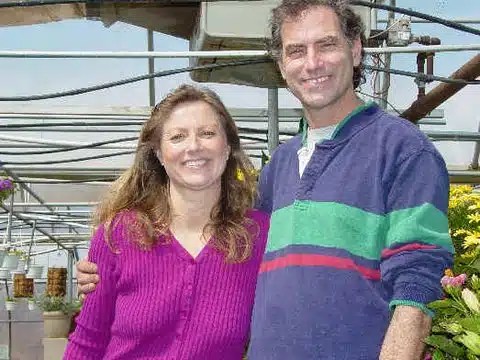
The Bardy story is therefore about more than one farm stand. It is the story of how a New Jersey immigrant farm family adapted, expanded, and survived as the surrounding countryside was transformed.

What comes next for Bardy Farms remains uncertain. Warren Township’s amended affordable-housing plan identifies the family’s Warren property for the potential construction of as many as 115 residences, including up to 28 affordable rental units, as reported in the newspapers in February 2026.
Mayor Shaun Fine, Township Attorney William Willard and Professional Planner Katherine Sarmad stated the designation does not represent an approved development; a developer must still submit detailed plans and undergo public review, including consideration of the property’s streams, wetlands, possible flooding, traffic, and sewer capacity.
For now, Rob and Donna Bardy continue operating the farm market and greenhouses established by a family whose New Jersey agricultural story began more than 120 years ago. Whether this historic Warren landmark survives into another generation, or finally gives way to development, may become the closing chapter of the Bardy family’s remarkable farming legacy.


