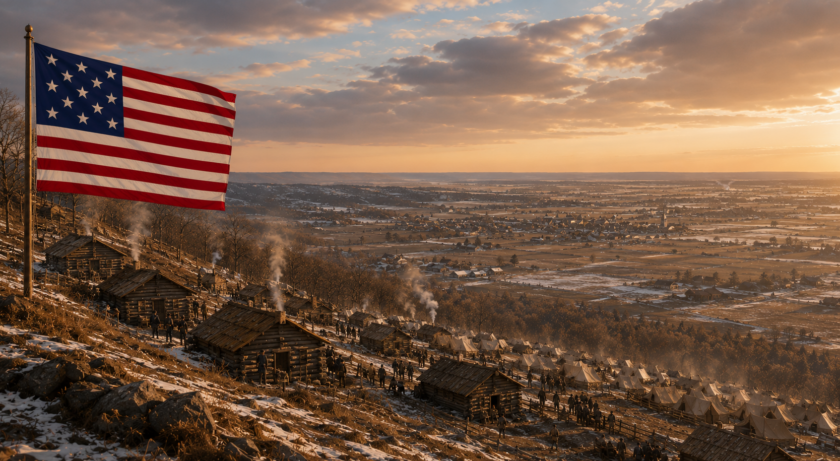
Military protocol in the eighteenth century generally called for armies to suspend major campaigning during the winter months. Harsh weather, poor roads, limited food supplies, and the difficulty of moving men, horses, artillery, and wagons made large-scale operations impractical. Rather than remain on the march, armies typically established winter encampments—temporary military communities where soldiers could be housed, supplied, trained, and organized until favorable campaigning weather returned in the spring.
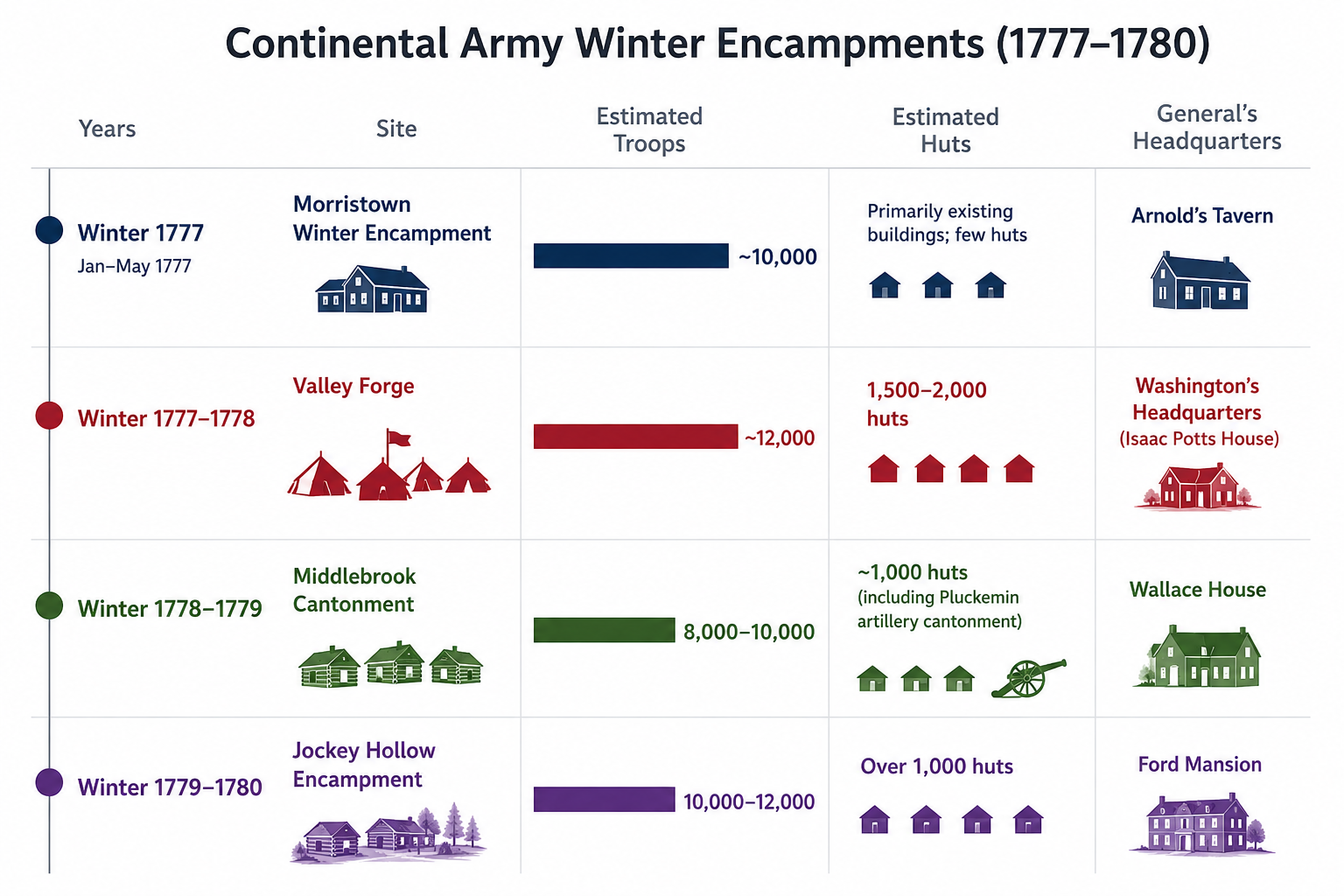
These encampments often lasted four to six months and were carefully selected for both strategic and logistical reasons. A successful site needed access to fresh water, firewood, transportation routes, and nearby food sources, while also providing a defensible position against enemy attack. During this period, soldiers constructed huts, drilled, repaired equipment, received supplies, and maintained military discipline. For General George Washington and the Continental Army, winter encampments became essential to preserving the army’s strength and preparing for the next year’s campaign.
Among the most important of these Revolutionary War encampments were those at Morristown, Valley Forge, and Middlebrook. Each served a distinct military purpose, housed thousands of troops, and played a vital role in sustaining the American war effort during some of its most challenging years.
Middlebrook Encampments of Today’s Bridgewater, New Jersey
The Middlebrook Encampments, located in present-day Bridgewater Township and surrounding Somerset County, were among the most strategically important military positions occupied by General George Washington and the Continental Army during the American Revolution. Protected by the natural defenses of the First Watchung Mountain and overlooking the vital Raritan Valley corridor, Middlebrook served as a military stronghold from which Washington could monitor British movements in New Brunswick and New York while preserving the strength of his army.
The Continental Army occupied Middlebrook on two occasions. The first encampment, from May to July 1777, placed Washington’s forces on the heights above the valley, where their presence helped frustrate British plans and contributed to General Howe’s decision to move his army to Philadelphia by sea rather than by land. The second and more extensive occupation occurred during the winter of 1778–1779, when thousands of soldiers constructed huts and cantonments stretching across what are now Bridgewater, Somerville, Bound Brook, South Bound Brook, and Bedminster. During this winter encampment, the army emerged from the hardships of Valley Forge as a more disciplined and professional fighting force.
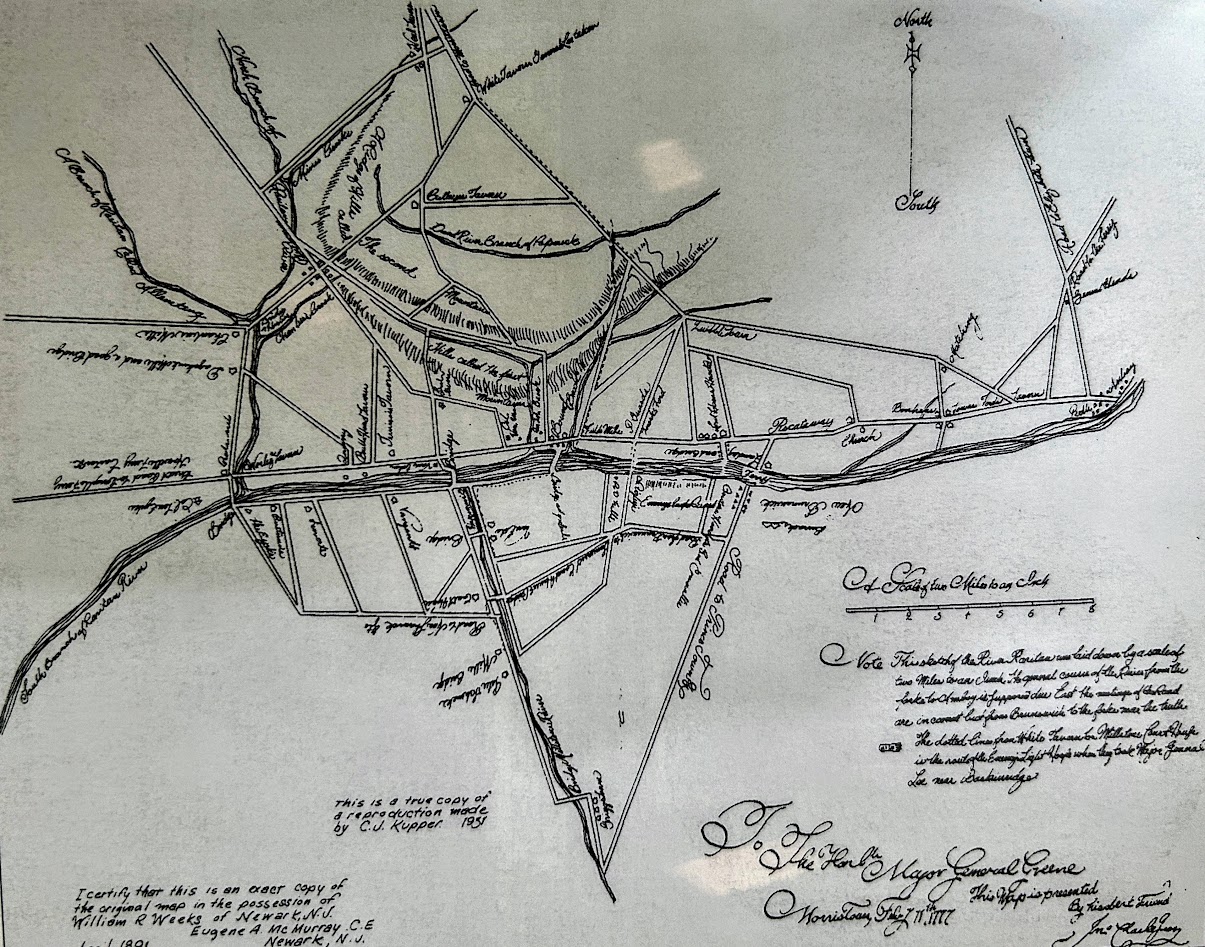
Unlike Valley Forge and Morristown, which are often remembered for suffering and endurance, Middlebrook is best understood as a place of military strength and strategic advantage. From these positions among the Watchung Mountains, Washington maintained control of central New Jersey, protected the approaches to the interior, and kept constant pressure on British forces. Historians today increasingly recognize that the Middlebrook Encampments played a critical role in the Continental Army’s survival and evolution, making Somerset County one of the most important military landscapes of the Revolutionary War.
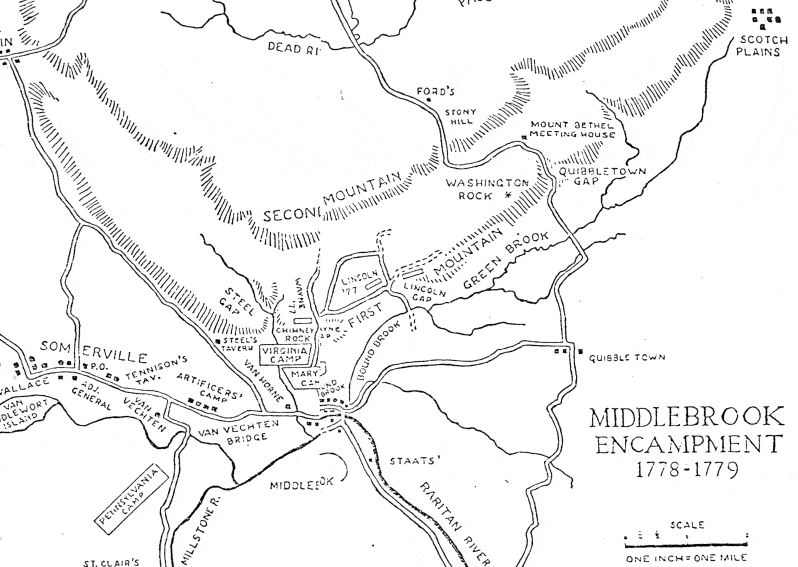
“If roughly 4,000 Continental soldiers occupied the Middlebrook mountain camps, the hillside may have held 350–400 enlisted men’s huts, plus dozens of officers’ quarters, kitchens, guardhouses, and supply structures — creating a temporary military village across the Watchung ridge.”
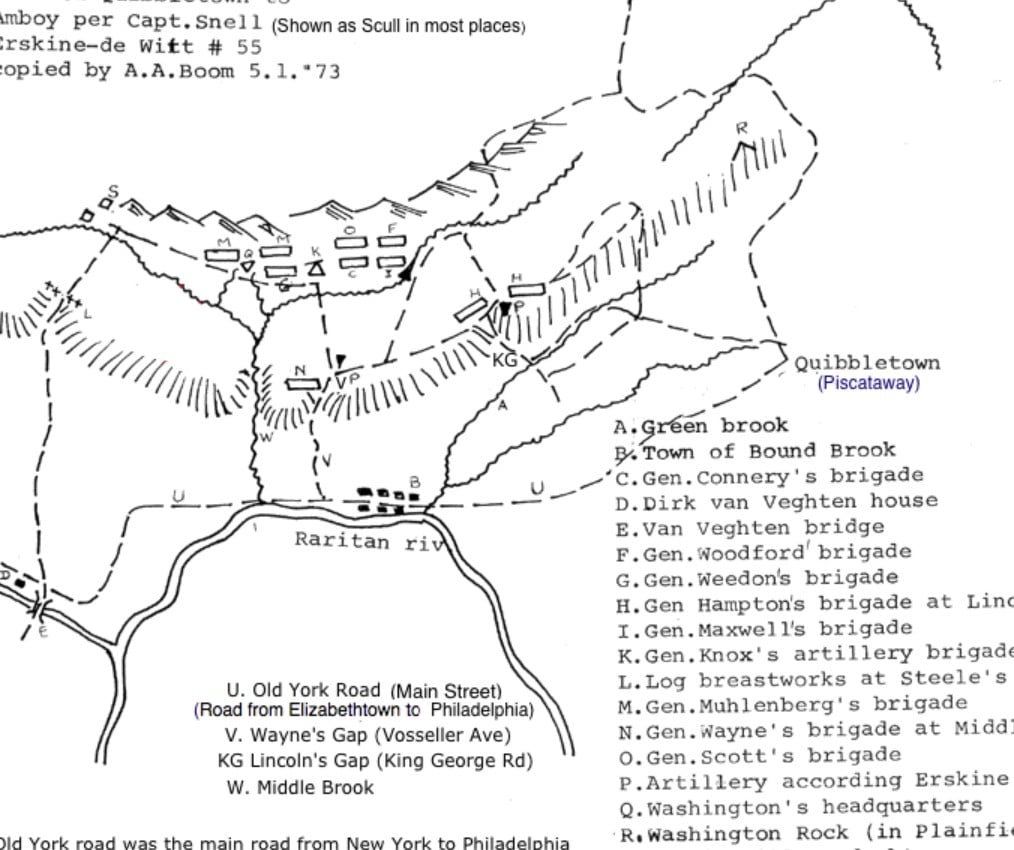
Many people overlook the fact that Pluckemin was an integral part of the larger Middlebrook military complex. During the winter of 1778–1779, the village served as the location of the Continental Army’s Artillery Cantonment under General Henry Knox, housing hundreds of artillerymen, officers, horses, and equipment that supported Washington’s main army encamped across the Middlebrook region.
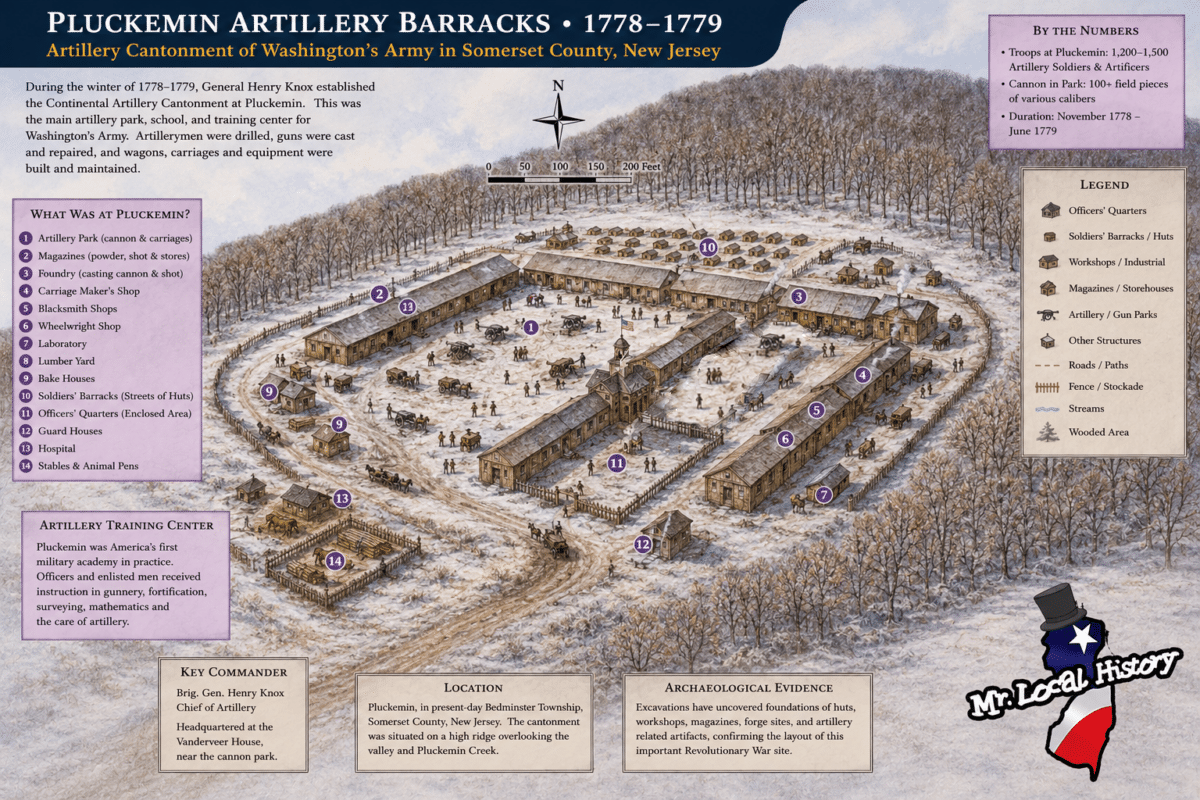
More than simply a winter camp, Pluckemin functioned as a specialized military community complete with barracks, workshops, supply facilities, and what is often regarded as America’s first military academy, where artillery officers received instruction in engineering and military science. Together, the Middlebrook encampment and the Pluckemin Artillery Cantonment formed a coordinated military system that helped transform the Continental Army into a more professional and effective fighting force.
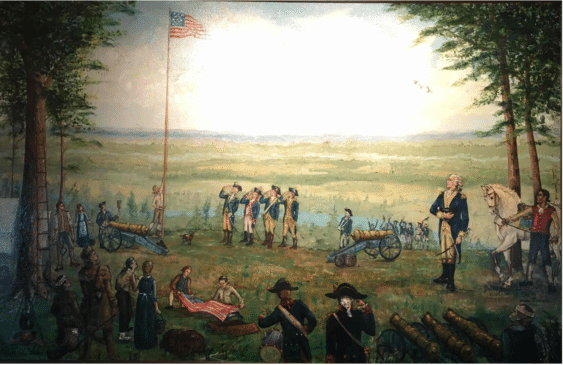
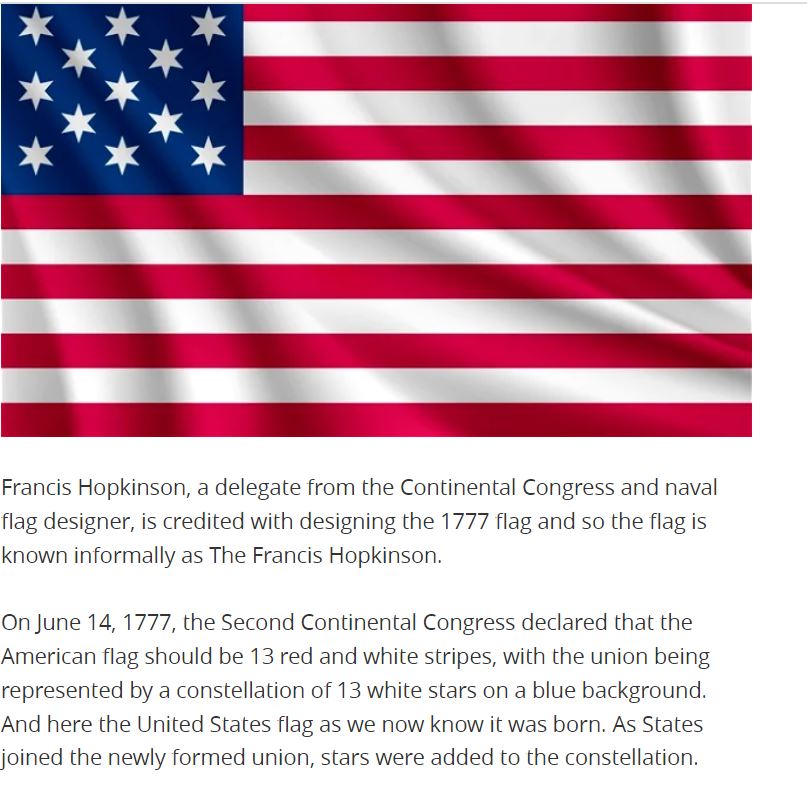
Don’t Forget the Flag –
The First Time America’s Official Flag Flew at Middlebrook
(Yes, that’s Bridgewater, New Jersey)
What about Morristown’s Winter Encampments?
While Valley Forge may be the most famous Revolutionary War encampment, many historians regard Morristown as the true testing ground of the Continental Army. Washington brought his troops to the Morristown area twice, including the brutal winter of 1779–1780 at Jockey Hollow, often described as the harshest winter of the entire war.
Deep snow, freezing temperatures, and severe shortages challenged the army’s endurance, yet the soldiers persevered. Morristown’s strategic location, protected by the Watchung Mountains and close enough to monitor British forces in New York, made it an ideal military stronghold. The army’s survival during these difficult months demonstrated the resilience of both the soldiers and their commander, reinforcing Morristown’s place as one of the most important military landscapes of the American Revolution.