
This is a continuation of the history of our earlier story (See Below)
Imagine a sleepy little Somerset Hills Borough transforming overnight into one of New Jersey’s largest gatherings. Every October, that’s exactly what happens in Far Hills, when thousands descend upon the rolling countryside for one of America’s most celebrated steeplechase traditions. But behind the colorful hats, extravagant tailgates, and thundering hooves lies a fascinating story that began with a fox hunt in the late 1800s.
For nearly a decade, the Mr. Local History Project has been uncovering the people, places, and forgotten stories behind the legendary Far Hills Race Meeting, affectionately known as “The Hunt.” With roots stretching back more than a century, it’s more than a horse race. It’s a living piece of Somerset Hills history. If you’re heading to the races this October, a whole lot of history awaits between the tailgates and the finish line.
Far Hills Race Meeting, which started as the Essex Hunt
Long before crowds, colorful tailgate parties, fancy hats, and thundering racehorses became a Far Hills tradition, the Hunt came first. That’s right! What we know today as the famous Far Hills Race Meeting traces its roots to the Essex Fox Hounds, when horseback riders and their hounds chased foxes across the rolling hills and open countryside of the Somerset Hills. What began as a sporting tradition among local horse riders eventually evolved into an organized day of steeplechase racing, where horses and riders competed over fences rather than following hounds through the countryside.
Over time, the races took over, and a local equestrian gathering grew into one of America’s most celebrated steeplechase events. The horses are still running, but the foxes have long since retired from the festivities! Let’s start to break it down:
- 1872 – Essex County Country Club creates a new club, Essex County Hunt Club, for its members.
- 1890 – Essex County Country Club sells Essex County Hunt Club and the Essex County Hounds to Charles Pfizer Jr.
- 1892 – Essex Hunt Club and the Essex County Hounds relocate to Somerset County
- Essex Hunt Club reorganizes under the banner Essex Fox Hounds and leases the Essex Hunt Club in Peapack.
- The Essex Hunt Club sells the rights of the Far Hills Race Meeting to FHRMA (Far Hills Race Meeting Association – today’s organizers)
- 2020 – Organizers tell us the Far Hills Race will be a 100 in 2020. In actuality, it’s the 100th Running because our records indicate the first race on the books is not the Farmers Day Race, but the 1916 race.
From The Essex Hunt to America’s Largest Steeplechase
So, long before the fancy hats, elaborate tailgates, and thundering racehorses, there was the fox hunt. What we know today as the Far Hills Race Meeting began with the Essex Fox Hounds, whose riders and hounds chased foxes across the rolling Somerset Hills. To thank the local farmers who allowed the hunts to cross their properties, the Club organized a special Farmers’ Day celebration that eventually included horse races over fences and fields. What began as a small gathering of local horse riders grew into one of America’s premier steeplechase events. And while the foxes have long since disappeared from the festivities, the tradition lives on in the event’s beloved nickname: “The Hunt.”
- 1872 – With kennels in the Orange Mountains of St. Cloud (West Orange today), the Essex County Hunt and the Essex Hunt Club were founded in Montclair, New Jersey, as part of the Essex County Country Club (off Mt. Pleasant Avenue in West Orange), noted on the website as New Jersey’s first country club. (Essex County). Edward P. Thebaud as Master of the Hunt. Mr. Thebaud later resigned to Morristown and died in 1884.
- 1879 – Master F.M. Wheeler of Montclair becomes the Master of the Hunt. (F.M. Wheeler is the founder of what is now known as Foster Wheeler)
- 1880 – Kennels are built in West Orange. Mr. H. U. Munn was elected Master of the Essex County Hunt for 1880-1881. The map shows that these men all owned substantial land in the Llewellyn Park Section of Essex County. (LPHS)

- 1882 – C.A. Hecksher elected Master of the Essex County Hunt, 1882-1883
- 1884 – P. Thebaud elected Essex County Hunt Master from 1884-1888. Note: NYTimes documents Pellam Steeplechase
- 1887 – The Essex County Country Club reorganizes by introducing polo and moving kennels to Hutton Park (Now West Orange) Clubhouse in the Oranges of Essex County. Edward Thebaud was Master (1887), and the organization was sometimes noted as the Essex County Hounds.

- 1888 – J.H. Stewart elected Master from 1888-1890. Mr.Thebaud is quoted in a Na Y Times article as Master of the Hunt in a great recollection, Niece (October 11, 1888).
- 1888 – George B.Oct 22, 1889- George B. Post founds the Somerset Beagles (Hounds Club similar to the Tewksbury Bassets)
- October 2, 1880 – Essex County Hounds hold their first Fall Meet on the hills of North Belleville, NJ. Master of the Hounds John Stuart sent them off at 4:00 PM. Those who followed the dogs were John Farr, Jack Wilmerding, Charles A. Mumm, Douglas Robinson Jr., E.P. Thebaud, John Dallas, George O’Reilly, CharlesPfizerr? C.A. Hecksher, and Harry S. Page.
(NY Times October 3, 1889).
- 1890 – Charles Pfizer Jr. purchases the Essex Hunt Club, its hounds, equipment, and the hunting territory.
- 1891 – Charles Pfizer Jr. becomes the Master of the Essex Hunt Club (until 1913).
- 1891 – The Morristown Field Club opens for the wealthy, followed by the Morris County Golf Club in 1894. NY Times reports Charles Pfizer Jr. issuingthe Essex County Hounds schedule, including Llewellyn Park, West Orange, Maplewood, Fanwood, Springfield, and Irvington

- 1891 – Tommy Madden worked for Mr. Pfizer, beginning as Pfizer’s coachman and taking charge of the stables for harness horses and polo ponies. He was a stableman, stud groom, trainer, and veterinarian. He later took over the Kennels in Gladstone, where Pfizer later built living quarters for Tommy and his family.
Essex Hunt Club’s History begins in the Somerset Hills of Somerset County
- 1891 – 1892 – Charles Pfizer relocates the Hounds Pack to Walton Cottage, aka the Walton House, a resort hotel (later called the Alpton property) located on Kahdena Road near Morristown. He housed the dog kennels near Maplewood, officially splitting off from the Essex County Country Club. At the Sussex Avenue end of Kahdena Road stood a 61-acre farm called “The Alpton,” which Robert R. Reily purchased for $22,500 in 1899. Earlier owners were Lewis W. Walton and E. C. Row. Mrs. Louise Riley ran a large boarding house at “Alpton” until a fire destroyed it in 1913. It also had golf links and tennis courts. Records also indicate a Sheriff’s sale of 58 acres of the Walton House from Louisa B. Walton on October 16, 1896 (The Jerseyman )
- October 8, 1892 – The Morristown Society watches as The Essex County Hunt “gathered about the Green to witness the start, making its way toward Boonton, and a beautiful sight it was as the men in their bright colors followed the hounds across the field. Numerous carriages followed as near as they could. On “Colombian Day, Wednesday, the Hunt met at Hillcrest Farm, the beautiful place of Mr. J. W. Ogden on Loantaka Terrace in Morristown.
- 1892 – In 1892, Charles Pfizer relocated the kennels and stables adjacent to Yademos (across Mendham Road) to the former estate of Robert Seney (The Maples) on the Bernardsville mountain known as Walescott Kennels. (Verify) The properties in this area totaled over 1,000 acres. In 1898, Robert Seney sold 50 acres, including what became known as The Maples, to Francis Loyd.


- 1892 – Pfizer relocates the Hounds Pack to his friend George Ingraham Seney’s (1826-1893) property, while Pfizer Jr. begins looking for appropriate permanent accommodations. The Seney estate, known later as The Maples (named Maples by owner Francis Loyd in 1898). then noted as the Bernardsville section of Bernards Twp. The Maples, later owned by Francis Loyd (Brooks Brothers President), was demolished in 2004. Francis Loyd, an experienced breeder of Scottish Terriers, kept them on the 50-acre property called Walescott Kennels.
- 1892 – Pfizer Jr. purchases a 150-acre farm in Gladstone from Cornelius Wyckoff Schomp, converting the farm barns into large stables and kennels. There is an “Upper Kennel” on Pottersville Road (currently known as the present location of The Willow School) and a “Lower Kennel” on Old Chester Road (between Brook Hollow Drive North and Pfizer Drive) in Gladstone. In addition to the kennel and stables, Pfizer redesigned the farm barns as stables and kennels. The farmhouse had rooms for “Charley Pfizer’s” guests and a large two-story room with a vaulted ceiling, gallery, and an enormous stone fireplace for his famous ‘hunt dinners’ every Saturday Night.*(p.25). The following Wednesday (October 14, 1892), Mr. and Mrs. Ogden entertained about 150 guests at the Hunt Breakfast, and the run was more attractive to onlookers than usual, as the hounds were started without a long drive. Charles Pfizer Jr. was in attendance. (The Jerseyman- Friday, October 14, 1892).


Tommy Madden worked for Mr. Pfizer, beginning as Pfizer’s coachman and later overseeing the stables with his huntsman, Willie Howard.
- 1893 – Willie Howard comes to Gladstone with Charles Pfizer Jr. and serves as huntsman for the Essex Hunt. His favorite horse was “Ninette”, and he actually named his first daughter after this filly. After “Ninette” dies (the horse), he buries the filly at the Bedminster Inn (Hotel).

The tavern is now Delicious Heights (2019).
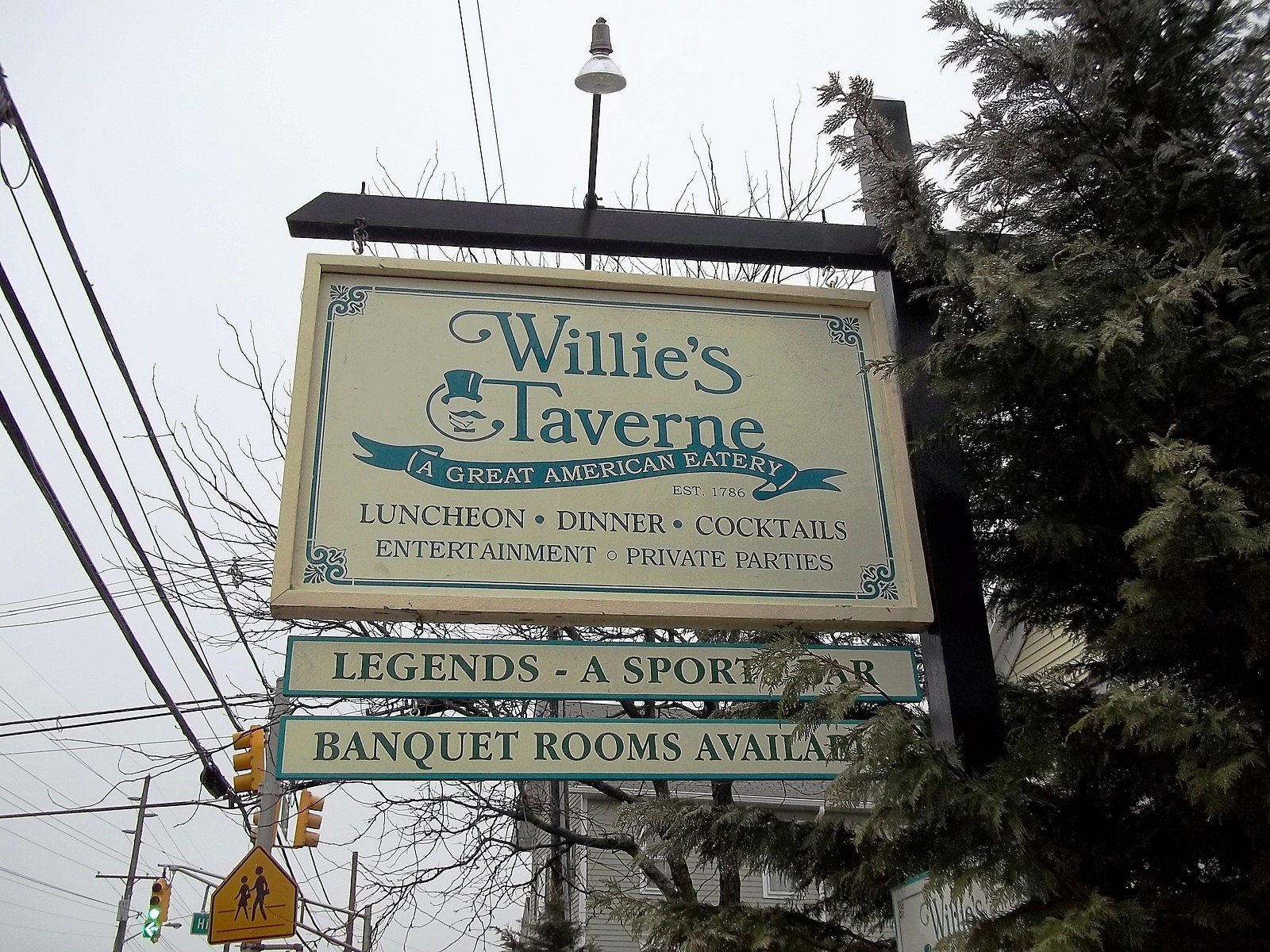
- In 1898, after retiring from Charles Pfizer, Willie and his wife, Bertha, bought the Bedminster Hotel, which later became the Howard Hotel and served as the forerunner to Willie’s Tavern. Howard also owned the Peapack Hotel. Willie Howard had another hobby – “cock fighting “. He set up many coops in secluded spots in the back of the Pfizer kennels. “Each Sunday morning he started with an old mattress over his head and went the rounds, stopping at each coop to toss the birds about…to strengthen their feet and wings.”(Recollections of the Essex Hunt) (Photo circa 1905). Willie was a huntsman and had a favorite horse, “Ninette”. After being thrown from Ninette so many times, Willie was nicknamed the “India Rubber Man.” He named his youngest daughter after Ninette and even buried Ninette (the horse) behind the Bedminster Inn (aka Willie’s Tavern).
- 1896 – Essex Hounds Meet – October 1896
- October 10- Morristown Green
- Wednesday, October 14th, Basking Ridge
- Saturday, October 17th, Washington Valley
- Wednesday, October 21st, New Vernon
- Saturday, October 24, Bernardsville
- Wednesday, October 28, Lyons
- Saturday, October 31st, Far Hills
- George P. Messervy, temporary Acting Master)
*Recollections of the Essex Hunt – Frederick W. Jones
- 1896 – Pfizer purchases George Seney’s estate (actually, it was in the hands of his son, Robert Seney, and his Somerset Land Company) at the corner of Mendham and Pfizer Road in Bernardsville: a stone house built for Robert Seney, son of George Seney, in 188. The architects were Lamb and Rich of New York. Yademos (sometimes spelled backward), built by George Seney, sits directly across the street from The Maples, on the corner of Mendham Road near Lloyd Road in Bernardsville.
- 1899 – Pfizer Jr. organizes the first Polo Club in Bernardsville. The Polo Club was situated next to what is today’s Bernardsville Middle School (141 Seney Drive, Bernardsville)
- 1900 – Pfizer Pharmaceuticals Incorporated and Charles Pfizer Jr. became the company’s first President.
- 1902 – Charles Pfizer Jr. purchases Upper Kennel Property (Approximately 150 acres). The property is where The Willow School sits today, just off Pottersville Road in Gladstone.
- 1903 – 20 millionaires on Wall Street incorporate the Whippany River Club of Morristown. The Club certainly influenced the later development of the Essex Hunt Club. The Whippany River Club burned to the ground in 1913 and was disbanded.

- 1905 – President of Pfizer and Company since 1900, Charles Pfizer’s title was strictly honorary. In 1905, the Board of Directors, consisting of Charles Pfizer Sr., his brother Emile, William Erhart, and John Anderson (CEO), demanded and received Charles Jr.’s resignation. The resolution said he was to cease from in any way participating in the business of Charles Pfizer & Company.”Pfizer Website Notes: – “Emile Pfizer was made President at a special Board meeting held at the end of 1905, when his elder brother Charles Pfizer, Jr., noted huntsman and cross-country steeplechase rider with no real interest in the business, was asked to resign as President and director.”
- 1907 -1908 – Women are permitted to participate in hunts. However, they were not allowed to be members or attend the annual Farmer’s Day Outing.
- 1909 – Charley Pfizer could no longer afford to support the Essex Hunt Club, thus turning over interest in the Club to interested members. (1913 Essex Fox Hounds are Incorporated)
- 1910 – Charles Pfizer and Nana E. (wife) purchased the John S. Miller farm, a 128-acre farm and Miller house, just off Holland Road near Vliettown, in Peapack, New Jersey. John Honeyman, the grandson of John Honeyman, a noted spy for General Washington during the Revolutionary War, had once owned the farm. FYI, Honeyman also had another farm on Long Lane in Bedminster.
- 1912 – A fire destroys the Lower Kennel clubhouse, and it is not rebuilt. The large old stone barn was converted into an apartment, and the former stable into a single-family home.
- In 1912, Charles Pfizer Jr. handed over the rights to the Essex Hounds to a new committee (see below) because of severe financial troubles caused by WW1, as his family’s company (Pfizer) was originally based in Germany. He relinquishes ownership of the Essex Hounds.
June 6, 1912 – Peapack and Gladstone set off from Bedminster Township and incorporated as an independent twin Borough.
- 1912 – Barny Schley’s Beagles mentioned as a “drag” for mounted followers in Far Hills. (A History of the Pack of Harriers, Beagles, and Bassets in New Jersey) Known to some as “beagling”.
- January 8, 1913 – Certificate of Incorporation officially changes the name to the Essex Fox Hounds, officially separates from the Essex Hunt. Barney Schley and Bill Larned become Joint Masters. A. Fillmore Hyde becomes Master later in the year 1913 and serves for fifteen years.

The Essex Hunt Club Incorporates
February 10, 1913 – At the offices of Moore & Schley in NYC the Essex Fox Hounds committee meets, where Freddie Bull (owned Greenacres Estate in Bedminster-Turpin) is unanimously elected President. The new Hunt Club is separated from the Essex Hunt Club and the Essex Fox Hounds is created. They sign a three year lease for Pfizer Jr’s 128 acre “John S. Miller farm” at Peapack and the old Miller house is remodeled as the new clubhouse. While this picture shows an actual hunt in 1916, the building in the background is “The Club House”. Each trustee pays $100 to join the Board. Trustees were: Percy R. Pyne, Clarence B. Mitchell, Kenneth Schley, George Messervy, Ogden Hammond, R. H. Williams, Jr., Arthur Turnbull, William Larned, Seymour Cromwell, Arthur Whitney, Fred W. Jones, Ben. Nicoll, W. S. Richardson, Arthur Fowler, and Charles Pfizer. (Arthur Fowler is the first Secretary, and Seymour Cromwell is appointed Chair)
Essex Hunt Club archives
- 1913 – Upper Kennel Property that Charles Pfizer Jr .owned is sold to James Cox Brady and becomes part of his Hamilton Farm. (Approximately 150 acres) which later gets sold off to become the Willow School.

1914-1920 – First World War
- 1914 – A kennel fire burns the Lower Kennels at the Old Chester Road farm of Charles Pfizer. (Fred Jones’ book).
1914 – Farmers’ Day Race
October 24, 1914 – The Farmers’ Day Race is held for the first time, Saturday, 2 PM, October 23, 1914, under the sanction of The Hunts Committee of The National Steeplechase and Hunt Association and sponsored by the Essex Fox Hounds at “The Club House”, Peapack, NJ.

The course started at the crest of a hill on Dr. Henry Lance’s farm, ran through Frederick Bull’s farm, Mrs. George Messervy’s, and land leased by the Essex Fox Hounds. After a glorious dinner served outside the Clubhouse at approximately noon, over 200 farmers and guests climbed the hillside to view the event. The main race was the Whippany Challenge Cup, transferred from the Whippany River Club in Morristown to the Essex Fox Hounds until an owner wins it three consecutive times. Prize money was set at $150, and registration was limited to bona fide hunters owned by members of the Essex Fox Hounds or Essex Hunt. The course was about 3 1/2 miles and featured 30 fences. Five horses started the event. Shelton E. Martin’s Miss Meadows beat Nina by a neck, denying Charles Pfizer outright ownership of the Cup (he had two wins on record).
- 1915 – R.V.N. Gambrill moves his Vernon Somerset Beagles to where the Essex Fox Hounds were being kenneled in Peapack, New Jersey.
The New Jersey Hunt Cup – October 23, 1915
- October 23, 1915 – First New Jersey Hunt Cup is held as part of the Farmers Day Race at what is known as the Far Hills Fairgrounds (the site of the annual VNA Rummage Sale). “Second Annual Farmers’ Day Race Meeting” was held October 23, 1915 – three years after the first – and featured the very first Running of the New Jersey Hunt Cup. Between 500 and 600 guests attended the event, which began with an elaborate luncheon, served under large tents. Sanctioned by the National Steeplechase and Hunt Association, the official program described its mission as “to provide a course to test the qualities of a hunter; the steeplechases will be laid over a fair hunting country (Post and Rail).”


The race was for horses owned and ridden by members of recognized hunt clubs or the U.S. Army. Arthur Fowler (jockey: Mr. George Gilder) easily won on Oxygen. In addition to this trophy, the President of the Essex Fox Hounds (Freddie Bull) presented a challenge Cup, which becomes the property of the owner who wins the Cup three times. The course was over 4 miles of fair hunting country. Of the six entries, four reached the post. Oxygen led for virtually the entire distance and eventually won by over thirty lengths. (NY Times -Oct. 24, 1915)
- May 1916 – The John Miller Farm land on Peapack Road is sold from William Larned’s Security Land Company (Bill Larned was Joint Master with Barney Schley back in 1912) to the Essex Fox Hounds Realty Company (member-owned corporation) for $20,000, which becomes the last eventual Essex Hunt Club (and current site). The site was previously leased from Charley Pfizer under a three-year deal.

- 1916 – The New Jersey Hunt Cup moves to Grant Schley’s Froh-Heim Estate in what was then part of Bernards Township (today it is Far Hills/Bedminster). The New Jersey Hunt Cup race remains on the Far Hills Race Meeting race card today. However, the first race was always the Farmer’s Race.


The event became known as the Essex Fox Hounds Race Meeting, a two-day event patterned after the English agricultural shows of the time. (McGraw email). Photo – Turpin Book
- 1917-1918 – Essex Fox Hounds Race Meeting is canceled due to World War 1. True, the winner was announced for the New Jersey Hunt Cup.
- 1917 – Grant Schley dies, and son Evander B. (known as Van / 1883-1952) takes ownership of Froh Heim, tears it down, and builds a new Spanish-style Froh Heim (still on the farm today).
1918 – Federal progressive income tax and the inheritance tax were enacted. This was one of the biggest blows to the Somerset Hills landed gentry.
- February 11, 1920 – Charles Pfizer Jr. sponsors the first Farmer’s Day outing at 1:00 PM in Pottersville at the Pottersville Hotel (built by Whisky Hank (Henry) Fleming – later renamed the Sutton Hotel), as a stag affair (men only). The Black Diamond Quartet provided music, and over 300 farmers were present. (Frederick Jones – Recollections of the Essex Hunt) February 11 was a Friday. Photo courtesy of the Somerset County Historical Society. November 1921 – The Essex Fox Hounds Race Meeting, which previously had been held in Bedminster, moved to Froh-Heim. More than 2,000 people came to see the fourth Running of the New Jersey Hunt Cup Race – it rained. (Quoted: Far Hills website). It is actually the fifth Running.

(Property is later known as the Pottersville Hotel)

1921 – Far Hills secedes from Bernards Township and becomes its own Borough.
1924 – Bernardsville splits from Bernards Township and becomes its own town.
- 1928 – Charles Pfizer dies, and his properties pass to his brother Emile, who builds a house on the Northern end of the Lower Kennel by the Polo Grounds. For many years, this was known as Dr. Bernard Sugarmann’s home.
1929 – Great Depression strikes hard on the Somerset Hills
- November 30, 1933 – The First Running of the Charles Pfizer Jr. Cup Race was held on Thanksgiving Day.

- May 1936 – The Essex Fox Hounds Club is one of only four establishments permitted to sell Apple Jack to its patrons. The other three were the Gladstone Hotel, the Peapack Hotel, and H. LLouisDebus.
1941-1945 – World War II
- 1942-1945 – Essex Fox Hounds Race Meeting is canceled due to World War II. True, the winner’s prize was posted for the New Jersey Hunt Cup.
- 1946 – The Essex Fox Hounds Race Meeting resumes after World War II.
- 1946 – Walk-ins had free entry, while subscribers paid $10 per car, equivalent to $132 today. In 2019, general admission tickets start at $100 in advance, $200 on race day, and reserved parking tailgate spaces start at $475.
- 1953 – The New Jersey Hunt Cup is not run. Why? (We’re not sure)
- 1954 – William Bassett purchases Froh-Heim two years after Evander Schley’s death and renames the estate Moorland Farm after a property his mother purchased in nearby Pottersville (Bedminster). The property originally belonged to the Moore family and is now part of the Purnell School grounds.

- 1954 – Somerset Medical Center of Somerville, NJ, becomes the primary benefactor of the Far Hills Race Meeting. Previously, the event’s proceeds funded the Essex Fox Hounds. It was said that if the social aristocrats wanted to engage in public libations and equine activities, they at least should benefit a worthy cause. The organizers first offered the opportunity to Morristown Memorial, which declined. The second request was made to the Somerset Medical Center in Somerville, which gratefully took the organizers up on the offer (J. von Stade discussion / 2006)
- 1964 – John von Stade becomes a race committee member. The NJ Hunt Cup is also declared VOID.
- 1977 – AT&T Long Lines purchases what is now the Clarence Dillon Library and Moorland Farms, home of the Far Hills Race Meeting steeplechase and Midland Run.
1985 – The Essex Fox Hounds Race Meeting name changes and becomes the Far Hills Race Meeting. (McGraw)
- 1987 – The U.S. Grand National Steeplechase becomes a race within the Far Hills Race Meeting. The most significant race in this country, the U.S. Grand National dates to 1899 at Morris Park, and was held for many years at Belmont Park. Now serving as the Breeders’ Cup Grand National, its presence at Far Hills says a lot about how the sport, and the venue, have grown. Purses at Far Hills reached over half a million dollars, and ESPN2 covered the races nationally.
- 1998 – AT&T announces it will sell the 175-acre Moorland Farms to the nonprofit Far Hills Race Meeting Association (FHRMA). In addition to 75 additional acres in Bedminster, the contract placed restrictions on the land, requiring it to be preserved as permanent open space. If the FHRMA ever sells the property, it can be developed into no more than 15 units on lots of at least 10 acres.
- 2000 – The Breeders’ Cup Steeplechase returns to the Far Hills Race Meeting after a hiatus. The event later became the Breeders’ Cup Grand National Steeplechase. (Verify in FHRM 2006 booklet). October 25, 2000 | Led by Kentucky Derby winner Fusaichi Pegasus, a record 135 horses pre-entered for the 17th Running of the Breeders’ Cup. In addition, a record 18 horses supplemented the event, boosting the total of purses and awards for the eight races to more than $15 million.
- October 22, 2005 – McDynamo dominated the $200,000 Grade I Breeders’ Cup Steeplechase, winning North America’s richest steeplechase for the third consecutive year, the first horse to do so in the 14th Running of the race. In the process, the 8-year-old son of Dynaformer halted a five-race losing streak and leaped into the race for the 2005 Eclipse Award as champion steeplechaser. McDynamo completed the 2 55/8-milecourse, softened by intermittent rain, in a slow 5:46 3/5, almost 53 seconds off the track record of 4:53 4/5 set by All Gong (GB) in 2000 over a firm course.

- 2005 – Funds raised from the 2005 races benefited The Steeplechase Cancer Center at Somerset Medical Center. Over the past 51 years, the Far Hills Race Meeting Association has donated more than $16 million to the medical center through the Somerset Medical Center Foundation, making it one of the state’s most successful fundraisers. In recognition of the association’s long-standing support, the medical center named its new cancer center in the association’s honor. The Steeplechase Cancer Center, opened in November, houses the latest cancer-treatment technologies, the medical center’s research team, the Sanofi-Aventis Breast Care Center, oncologists’ offices, and an oncology pharmacy.
- 2005 – John von Stade, the longest-tenured President in the history of the National Museum of Racing and Hall of Fame, completes 16 years of service and resigns. The museum’s eighth President, von Stade, 67, will succeed Martha Gerry as chairman of the museum’s Board of Trustees. PH (908) 953- 8375. John has also chaired the Somerset Medical Center Foundation and the Far Hills Race Meeting Association.

- September 29, 2006 – Somerset Medical Center Steeplechase Race for Cancer Awareness is held 1 month before the Far Hills Race. $75,000. Winner – McDynamo. Place – Show.
- 2006 – Simms Jewelers is the official engraver of all Far Hills Race Meeting trophies.
- October 28, 2006 – 86th Running of the Far Hills Race Meeting (makes it beginning in 1920?). Total purse: $600,000. 6 races in total. $75,000 Appleton, $75,000 New Jersey Hunt Cup, the Grade II Foxbrook Supreme Hurdle ($100,000), and the $250,000 Breeders’ Cup Grand National. The Breeders’ Cup is the richest steeplechase event in the country. More info… click here.
- 2006 – The New Jersey Hunt Cup is actually called the Arthur Fowler Trophy, named for the first winner of the New Jersey Hunt Cup in 1915. Arthur was also the first Secretary of The Essex Fox Hounds, which became incorporated in 1913.
- October 20, 2007 -87th Running of the Far Hills Race Meeting. If this were a chronological event, going back 87 years, it would place 1920 as the first year. But the first was in 1915 (the NJ Hunt Cup’s first), so the event must have been skipped for 6 years. The answer must be that the first event is recorded as 1915 (the first NJ Hunt Cup). 93 years have passed, and with this year being the 87th Running, the event was not held. six times 1917, 1918 (WW1), 1942,1943,1944,1945 (WW2)
- 2014 – One year after security was beefed up and new alcohol restrictions were put in place to curtail underage drinking and rowdy behavior at the annual Far Hills Race, race organizers have increased the price of general admission tickets to help defray the added cost. This year, general admission tickets to the 94th annual Far Hills Race steeplechase on Saturday, October 18, at Moorland Farm increased from $60 in 2013 to $100. Parking will remain $30.
- 2018 – “The wagering experience is yet another way for our fans to enjoy and be intimately involved in our races, which, every year, draw top horses from the United States and overseas,” Far Hills Race Meeting Chairman Guy J. Torsilieri said in a statement. Tickets are now $200 at the gate and $100 in advance.
New Jersey Hunt Cup Winners
Unlike the Breeders’ Cup race, the New Jersey Hunt Cup is “the premier” horse race in America. Starting in 1915, it is the oldest American steeplechase race.
- HORSE WGT RIDER OWNER TRAINER PURSE
- 2019 – FEARSOME (GB) 151 Nagle, D Irvin S. Naylor Cyril Murphy 30,000
- 2018 – TWO’S COMPANY (IRE) (L) 155 McDermott, S Bruton Street-US Jack Fisher 30,000
- 2017 – WHERE’S THE BEEF (L) 160 Mark Beecher Welcome Here Farm Ivan Dowling 30,000
- 2016 – LE CHEVALIER (L) 165 Mark Beecher Otter Racing Julie Gomena 30,000
- 2015 – EBANOUR (IRE) 165 Gustav Dahl Irvin S. Naylor Cyril Murphy 30,000
- 2014 – HOT RIZE (L) 165 Willie McCarthy Holston Hall Russell Haynes 30,000
- 1991-2015 (researching)
- 1990 Monkton Stables’ “Pacific Parley,” 155 lbs. (Joseph Gillet)
- 1989 Sheila Williams'”Call Louis”, *165 (Jack Fisher)
- 1988 Sheppard Worrall Stable’s “Von Csadek,” 163 lbs. (PatrickWorralll)
- 1987 Foxbrook Farm’s “Freeman’s Hill,” 160 lbs. (William Meister)
- 1986 Mrs. J. Maxwell Moran’s “Tom Miller (IRE),” 163 lbs. (Anne Moran)
- 1985 Tee Pee Stables “Exploding Fortune.” 168 lbs. (Jeff Teter)
- 1984 Mrs. Miles Valentine’s “Cancottage (GB),” 165 lbs. (Joy Carrier)
- 1983 Jeremy Gilliam’s “Redgate,” 164 lbs. (Jeremy Gilliam)
- 1982 W. Wallace Lanahan, Jr.’s “Sam Son of a Gun,” 168 lbs. (C.C. Fenwick)
- 1981 W. Wallace Lanahan, Jr.’s “Sam Son of a Gun, “176 lbs. (Charles Fenwick, Jr.)
- 1980 Mrs. Miles Valentine’s “Cancottage (GB),” 165lbs. (Joy Slater)
- 1979 Mrs. Miles Valentine’s “Cancottage (GB),” 165lbs. (Joy Slater)
- 1978 Charles S. Bird, Jr.’s “Christmas,” 161 lbs. (R.P.S. Hannum)
- 1977 Helen Polinger’s “All There Is,” 156 lbs. (RossPearce)
- 1976 Foxbrook Farm, “Devil’s Brolly,” 157 lbs. (Reese Howard, Jr.)
- 1975 Mrs. Rosalie Culver’s “Dosdik,” 165 lbs. (Charles Fenwick, Jr.)
- 1974 H. Turney McKnight’s “Still In All,” 173 lbs. (A. Riker)
- 1973 Rokeby’s Stable’s “Chapel Street,” 170 tbs (L.Neilson)
- 1972 Mrs. H. Nelson Slater, “Devil’s Brolly,” ** 152lbs. (Mr. R. Howard, Jr.)
- 1971 Charles C. Fenwick, Sr.’s “Happy Orphan,” ** 162 lbs. (Mr. C.Fenwick)
- 1970 Mrs. Nelson Slater Jr.’s “Stutter Start,” 160 lbs. (Mr. K. Freeman)
- 1969 George T. Weymouth’s “Island Stream,” 168 lbs. (Mr. J.R.S. Fisher)
- 1968 Redmond Stewart, Jr.’s “Haffaday,” 171 lbs. (Mr. L. Nielson, 111)
- 1967 Mrs. Nelson Slater Jr.’s “Stutter Start,” 159 lbs. (Mr. C. Meister, Jr.)
- 1966 David L. Ferguson’s “Leeds Don,” 168 lbs. (T. Walsh)
- 1965 Russell B. Jones, Jr.’s “Boating Party,” ** 146 lbs. (Mr. R. Jones, Jr.)
- 1964 Race declared void
- 1963 Woodcrest’s “Red Lion Mike,” 157 lbs. (Mr. B.Tagg)
- 1962 T.B. Glynn’s “Allan Adale,” 153 lbs. (R. Woolfe); 1961 Bliss Flaccus’ “Trout Line,” 163 lbs. (R. Houghton)
- 1960 Mrs. Wilfrid Wood’s “Latin Lancer,” 146 lbs. (Mr. L. Neilson, 3rd)
- 1959 Miss Audrey Riker’s “Golden Fly,” 155 lbs. (Mr.B.H. Murray)
- 1958 Alfred H. Smith’s “Grand Chat,” 168 lbs. (J. Aitcheson, Jr.)
- 1957 Mrs. Henry Obre’s “Coupe de Vite,” 164 lbs. (K.Field)
- 1956 Mrs. C.P. Denckla’s “Ned’s Flying,” 149 lbs. (Mr. P. Fanning)
- 1955 Charles Cann’s “Galant Ship,’ 161 lbs. (Mr. Charles Cann)
- 1954 Mrs. Wm. J. Strawbridge’s “Lands Corner,” 161lbs. (Mr. B. Murray)
- Not run 1953.
- 1952 G.T. Weymouth’s “Done Sleeping,” 168 lbs. (Mr.E. Weymouth)
- 1951 Bliss Flacus’ “McGinty Moore,” 168 tbs (M. Ferral)
- 1950 Mrs. John Strawbridge, Jr.’s “Jester’s Moon, ” 161 lbs. (Mr. W. Dixon)
- 1949 Mrs. Simon T. Patterson’s “The Cardinal 2 nd, “157 lbs. (Mr. E.Weymouth)
- 1948 Lee L. Chandler III’s “Royal Mission,” 159 lbs. (Mr. G. Stephens)
- 1947 Mrs. C.S. Richard’s “Tino Wave,” 158 lbs. (Mr. J. Arthur)
- 1946 John Strawbridge’s “Bungtown,” 165 lbs. (Mr.F.H. Powers, Jr.)
- Not run 1942 through 1945 (WWII)
- 1941 Mrs. Frank M. Gould’s “Hold Forth,” 165 lbs. (Mr. N. Cleland)
- 1940 C.E. Tutle’s “Blockade,” 157 lbs. (Mr. J.F. ColwiI4
- 1939 Allison Stern’s “Lucier,” 165 lbs. R.G. Wolfe)
- 1938 John Strawbridge’s “Coq Bruyere,” 165 lbs. (Mr.G. Strawbridge)
- 1937 John Strawbridge’s “Coq Bruyere,” 165 lbs. (Mr.R.P. Hamilton)
- 1936 Mrs. Frank M. Gould’s “Ostend,” 165 lbs. (Mr.R.G. Duffey)
- 1935 Northwood Stable’s “Indigo,” 165 lbs. (Mr. C.R.White)
- 1934 Mrs. T.H. Somerville’s “Trouble Maker,” 165 lbs. (Mr. N. Laing)
- 1933 Carieton H. Palmer’s “Round du Roi,” 165 lbs. (Mr. E.H.B. Allen)
- 1932 Howard Bruce’s “Hubar,” 165 lbs. (Mr. R.G. Woolfe) 1931 W. Congreve Jackson’s “Sennarcherib,” 165 lbs. (Mr. F.C. Thomas)
- 1930 Howard Bruce’s “Hubar,” 165 lbs. (Mr. G. Blakiston)
- 1929 Mill Creek stable’s “Sea Soldier,” 165 lbs. (Mr. Rigan McKinney)
- 1928 Mrs. M.K. Stevenson’s “Alligator,” 165 lbs. (Mr.F.C. Thomas)
- 1927 Howard Bruce’s “Billy Barton,” 165 lbs. (Mr.A.G. Ober, Jr.) 1926 F. Ambrose Clark’s “Moccasin,” 165 lbs. (Mr. A.C. Bostwick)
- 1925 A. Filmore Hyde’s “Bulgar,” 165 lbs. (Mr. W.F.Sabater)
- 1924 Mrs. A.C. Burrage’s “Stilts,” 165 lbs. (Mr. A.C. Burrage, Jr )
- 1923 Mrs. M.M. Maddux’s “Oracle It,” 165 lbs. (Mr. R. Belmont)
- 1922 R.B. Strassburger’s “Wolferton II,” 162 lbs. (Mr. E.M. Cheston)
- 1921 R.B. Strassburger’s “Wolferton [1,” 165 lbs. (Mr. C.N. Kline)
- 1920 R.B. Strassburger’s “Wolferton If,” 165 lbs. (Mr. WT. Fleming)
- 1919 Welsh Strawbridge’s “River Breeze,” 165 lbs. (Mr. W. Strawbridge)
- No Run 1917-1918 (WW1)
- 1916 Nicholas L. Tilney’s “Wayside”
- 1915 Arthur A. Fowler’s “Oxygen,” 165 lbs. (Mr. G. Gilder)
*Recollections of the Essex Hunt – Frederick W. Jones
Winners – Grand National (Breeders Cup) Steeplechase at Moorland Farm
The 2 5/8-mile may not be the oldest race; the NJ Hunt Cup is the circuit’s oldest, but it certainly pays the most!
- 2025 – ZANAHIYR (IRE) (8) – Jockey Jack Kennedy, trainer Gordon Elliott, owner Bective Stud. Winning time: 5:20.00. On October 18, Zanahiyr captured the $250,000 Grade 1 American Grand National, defeating Ballysax Hank in a thrilling finish. Elliott dominated the Far Hills meeting with five victories.
- 2024 – SNAP DECISION (USA) (10) – Jockey Graham Watters, trainer Jack Fisher, owner Bruton Street-US. Winning time: 5:02.86. On October 19, Snap Decision won the $250,000 Grade 1 Grand National, edging Irish challenger Galvin by a neck after several previous attempts to capture the prestigious race.
- 2023 – NOAH AND THE ARK (IRE) (9) – Jockey Harrison Beswick, trainer Todd McKenna, owner Keystone Thoroughbreds. Winning time: 5:41.28. On October 21, Noah And The Ark captured the $250,000 Grade 1 American Grand National at Far Hills, defeating Merry Maker and Seddon in an upset victory over yielding turf.
- 2022 – Hewick and jockey Jordan Gainford flawlessly circled the Far Hills course to cover the 2 5/8-mile distance in 5:11.60 over yielding turf. Trainer: John Hanlon. Run over a trip of 2 5/8m over 14 fixed hurdles, the American Grand National is a Grade 1 event for 4+ year-olds. Hewick (IRE) was the favorite.
- 2021 – THE MEAN QUEEN (5) (IRE) -Jockey Richard J. Condon – trained by Keri Brion. Bred in Ireland by Kevin Purfield. The Irish-bred five-year-old became the first female winner of the Grand National in nearly a century,
- 2020 – Canceled due to COVID-19
- 2019 – BRAIN POWER (IRE) (L) 156 de Boinville, N Michael Buckley Nicholas Henderson 270,000
- 2018 – Jury Duty (7) Robbie Power Gordon Elliott (IRE) Sideways Syndicate 5:14.20
- 2017 – Mr. Hot Stuff (11) Danny Mullins Jack O. Fisher Mrs. S. K. Johnston, Jr. 4:42.40
- 2016 – Rawnaq (9) Ruby Walsh Cyril Murphy Irvin Naylor 4:50:00
- 2015 – Dawalan (5) Ross Geraghty Cyril Murphy Irvin Naylor 4:57.20
- 2014 – Demonstrative (7) Robert Walsh Richard Valentine 5:19.00
- 2013 – Divine Fortune (10) Darren Nagle Jonathan E. Sheppard 5:15.00
- 2012 – Pierrot Lunaire (8) Bernard Dalton Blythe Miller Davies 5:40.00
- 2011 – Black Jack Blues (8) Ross Geraghty Joseph W Delozier III Irvin S Naylor 5:29.80
- 2010 – Percussionist (9) James O’Farrell Hanne Bechmann 5:00.40
- 2009 – Your Sum Man (7) Ross Geraghty Thomas H. Voss Fields Stable 5:39.78
- 2008 – Good Night Shirt (7) William Dowling Jack Fisher Harold A. Via, Jr. 4:54.20
- 2007 – McDynamo (10) Jody Petty Sanna Hendriks Michael J. Moran 5:30.60
- 2006 – McDynamo (9) Jody Petty Sanna Hendriks Michael J. Moran 5:58.20
- 2005 – McDynamo (8) Jody Petty Sanna Hendriks Michael J. Moran 5:46.65
- 2004 – McDynamo (7) Thornton 156 Hirapour (Ire) (8) 156 Sur La Tete (6) 156
- 2003 – McDynamo (6) Thornton 156 Pelagos (FR) (8) 156 Mullahen 156
- 2002 – Flat Top (9) Massey 156 Tres Touche (5) 156 All Gong (GB) (8) 156
- 2001 – Quel Senor (Fr) (6) Murphy 156 Lord Zada (8) 156 Praise The Prince (6) 156
- 2000 – All Gong (GB) (6) B. Miller 156 Popular Gigalo (6) 156 Allgrit (5) 156
- 1993 – Lonesome Glory (5) B. Miller 156 Highland Bud (8) 156 Mistico (7) 156
- 1992 – Highland Bud (7) Dunwoody 156 Mistico (6) 156 Sassello (5) 156
- 1991- Morley Street (7) Frost 156 Declare Your Wish (5) 156 Cheering News (4) 146
- 1990 -Morley Street (6) Frost 156 Summer Colony (7) 156 Moonstruck (7) 156
- 1989 – Highland Bud (4) Dunwoody 146 Polar Pleasure (7) 156 Victorian Hill (4) 146
- 1988 – Jimmy Lorenzo (6) McCourt 156 Kalankoe (7) 153 Polar Pleasure (6) 156
- 1987 – Gacko (6) Duchene 156 Inlander (6) 156 Gateshead (8) 156
- 1986 – Census (8) Teter 156 Kesslin (6) 156 Pont du Loup (6) 156
Related Stories & History
The ultimate Essex Hunt Club book – The Essex Fox Hounds: A Look through Time, Gretchen W. Johnson


