
Eating Your Way Through New Jersey History
Long before New Jersey had diners, highways, turnpikes, or even became a state, the local tavern often served as the center of community life. These were places where a traveler could find a hot meal and a bed, where stagecoaches stopped, news was exchanged, business was conducted, and neighbors gathered around the fire. During the American Revolution, taverns and inns became even more important as soldiers, messengers, politicians, merchants, and ordinary citizens moved through the state. Some of those gathering places remarkably survive.
So the Mr. Local History researchers decided to turn history into a road trip. We tracked down 25 of New Jersey’s oldest restaurants, taverns, and inns still serving today, researched their stories, mapped their locations, and created our “Eat Your Way Thru New Jersey History” Punch Card. Start with one or make it your mission to visit all 25. Get the punch, order something good, look around the room, and think about everyone who passed through those doors before you.
History is still being served in New Jersey. All you have to do is pull up a chair.
Let’s start with the interactive map – We’ve added the marker, location, name, directions, year, and link so it’s a great resource to come back to. Then on to the details.
Mr. Local History’s Top 25 New Jersey Historic Restaurants, Pubs, Taverns, Inns
Today, you can still walk through their doors. You can have dinner in buildings that welcomed travelers before the Declaration of Independence, sit in rooms connected to Revolutionary War stories, and raise a glass in establishments that have watched New Jersey change for centuries. Some have operated continuously, while others are historic inns and taverns that were restored or reinvented along the way. Together, they preserve something increasingly rare: history you can actually experience rather than simply look at.
You’ll notice some great burgers at these classic establishments. Pizza is big as well, and yes there are a few white tablecloth dining experiences. So grab the car keys and bring your appetite, because there’s great history all across the Garden State. It’s gonna be a fun ride, and you’ll get some great local history.
| County | Count | County | Count |
|---|---|---|---|
| Hunterdon | 7 | Monmouth | 4 |
| Gloucester | 3 | Mercer | 2 |
| Morris | 2 | Atlantic | 1 |
| Bergen | 1 | Middlesex | 1 |
| Salem | 1 | Somerset | 1 |
| Sussex | 1 | Union | 1 |
| TOTAL | 25 |
#25. Crossed Keys Inn — Andover (1850s)

Crossed Keys Inn Web Address: 136 Main St, Andover, NJ 07821; Phone: +1 973-786-0251
The Crossed Keys Inn stands in the historic Sussex County village of Andover, whose development was closely connected to the region’s iron industry. The inn has long served as a local gathering place and lodging for travelers. I have not found a sufficiently documented famous Revolutionary-era visitor or major national event to attach to it, so we shouldn’t manufacture one. Today the restored inn combines lodging with a taproom and restaurant emphasizing American comfort food, pub fare, and drinks.
#24. The Globe Hotel Co — Red Bank (1844)

The Globe Hotel Co Web Address: 20 E Front St, Red Bank, NJ 07701 Phone: +1 732-842-5572
The Globe began operating as a hotel in 1844, after Tobias Hendrickson enlarged an earlier residence on the site. It became part of the commercial and social life of growing Red Bank, serving generations of travelers and locals. Rather than an upscale hotel dining room today, The Globe is a beloved old-school neighborhood sports bar, known for burgers, wings, sandwiches, beer, and classic pub food.
#23. FiNNBAR — Frenchtown (1838)

FiNNBAR Web Address: 7 Bridge St, Frenchtown, NJ 08825 Phone: +1 908-465-0021
Today’s FiNNBAR occupies the historic Frenchtown Inn/ Railroad House, whose hospitality history dates to 1838, when the arrival of transportation and commerce helped transform this Delaware River community. The historic building has had many identities, so FiNNBAR itself should not be described as an 1838 restaurant. Today it offers a much more contemporary experience: a seasonal, locally sourced menu influenced by Italian and Mediterranean cooking, with much of its mission tied to supporting the local Studio Route 29 arts community.
#22. The National Hotel — Frenchtown (1833/1850)

The National Hotel Restaurant and Bar Web Address: 31 Race St, Frenchtown, NJ 08825 Phone: +1 908-628-9833
An earlier inn known as the Sign of the Buck occupied the site by 1833; the property was rebuilt and became the National Hotel in 1850. Its story parallels Frenchtown’s emergence as an important Delaware River transportation and commercial community. Today the National continues the historic hotel-and-dining tradition with a restaurant and bar rather than functioning simply as a preserved historic building.
#21. American Hotel — Freehold (1824)
American Hotel Web Address: 18 E Main St, Freehold, NJ 07728 Phone: +1 732-431-3220
The American Hotel opened on Freehold’s Main Street in 1824, when hotels and taverns were essential stops for stagecoach travelers as well as centers of town life. Its location only adds to the historic atmosphere of a community deeply associated with the Revolutionary War and the nearby Battle of Monmouth. Today its restaurant, The Standard, serves an American bistro/steakhouse-style menu featuring steaks, seafood, and traditional American comfort dishes.
#20. Lambertville House — Lambertville (1812)

Lambertville House Web Address: 32 Bridge St, Lambertville, NJ 08530 Phone: +1 609-397-0200
Captain John Lambert, for whom Lambertville was eventually named, erected the tavern and hostelry in 1812. Its location near the Delaware River made it a natural stopping point as Lambertville developed into an important transportation and industrial community. The landmark survives as a boutique hotel with a restaurant and cocktail lounge, maintaining the building’s original combination of lodging, food, and drink.
#19. Publick House / PH Steakhouse — Chester (c.1810)

PH Steakhouse at the Publick House of Chester — Web Address: 111 Main St, Chester, NJ 07930 Phone: +1 908-955-7911
The building was erected as a tavern around 1810, when Chester was developing as a crossroads community. Its history wasn’t uninterrupted: from 1854 to 1870 it became the Chester Institute, a school, before returning to hotel and tavern use. That interruption matters in our story because this is a historic tavern building, not a restaurant that has operated continuously since 1810. Today the property continues its hospitality tradition with American steakhouse/tavern dining.
#18. Franklinville Inn — Franklinville (Before 1826)

Franklinville Inn Web Address: 2526 Delsea Dr, Franklinville, NJ 08322 Phone: +1 856-694-1577
This is one where we resist the commonly repeated “1790” date. Gloucester County’s history indicates that nobody knows precisely when the building was erected, but documentary evidence establishes a tavern here before 1826, when Phebe Cake petitioned to continue its license. That makes “before 1826” our safer historical date. Today the Franklinville Inn is known as an upscale traditional American restaurant, particularly for steaks, prime rib, and seafood.
#17. The Nottingham Tavern — Hamilton Square (c.1790)

The Nottingham Tavern Web Address: 9 Mercer St, Hamilton Square, NJ 08690 Phone: +1 609-587-6000
The Olde Nottingham Tavern dates to around 1790 and originally served travelers and residents in what became Hamilton Square. Its longevity illustrates how the colonial and early-American tavern evolved into the neighborhood bar. That’s essentially what “The Nott” remains today: a lively tavern serving pizza and classic pub food, with drinks, live music, DJs, karaoke, and sports.
#16. The Smithville Inn — Smithville (1787)

The Smithville Inn Web Address: 1 N New York Rd, Galloway, NJ 08205 Phone: +1 609-652-7777
The Smithville Inn building dates to 1787, but there’s an important catch: it wasn’t a restaurant for 239 uninterrupted years. The old inn eventually fell into abandonment before Fred and Ethel Noyes restored it and reopened it as a restaurant in 1952, helping spark the creation of today’s Historic Smithville. The restaurant now serves traditional American fare, with favorites including French onion soup and chicken pot pie, in its picturesque lakefront village setting.
#15. Moore’s Tavern & Sports Bar — Freehold (1787)

Moore’s Tavern & Sports Bar Web Address: 402 W Main St, Freehold, NJ 07728 Phone: +1 732-863-0555
Moore’s traces its tavern tradition to 1787, when establishments like this served residents, travelers, and the surrounding farming community. Its location in Revolutionary-era Monmouth County gives it an unmistakable historical setting, although we should distinguish documented events at the tavern from broader Battle of Monmouth history. Today it feels much more modern: a sports bar serving burgers, wings, wood-fired pizza, and other American pub favorites, along with live entertainment.
#14. Barnsboro Inn — Sewell (1776)

Barnsboro Inn Web Address: 699 Main St, Sewell, NJ 08080 Phone: +1 856-468-3557
Parts of the Barnsboro property may go back to an earlier 1720 log structure, but the date that matters for our restaurant story is March 19, 1776, when John Barnes received a tavern license. That dates its documented tavern life to the beginning of the American Revolution. Today, it remains a genuine neighborhood tavern with burgers, American entrees, beer, and cocktails, plus weekend brunches; Barnsboro Burger is a signature.
#13. Mt. Royal Inn — Mount Royal (1762)
Mt Royal Inn Web Address: 137 Kings Hwy, Mount Royal, NJ 08061 Phone: +1 856-423-3030
The Mt. Royal Inn dates to 1762, making it one of South Jersey’s surviving colonial-era hospitality sites. Because some of its earliest history comes from later historical accounts rather than a clear surviving tavern-license record, today it continues as a local tavern/restaurant serving casual American food and drinks.
#12. Pittstown Inn — Pittstown (1760s)

The Grill at The Pittstown Inn Web Address: 350 Pittstown Rd, Pittstown, NJ 08867 Phone: +1 908-735-0125
Originally associated with Hoff’s Mill, the inn was serving residents and travelers by the 1760s. During the Revolution, Pittstown became an important Continental Army supply center. Moore Furman, Washington’s Deputy Quartermaster General, owned much of the village and used Pittstown as a military supply depot. The tavern itself reopened under Furman in 1800 and was nearly destroyed by fire in 1913. Today the inn continues as a restaurant in this remarkable historic setting.

#11. Dutch House Tavern — Fair Lawn (c.1756)

Dutch House Tavern Web Address: 24-07 Fair Lawn Ave, Fair Lawn, NJ 07410 Phone: +1 201-796-9886
The Dutch House occupies a distinctive Bergen County sandstone building dating to roughly the mid-1700s, but this is another place where building age and restaurant age aren’t the same thing: it became a restaurant/tavern much later. Its architecture nevertheless connects today’s customers directly with Bergen County’s Dutch colonial landscape. Today it’s an unpretentious neighborhood bar and grill, particularly known for burger nite, onion rings, chili-topped nachos, and pub food.
#10. Nassau Inn / Yankee Doodle Tap Room — Princeton (1756/1759)
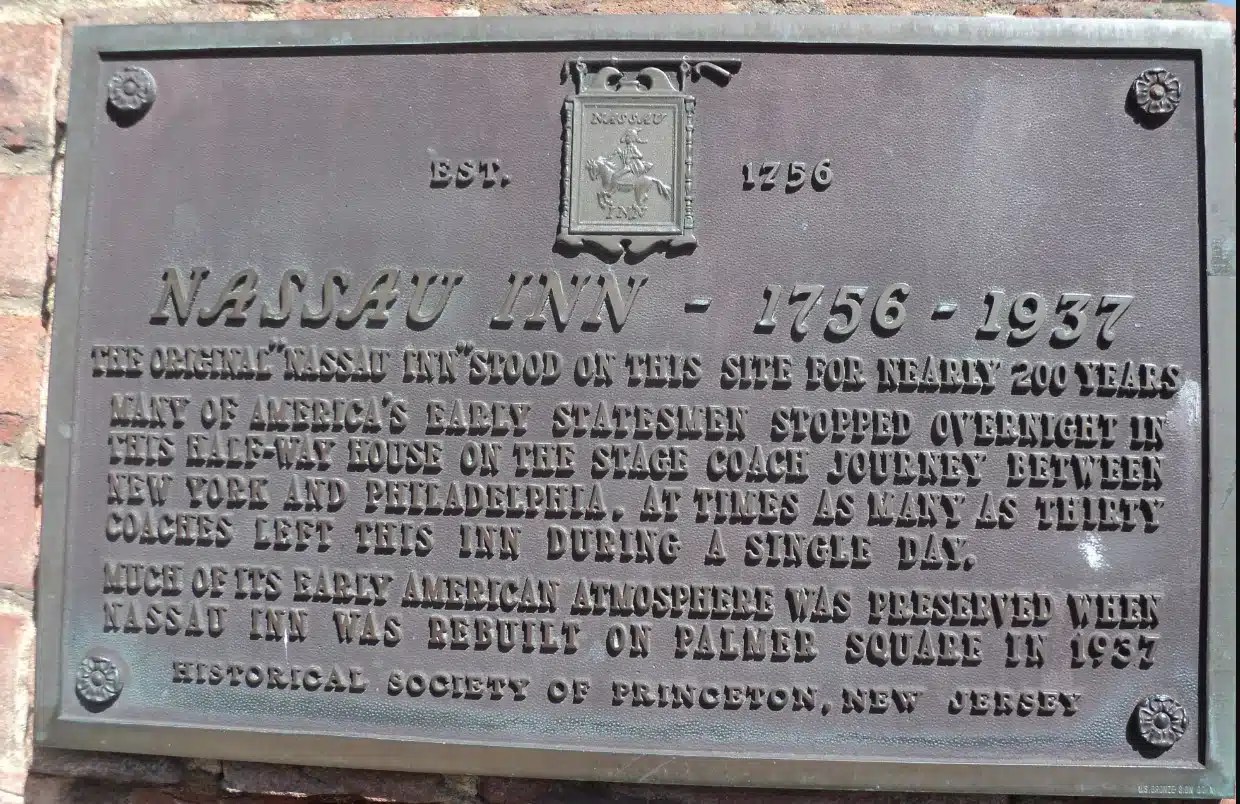
Nassau Inn Web Address: 10 Palmer Square E, Princeton, NJ 08542 Phone: +1 609-921-7500
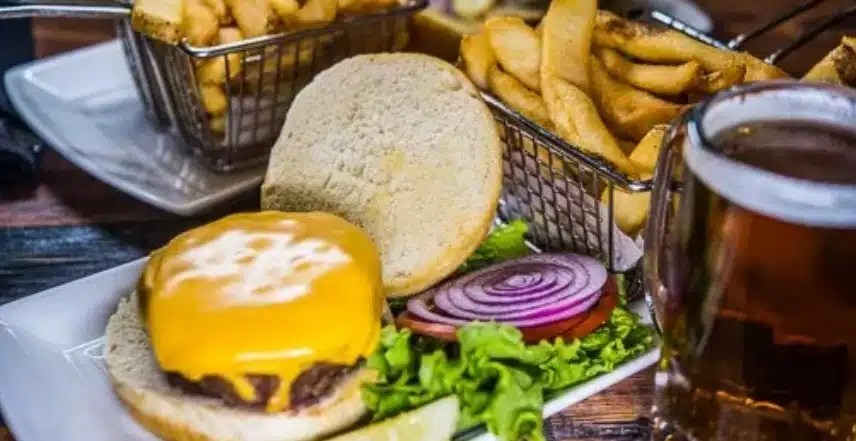
Few places on our list can compete with Nassau’s cast of characters. The original Princeton Inn welcomed figures including Paul Revere and Thomas Paine, and when the Continental Congress met in Princeton in 1783, prominent national figures stayed there. The current Palmer Square Nassau Inn replaced the original Nassau Street establishment in the 1930s, so again we’re following the institution’s history, not the age of the present building. Inside the Yankee Doodle Tap Room is a huge Norman Rockwell mural, and today’s menu features American gastropub fare, craft beer, and cocktails.
#9. The Cranbury Inn — Cranbury (1750s)

The Cranbury Inn Web Address: 21 S Main St, Cranbury, NJ 08512 Phone: +1 609-655-5595
The Cranbury Inn incorporates colonial tavern buildings traditionally dated to 1750 and 1765, reflecting Cranbury’s importance along early travel routes through central New Jersey. One of its most interesting later associations is Albert Einstein, whom the inn identifies as a frequent patron during Adrian Van Ravesteyn’s ownership. Today the Cranbury Inn remains a full-service American restaurant and event venue, with steaks, seafood and traditional favorites, plus an extensive beer and wine program.
#8. Rocky Hill Inn — Rocky Hill (1745)

Historic Rocky Hill Inn & Tavern Web Address: 137 Washington St, Rocky Hill, NJ 08553 Phone: +1 609-683-8930
The strongest date here isn’t simply the building: a tavern license was issued in 1745. Rocky Hill later became one of New Jersey’s most important Revolutionary locations because George Washington established his headquarters at nearby Rockingham in 1783, where he wrote his Farewell Orders to the Armies. We should describe that as nearby history rather than claim Washington ate at the inn without documentation. Today Rocky Hill Inn is known for creative American gastropub cooking, burgers, sandwiches, and craft beer.
#7. The Clinton House — Clinton (1743)
The Clinton House Web Address: 2 W Main St, Clinton, NJ 08809 Phone: +1 908-730-9300
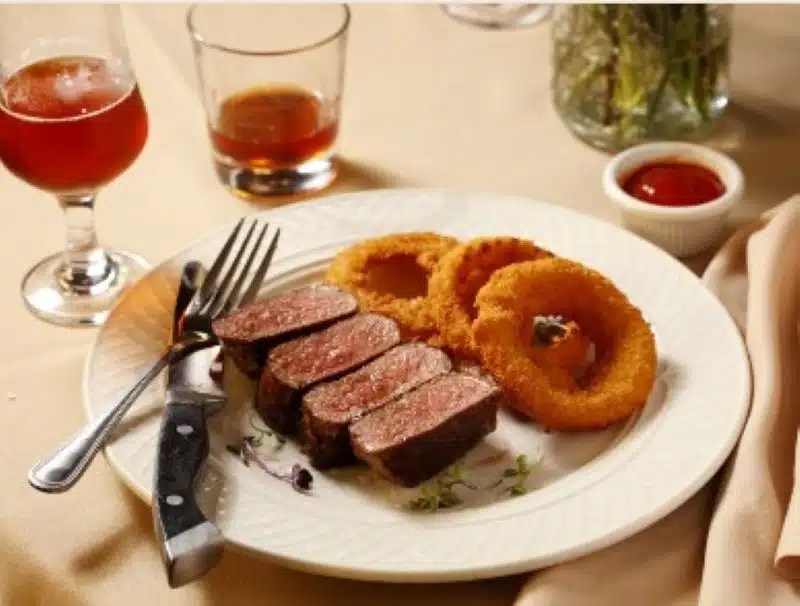
The Clinton House opened as an inn along the Old York Road in 1743, before Clinton even existed as an incorporated community. It fed and housed travelers moving between Philadelphia and New York, and later survived the canal and railroad eras as Clinton developed around them. Political meetings, weddings, and community business took place here over generations. Today it is an American steakhouse specializing in hand-cut steaks, fresh seafood, seasonal dishes, and an award-winning wine program.
#6. The Black Horse Tavern & Pub — Mendham (1742)

The Black Horse Tavern & Pub Web Address: 1 W Main St, Mendham, NJ 07945 Phone: +1 973-543-7300
Dating to 1742, the Black Horse has perhaps the strongest claim on this entire list: Mendham Borough describes it as New Jersey’s oldest continually operating restaurant. The building began as a stagecoach house and served travelers before and during the American Revolution. Today, its historic identity remains central to the experience, with an updated menu of American classics, burgers, tavern dishes,s and cocktails in the restored colonial setting.

#5. Stage House Tavern — Scotch Plains (1737)

Stage House Tavern Web Address: 366 Park Ave, Scotch Plains, NJ 07076 Phone: +1 908-322-4224
John Sutton built the Stage House Inn in 1737, and it became a center of local social, business, military, and political activity. During the Revolution,n it served as a meeting place for troop messengers and officers, and tradition holds that Marquis de Lafayette spent time there. Another local tradition says rallies were held at the inn after Abraham Lincoln called for additional Union troops during the Civil War. Today Stage House serves broadly American tavern food, from burgers and casual dishes to more substantial entrées and cocktails.

#4. Sergeantsville Inn – Sergeantsville (1734)

Sergeantsville Inn Web Address: 601 Rosemont Ringoes Rd, Sergeantsville, NJ 08557 Phone: +1 609-397-3700
The Sergeantsville Inn dates to 1734, making its historic stone setting one of the oldest dining locations in Hunterdon County. Its long history is closely tied to the crossroads village around it, serving travelers and residents through the colonial and Revolutionary periods. For famous-person claims, I’d stay conservative unless we find primary documentation rather than repeating local legend. Today it’s among the more upscale restaurants on our list, offering contemporary/New American cuisine, seafood, creative appetizers, and tavern fare.

#3. Colts Neck Inn — Colts Neck (1717)
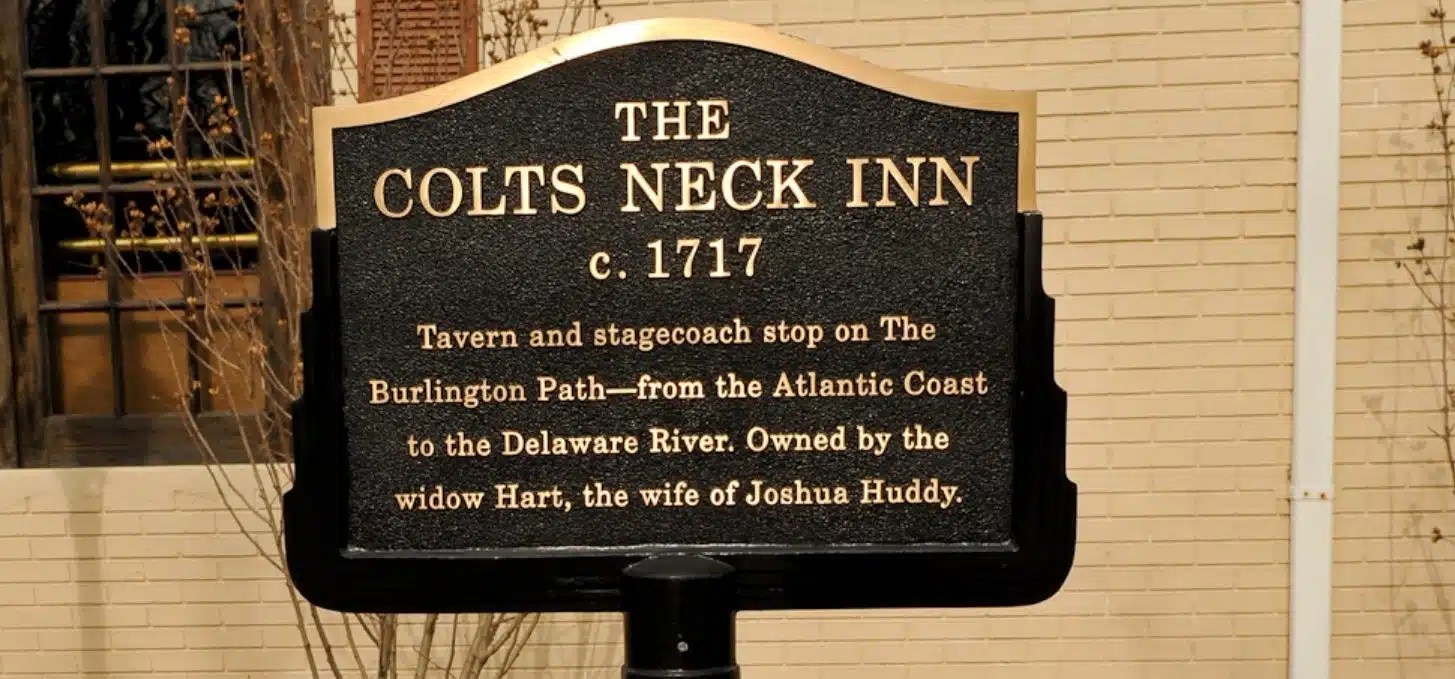
Colts Neck Inn Steakhouse Web Address: 191 County Rd 537, Colts Neck, NJ 07722 Phone: +1 732-462-0383
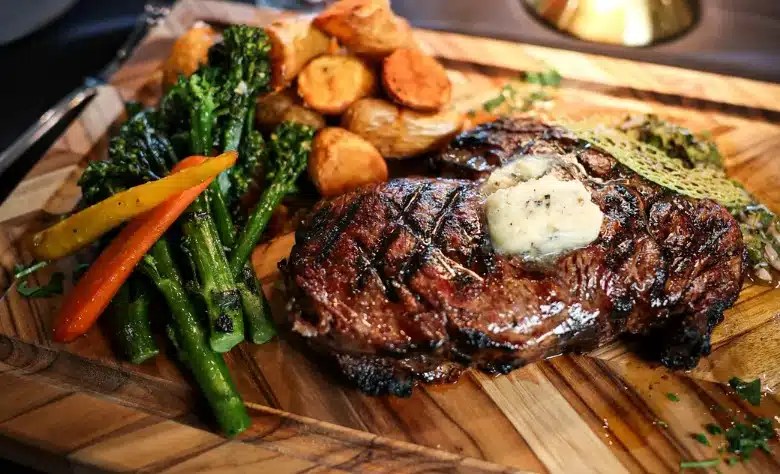
The Colts Neck Tavern tradition dates to 1717, when the site served travelers along an early route across New Jersey. One of its most fascinating connections is Captain Joshua Huddy, the celebrated Patriot militia officer who married tavern owner Catherine Hart in 1778 and was associated with its operation before his capture and controversial execution by Loyalists in 1782. Today the Colts Neck Inn is an old-fashioned American steakhouse, centered on steaks and chops but also offering seafood, pasta, and sushi.
#2. Stockton Inn Boutique Hotel — Stockton (1710)
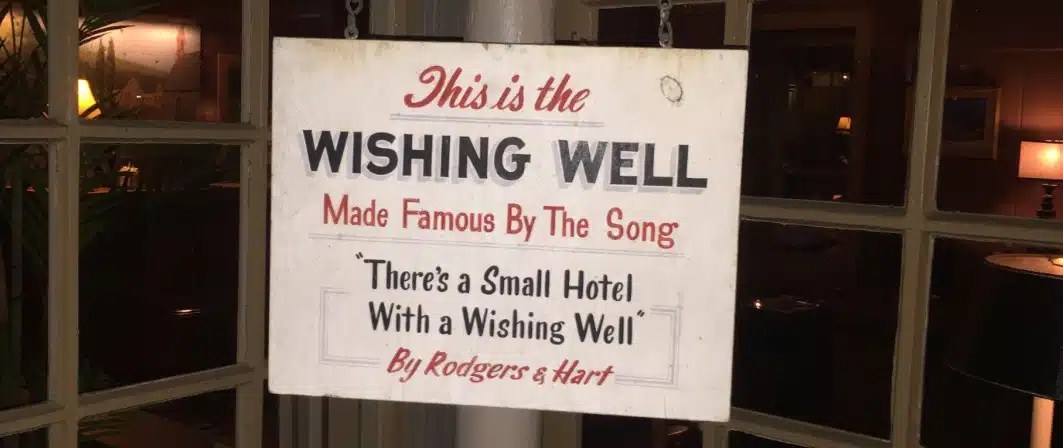
Stockton Inn Boutique Hotel Web Address: 1 S Main St, Stockton, NJ 08559 Phone: +1 609-460-4209
Stockton Inn’s history dates back to 1710, but its 20th-century stories are especially colorful. The inn says it served as media headquarters during the Lindbergh kidnapping trial, that Margaret Mitchell used its carriage house as a quiet place to write, and that Jacqueline Kennedy Onassis stayed there. After unexpectedly closing in 2014, the property sat vacant for eight years before restoration and reopening in 2024. Today, its destination restaurant serves sophisticated, seasonal modern American cooking with locally sourced ingredients, house-made pasta, and a serious cocktail program.

#1. Ye Olde Centerton Inn — Pittsgrove (1706)

Ye Olde Centerton Inn Web Address: 1136 Almond Rd, Elmer, NJ 08318 Phone: +1 856-358-3201
At the top of our list is Ye Olde Centerton Inn, tracing its hospitality tradition to 1706, more than seventy years before American independence. Its longevity reflects the essential role early South Jersey inns played as places to eat, drink, conduct business,s and rest while traveling through a largely rural colony. More than three centuries later, you can still dine there in a traditional inn atmosphere, with a menu centered on classic steaks and seafood, including filet mignon, New York strip, soups, and crab-topped steak specialties.
Now It’s Your Turn to Tell Us
Our researchers created this punch card for your purse or wallet. Just print it off and start your journey. Punch the card as you visit each.


