
Commemorating the 247th Anniversary of the Wedding Heard ‘Round the Colonies
July 27, 1779 – July 27, 2026
July 27, 1779
Basking Ridge’s Biggest Event – Kitty Stirling’s Wedding

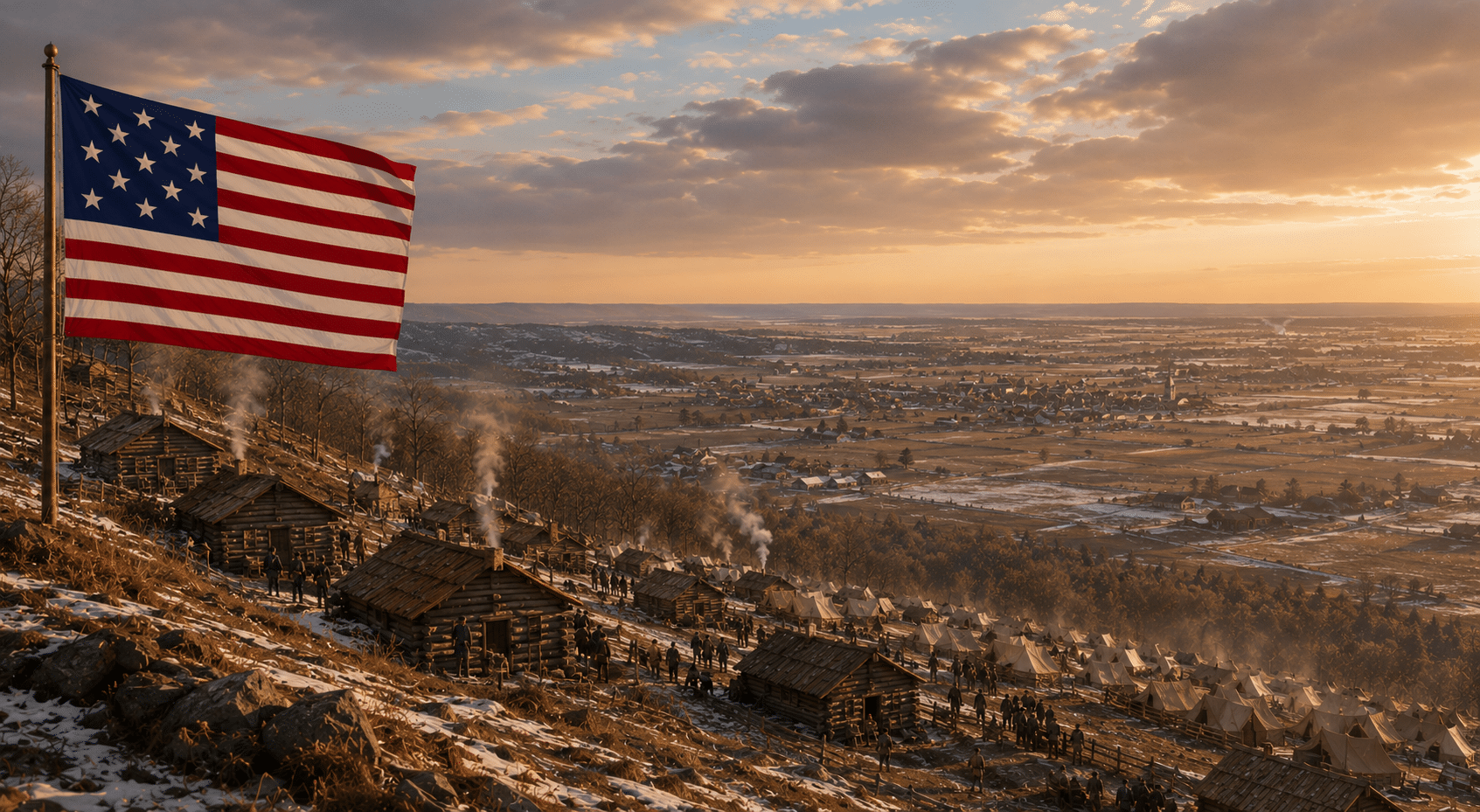
On July 27, 1779, the Revolutionary War was entering one of its most uncertain periods. Although no major battle was taking place at Basking Ridge itself, the countryside surrounding Stirling Manor remained deeply affected by the conflict. The British still occupied New York City, only about 35 miles away, and large armies watched one another across northern New Jersey. General George Washington’s headquarters shifted frequently through the Somerset Hills that summer, while Lord Stirling commanded an important division of the Continental Army and was one of Washington’s most trusted generals.

The wedding of Lady Kitty Stirling and Colonel William Duer occurred during a brief lull in active campaigning. Just weeks earlier, on July 16, 1779, American forces under General Anthony Wayne had captured the British fort at Stony Point, one of the war’s most celebrated victories. The success lifted morale throughout the Continental Army, yet everyone understood that the war was far from over. British raids continued along the New Jersey coast and in the Hudson Valley, and soldiers remained on constant alert.
Against that backdrop, the wedding became much more than a family celebration. It brought together many of the most influential military, political, and social figures in the young nation. Lord Stirling’s estate served as both a prominent country seat and an informal gathering place for Continental officers. According to long-standing family tradition, General George Washington presented Kitty to Colonel William Duer, while the ceremony was likely performed by the Rev. Dr. Samuel Kennedy, pastor of the Basking Ridge Presbyterian Church. Continental officers, local dignitaries, neighbors, and members of the Alexander, Livingston, Duer, and Morton families almost certainly mingled throughout the grounds.
One can imagine the contrast: beneath the shade of the estate’s magnificent mature cypress tree, amid formal gardens and overlooking the Passaic River, guests celebrated a joyful wedding while military aides came and went with dispatches, horses waited nearby, and uniformed soldiers stood watch around the property. Beyond the beauty of Stirling Manor, the realities of war were never far away. Many of those attending would soon return to military service, political duties, or the uncertain challenges of a nation still fighting for its independence.
That combination of elegance, optimism, and ever-present wartime tension is what made July 27, 1779, arguably the most celebrated social event in Revolutionary-era Basking Ridge history. The summer air was thick with the scent of July leaves when the wedding of Lady Kitty Alexander and Colonel William Duer took place beneath the towering trees of her father’s estate. It was July 27, 1779, and the war still loomed close enough that guests had to pass through sentinels and military lines to reach the celebration. Governor Livingston, often reluctant but dutiful, issued passes to the guests, members of New Jersey’s most prominent families: the Southards, Kennedys, Hatfields, Lotts, and Mortons. They arrived carrying fine gifts and dressed in their best silks and lace, a striking contrast to the worn uniforms of soldiers stationed nearby.
Lady Kitty’s trousseau was the talk of the camp, hundreds of pieces of satin, paduasoy, and lace gathered from both sides of the Atlantic. Even the Duchess of Gordon and the Earl of Shelburne, friends of Lord Stirling from his London days, sent lavish tokens to honor the general’s beloved daughter. Few could have imagined that many years later, that radiant bride, once the darling of both armies, would become an aging widow in New York, forced by hardship to part with the keepsakes of her happiest day.
Family tradition tells us that Kitty stood in white beneath a great cypress tree, her gown gleaming softly in the filtered sunlight, as General George Washington himself presented her to her waiting groom. Around them, officers in their splendid uniforms mingled with ladies in bright petticoats, their laughter carrying across the lawn. After the ceremony, the company moved to the manor for a grand feast, the kind of generous colonial collation that seemed to suspend the troubles of war for just one afternoon.
“The Wedding at Stirling Manor — July 27, 1779
The wedding of Catherine “Miss Kitty Stirling” and Col. William Duer, in the garden of the Alexander estate beneath a magnificent cypress tree, as described in contemporary accounts.

July 27, 1779
This painting depicts the ceremony as it may have appeared on the lawn of Stirling Manor beneath one of the estate’s great cypress trees, overlooking the formal gardens and grounds. At center, the Rev. Dr. Samuel Kennedy, pastor of the Basking Ridge Presbyterian Church, is portrayed officiating the marriage. General George Washington is shown presenting Lady Kitty to Colonel William Duer, reflecting a long-standing family tradition associated with the wedding. Standing nearby are Lord Stirling (William Alexander) and Lady Sarah Livingston Alexander as they witness their daughter’s marriage. Beyond the ceremony, Continental soldiers, family members, friends, and distinguished guests gather beneath the trees while the grandeur of Stirling Manor and its surrounding estate provide the backdrop to one of Revolutionary New Jersey’s most celebrated social events.
While based upon contemporary portraits, period descriptions, surviving maps, and local traditions, this painting is an historical reconstruction rather than a contemporary illustration.
As the evening light faded, the younger guests took to games, “Langteraloo,” “Kiss the Bride,” “Put,” and other long-forgotten merriments. Then a commotion arose outside. Rushing to the windows, the company found the manor surrounded by soldiers from the nearby encampment, cheering and calling for a glimpse of the bride. Laughing, Lady Kitty stepped once more onto the grass in her white satin slippers, curtseying and smiling as the men of her father’s army offered their congratulations one by one before marching off again into the twilight.
That joyful wedding was Lord Stirling’s last great celebration at the manor. His devotion to the Patriot cause had drained his fortune, and by the time he died in 1784, he left behind little but honor and a noble name. Yet through her marriage to William Duer, Lady Kitty continued to move in New York’s highest circles, surrounded for a time by the same elegance and grandeur she had known at her father’s beloved Jersey home, a fleeting echo of a golden day beneath the cypress trees.
Related MLH Research
A great find!
Real stories about Basking Ridge in Revolutionary Times extracted
from the 1912 Somerset County Historical Quarterly Magazine.


