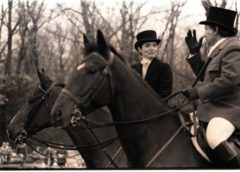
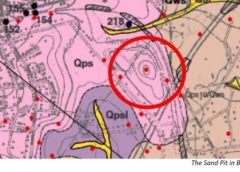
In December 1776 the American rebellion was close to collapse. The Continental Army was shrinking as enlistments expired and morale sank to its lowest point of the war. British forces held New York and expected the uprising to simply fade away with the coming winter. What happened next hinged on a few quiet but decisive events.
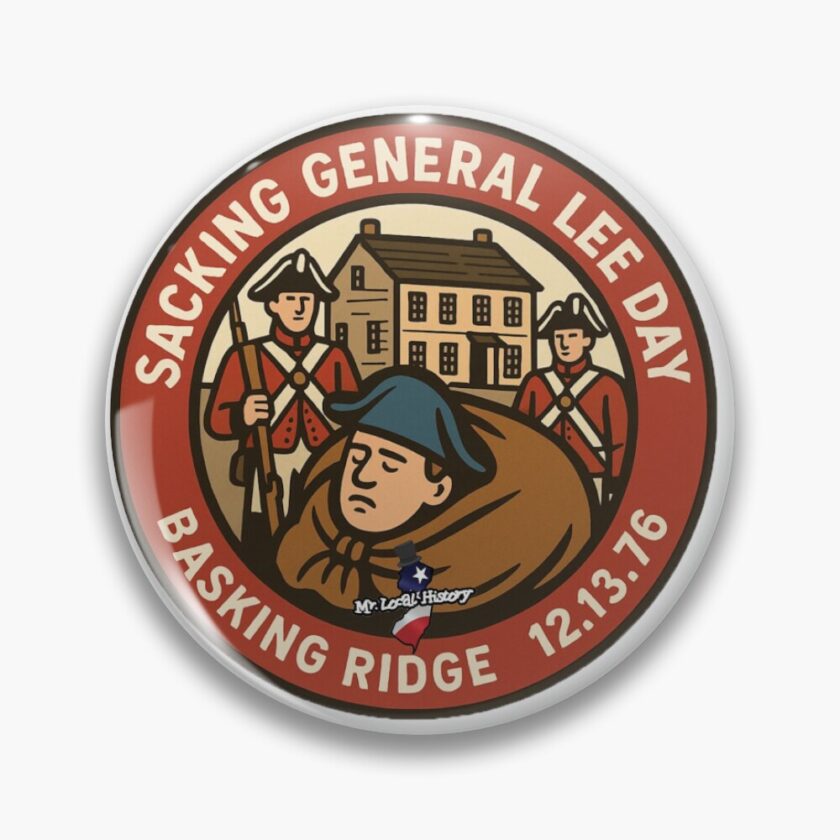
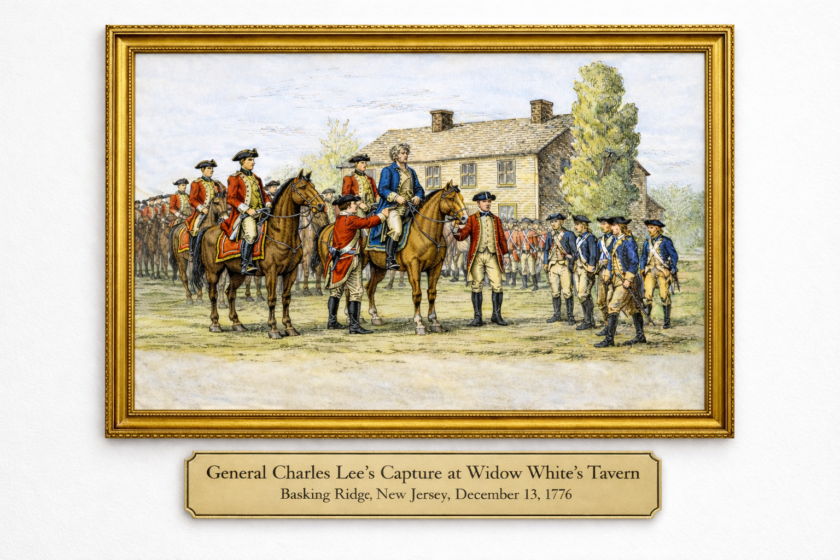
General Charles Lee, second in command to George Washington and a vocal critic of him, was captured by British dragoons while staying at a tavern in Basking Ridge New Jersey. His sudden removal eliminated internal division at a moment when unity mattered more than numbers. At the same time General John Sullivan succeeded in assembling and delivering troops under brutal winter conditions for a desperate plan already in motion.
Yes this was a very small action. One arrest at a tavern on a cold December morning does not look like the hinge of world history. It did not end a war or win a battle or declare a nation. Yet history is often shaped by moments so ordinary they barely register at the time. If this single event had unfolded differently if one man had not been taken if one rival had remained in the field if one fragile army had fractured instead of holding together the chain of consequences changes. Soldiers may not reenlist. A river may never be crossed. A rebellion may quietly dissolve. And without that fragile continuation the ideas that followed never take root. Like so many turning points this one mattered not because it was dramatic but because it happened at exactly the moment when everything else could have failed.
Those soldiers that left immediately after Lee’s arrest enabled George Washington to cross the Delaware River on Christmas night. The surprise victories that followed did not win the war but they saved the army long enough for it to survive. From that narrow margin the revolution continued.
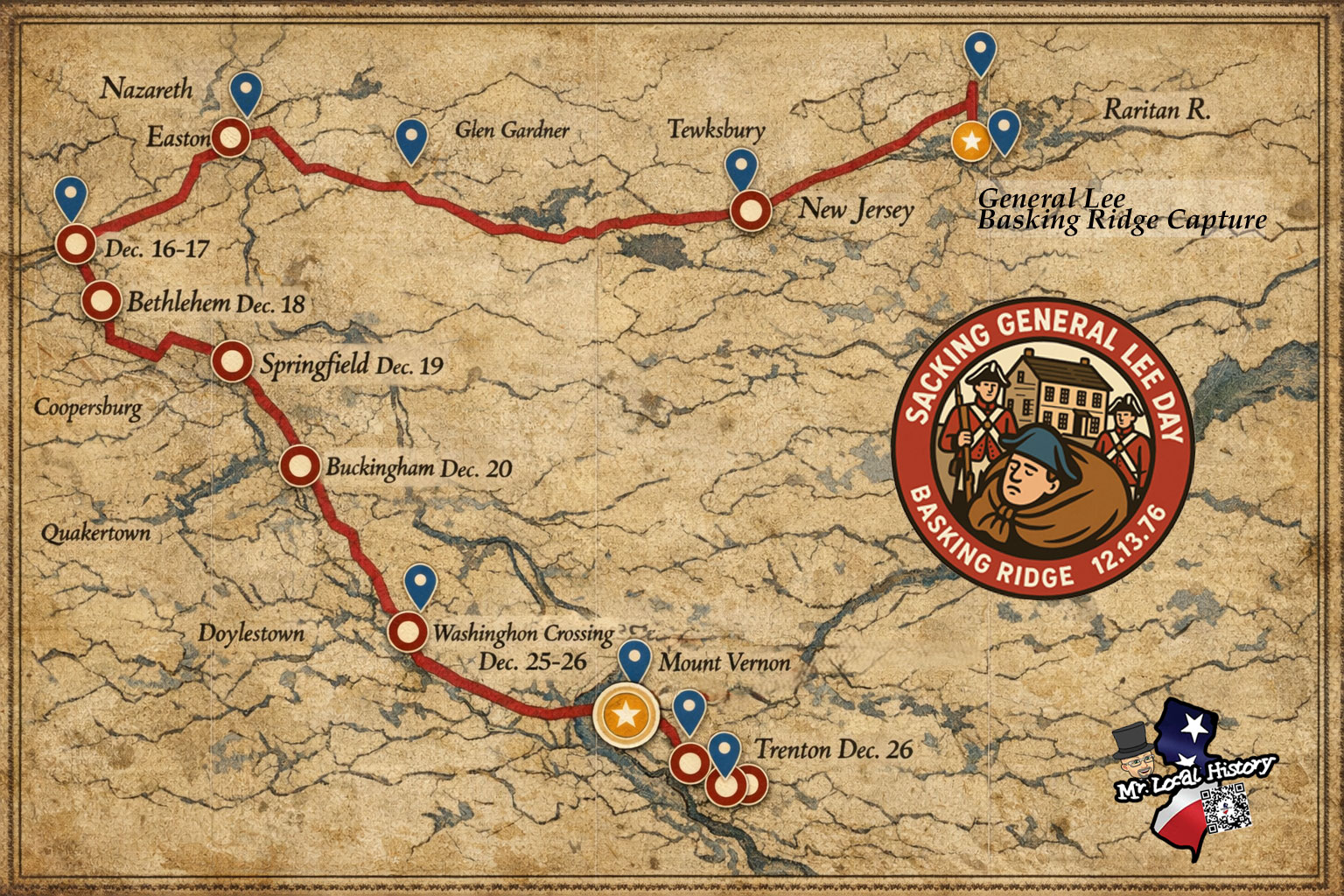
Everything that followed depended on the fact that General Lee was captured that day in Basking Ridge. But what might have happened if General Charles Lee wasn’t captured on December 13, 1776 in Basking Ridge? Well, let’s discuss……
The Winter That Broke the American Colonies Rebellion
The winter of 1776 ends not with resolve but with exhaustion. General Lee is never captured at Widow White’s Tavern in Basking Ridge on December 13, 1776. John Sullivan never delivers the troops Washington needs. The river crossing never happens. There is no shock and awe victories at Trenton and no follow up victories to prove the rebellion still has teeth. The crossing never happened, Trenton and Princeton never happened. Enlistments expire quietly and men return to farms and shops convinced the gamble has failed. By spring the Continental Army does not surrender. It simply dissolves.
Footnote:
British called them “American Colonies” because the word already existed long before independence and it had nothing to do with nationhood. The term comes from the early 1500s when European mapmakers began labeling the newly recognized western continents as America, based on the name of the Italian explorer Amerigo Vespucci. By the 1600s and 1700s America simply meant the lands of the Western Hemisphere, not a country and not a people with sovereignty.
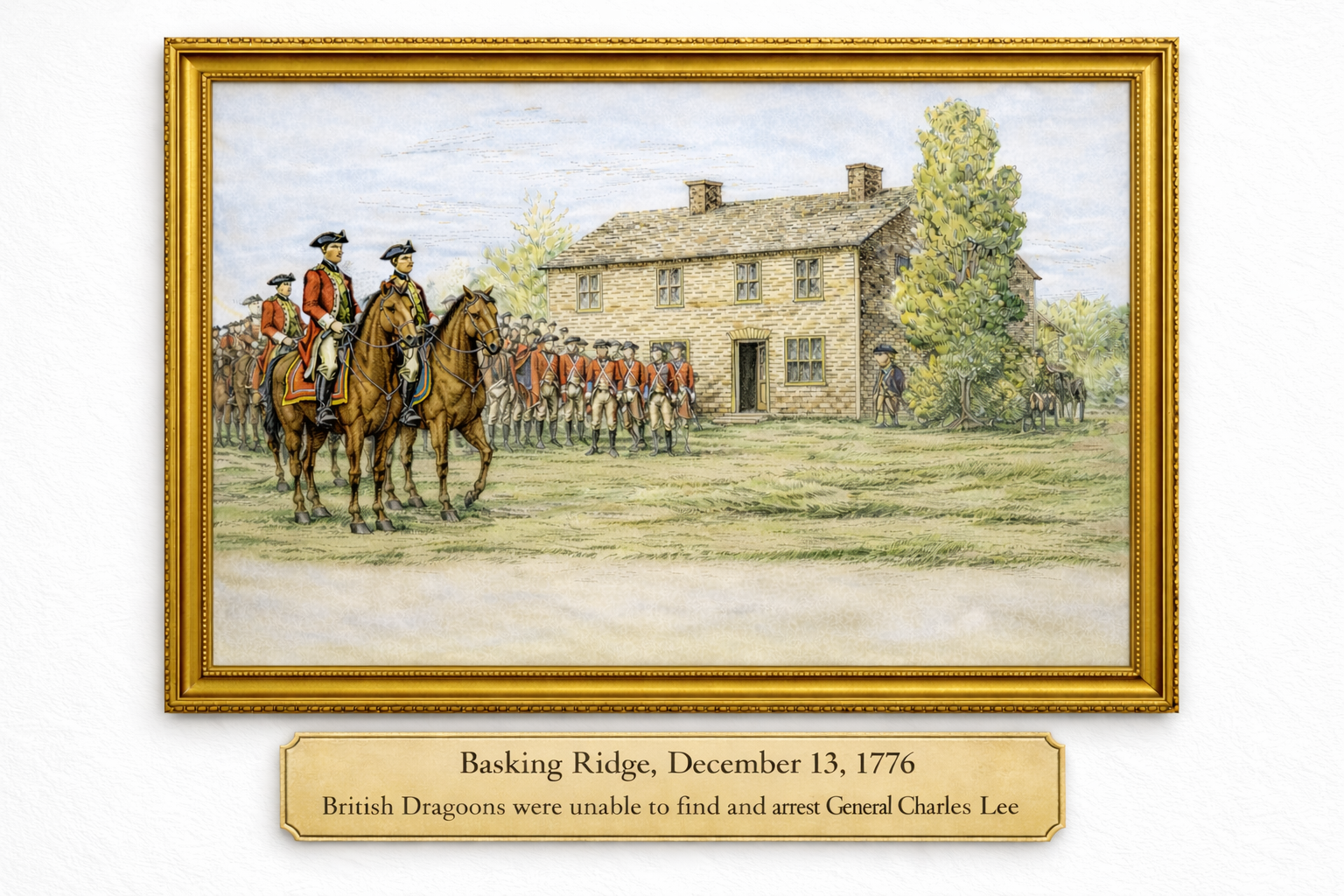

Britain Reclaims the Colonies
British forces move deliberately rather than desperately. New York becomes the unquestioned seat of royal authority in North America. Philadelphia falls without humiliation. Colonial assemblies are suspended or reshaped and loyalist militias step into the vacuum left by rebel forces. The rebellion does not end in a dramatic moment remembered by history. It runs out of oxygen. The idea of independence survives only as a dangerous memory whispered in taverns and churches.
A Revolution Without Founders
The men who once argued for independence scatter into obscurity. Some flee abroad and live as political exiles. Others accept pardons and return home watched and diminished. None are elevated into founders. None are preserved as moral authorities or national saints. There is no generation frozen in reverence. Without victory there is no founding mythology and without mythology there are no founders to anchor national identity. History records them as agitators rather than architects.
The men who argued for independence were not dealing in abstractions. They organized resistance raised money wrote pamphlets and risked property families and lives. Thomas Paine gave the rebellion its language. Common Sense turned scattered frustration into a mass political argument and reached tens of thousands at a moment when public opinion itself became a weapon. Without independence Paine does not become the voice of a new nation. He becomes a radical pamphleteer whose writings are suppressed dismissed and later remembered only in footnotes as dangerous agitation.
Samuel Adams spent years organizing resistance through committees protests and underground networks that made rebellion possible before open war began. He was a builder of movements rather than a battlefield commander. In a failed revolution Adams is not a founder. He is labeled a professional agitator watched closely and ultimately sidelined once imperial order is restored.
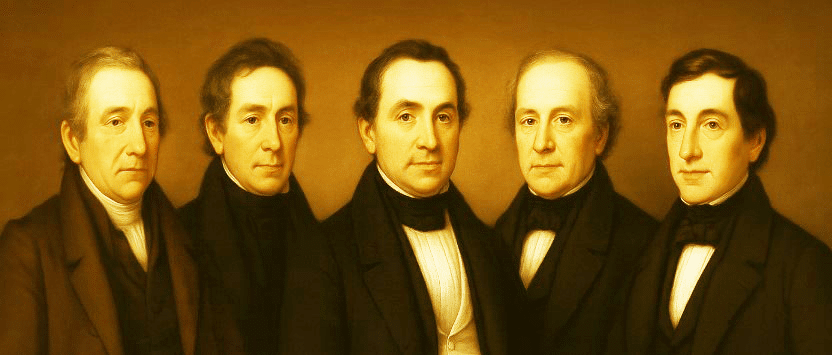
John Hancock risked immense personal wealth and reputation by openly backing independence and financing revolutionary activity. His famous signature only matters because independence succeeded. Without victory Hancock is remembered not for courage but for recklessness. His property is seized his influence erased and his name becomes a warning about the cost of challenging the Crown.
Patrick Henry reshaped colonial politics through speeches that framed resistance as a moral necessity rather than a political preference. His power was persuasion not office. In defeat his words lose their immortality. Without a republic to repeat them his speeches are remembered as overheated rhetoric from a failed uprising rather than the birth cry of a nation.
George Mason articulated ideas about rights liberty and limits on power that later shaped American political thought. In a world without independence his arguments remain theoretical essays without authority. Ideas without a nation to enforce them become commentary rather than law.
Even Charles Lee belongs in this group. Flawed ambitious and openly critical of Washington he argued strategy challenged leadership and believed himself essential to victory. In a failed revolution Lee is not redeemed by outcome. He is remembered as a divisive officer whose ambitions outpaced results rather than as a complicated contributor to a winning cause.
Without victory none of these people become founders. There is no sacred generation no reverence frozen in time. Their work still happened but it leads nowhere. History does not preserve intention. It preserves outcomes. Without a republic to anchor memory these men are recorded not as architects of a nation but as agitators who los
No Constitution – No Fixed Promise
Because the rebellion fails there is no constitutional moment. No convention. No grand document spelling out rights and limits of power. Law evolves through Parliament imperial decree and precedent rather than a single binding charter. Rights exist but they are conditional and adjustable. They can be expanded quietly or narrowed just as quietly. There is no supreme text to appeal to when power overreaches only tradition custom and the goodwill of institutions.
- There would be no written guarantee of free speech or a free press. Criticism of government would exist only so far as Parliament allowed it and could be restricted during unrest war or dissent without violating any supreme law.
- There would be no guaranteed right to assemble or protest. Large scale political movements like abolition labor unions civil rights marches or anti war protests could be limited or shut down as threats to order rather than protected civic action.
- There would be no separation of powers designed to limit government itself. Governors judges and administrators would ultimately answer upward to the Crown not outward to the people. Courts would enforce imperial law rather than interpret constitutional rights.
- There would be no citizen owned concept of sovereignty. Political authority would be inherited delegated and administered rather than claimed by the people. Voting would expand slowly if at all and always as a privilege not a right.
- There would be no constitutional amendment process allowing society to correct itself from within. Slavery voting rights equal protection and citizenship would be addressed administratively not structurally and could be delayed indefinitely.
- There would be no model for other nations to follow. Revolutions in France Latin America and beyond would lack proof that a colony could break away and successfully govern itself as a republic.
- There would be no idea that dissent is patriotic. Loyalty would be the highest civic virtue not challenge. Stability would matter more than justice and order more than change.
In short without independence and a constitution the modern idea that ordinary people can bind power with law and remake their government without tearing society apart never fully takes hold.
Commonwealth Not Republic
North America becomes a commonwealth not a republic. Power flows downward from the Crown rather than upward from the people. Authority is shared administratively not claimed as an inherent right. Citizens are subjects first participants second. Stability is prized over principle and continuity over rupture. Change happens gradually through reform not through challenge. The system values order and loyalty more than popular sovereignty and that difference shapes every generation that follows.
An Empire That Learns to Adapt
Britain absorbs the near disaster and adjusts. Parliament reforms imperial governance not out of generosity but survival. Taxes become predictable. Representation expands slowly and carefully never equal but sufficient to prevent another uprising. By the turn of the century the colonies are reorganized as a Dominion of North America within the British Empire. Foreign policy remains firmly in London while limited local governance is tolerated so long as loyalty is maintained. Empire adapts instead of fractures.
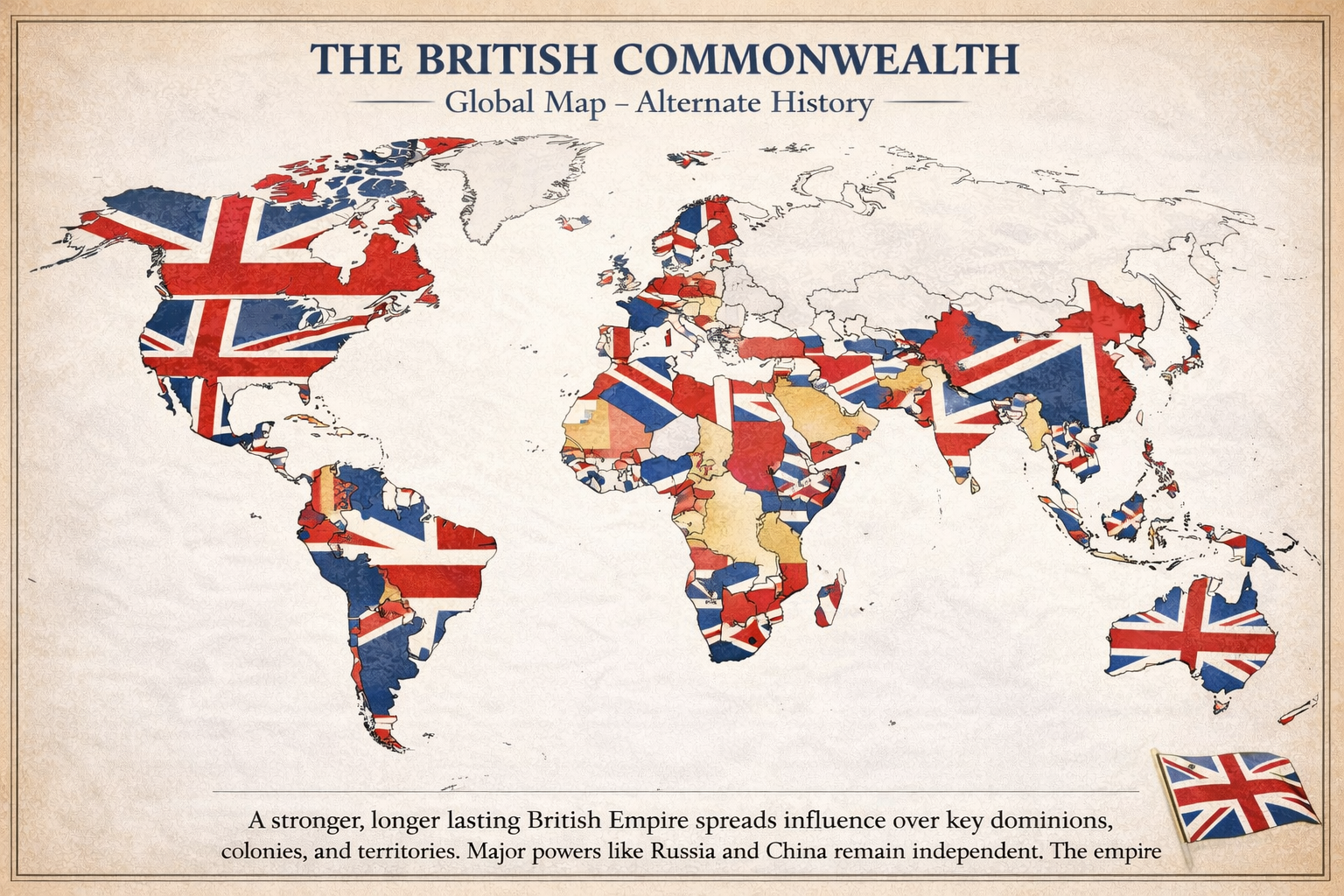
Speaking the King’s English
Language becomes the great unifier and the quiet leash. Everyone speaks the King’s English. American English never emerges as a defiant variant. Spellings remain British and accents develop regionally but never rebelliously. Titles matter. Courts speak in the Crown’s name. Loyalty oaths are routine. Speech is careful and measured. Criticism of policy exists but criticism of the monarchy itself carries consequences. Identity is imperial rather than revolutionary.
Slavery Ends Earlier but Justice Does Not Arrive
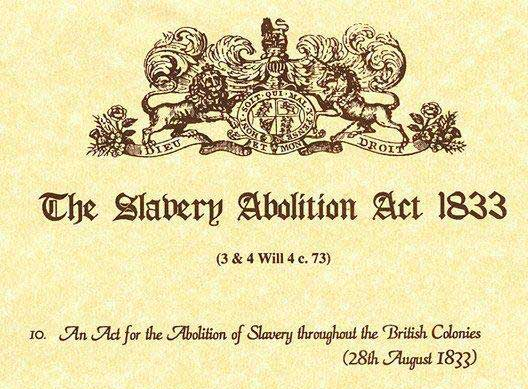
Slavery ends earlier in this world but in a colder way. Britain abolishes slavery across its empire in 1833 and North America is included. There is no civil war no emancipation proclamation and no constitutional reckoning. Slaveholders are compensated by Parliament while formerly enslaved people receive freedom without land without political power and without guarantees. Plantation slavery gives way quickly to sharecropping and company controlled labor. Racial hierarchy survives quietly because abolition comes from above rather than from struggle below. Freedom arrives earlier. Equality arrives later and weaker.
The Managed Frontier
Westward expansion continues but under tighter imperial control. Surveyors forts and trade monopolies shape the frontier. Treaties with Native nations are enforced when convenient and eroded over time. There is less chaos but no justice. Empire still hungers for land. It simply takes it methodically and with paperwork.
World Wars Without an American Century
When the world wars arrive North America fights as part of the empire. Industrial power is immense but remains tied to London. Britain emerges weakened but not broken. There is no American century no constitutional republic projecting itself abroad and no claim that freedom is the national export. Instead there is a long managed decline of empire rather than a sudden transfer of global leadership.
A World Without a Founding Myth
Today there would be no United States of America and no shared story of a people who remade history by force of will. There is a North American Commonwealth wealthy technologically advanced and politically cautious. It stretches from Nova Scotia to Georgia and westward through managed frontier provinces. London remains the symbolic capital while New York and Toronto serve as imperial centers of finance and administration. The world is calmer more orderly and more hierarchical but it lacks the dangerous idea that power ultimately belongs to the people.
Celebrate America 250 Because……

America exists because ordinary people chose risk over comfort and principle over safety. The story is not just one of victories but of persistence when failure was more likely than success. Farmers left fields. Merchants risked livelihoods. Women ran households farms businesses and intelligence networks. Enslaved people pursued freedom in whatever narrow openings they could find. Native nations navigated impossible choices in the shadow of empires. None of this was guaranteed to work. All of it required sacrifice.
America is great not because it was inevitable but because it was improbable. It was shaped by argument compromise courage and contradiction. The Revolution was not clean or unanimous or simple. It was contested at every level. Men disagreed fought and failed forward. Even figures like Charles Lee, flawed controversial and ultimately sidelined, played a role in the fragile chain of events that allowed the cause to survive its darkest hours. History is not made by saints alone. It is made by people.
The miracle of the American experiment is that out of chaos came a republic built on the radical idea that power belongs to the people and that rights exist before government. That idea was unfinished in 1776 and it remains unfinished today. Each generation has been forced to expand the promise to include those left out at the beginning. That ongoing effort is not a weakness. It is the strength.
America at 250 is not perfect but it is rare. A nation born from resistance that chose law over kingship. A place where dissent became patriotic and change became possible without collapse. The freedoms enjoyed today were purchased by sacrifice across race gender status and belief. Some were recognized in their lifetime. Many were not. So we celebrate America 250 not because the story is tidy or complete but because it happened at all. Because it could have failed. Because it almost did. And because when it mattered ordinary people chose to try anyway. And Thank General Lee for being foolish not to think….