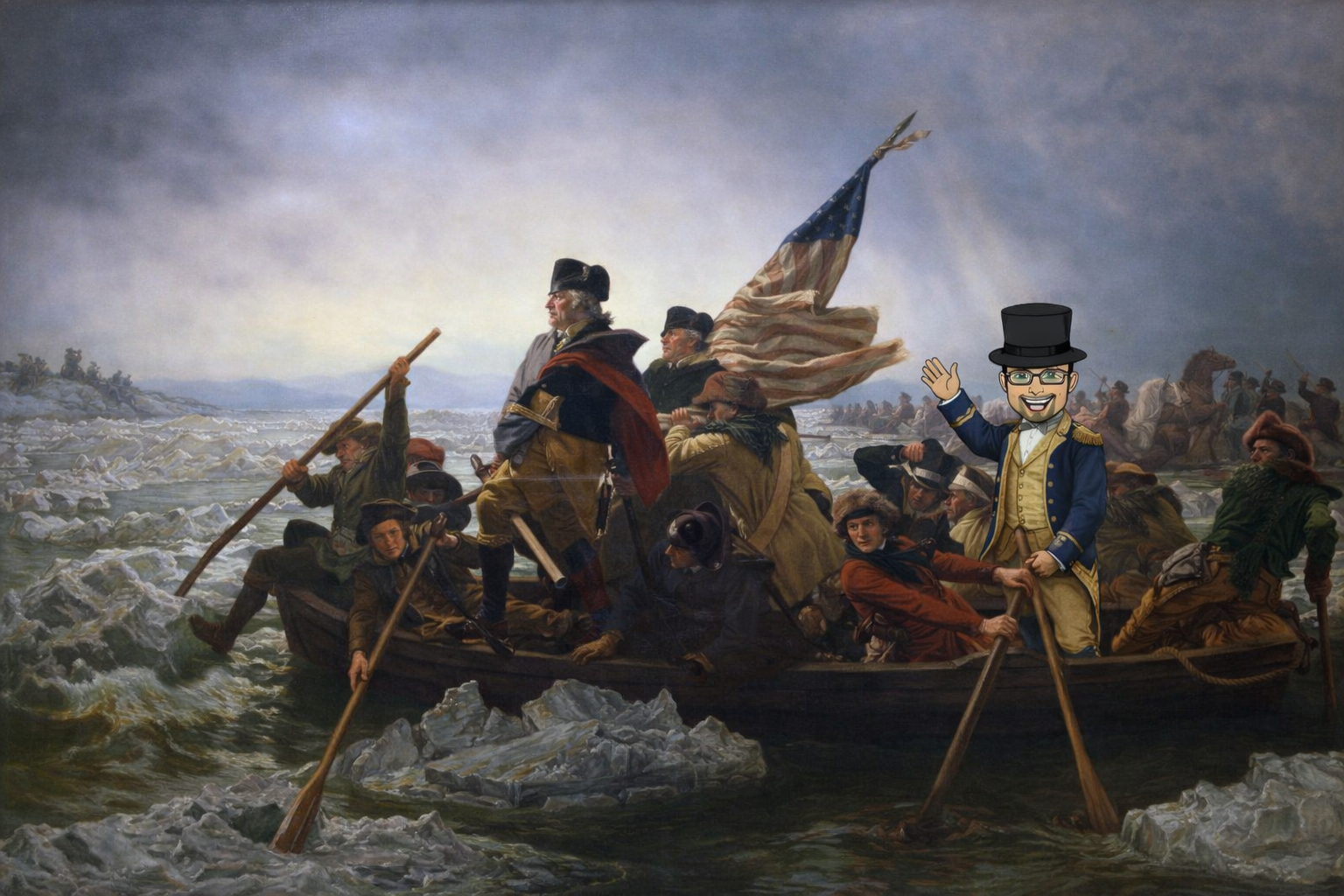
Watch a great video that shares the history of the Christmas Day crossing of the Continental Army and the surprise wins at Trenton and Princeton that built the confidence of men who would free the colonies from the tyranny of Britain’s King George III.
There were 3 separate crossings of the Delaware River by George Washington during the Ten Crucial Days and each one mattered for a different reason. The first crossing took place overnight on December 25 into the early hours of December 26, 1776. Washington led about 2,400 Continental soldiers from Pennsylvania into New Jersey through ice and snow with the clear purpose of striking the Hessian garrison at Trenton by surprise. The attack on the morning of December 26 succeeded beyond expectations with most of the Hessian force captured. This moment became iconic, but at the time it was a desperate gamble by an army that had been losing badly for months.
The second crossing happened later on December 26, 1776, after the victory at Trenton. Washington knew British forces were nearby and that his exhausted army could not safely remain in New Jersey. That same day he ordered the army, along with Hessian prisoners and captured supplies, back across the Delaware into Pennsylvania. This return crossing is rarely depicted, yet it was essential because it protected the army from counterattack and preserved the momentum gained at Trenton.
The third crossing occurred between December 30 and December 31, 1776, when Washington crossed the Delaware once again into New Jersey. With many enlistments expiring, he convinced his men to stay on and reentered Trenton to hold ground rather than retreat. This decision set the stage for continued operations in New Jersey, including the standoff at Assunpink Creek on January 2, 1777, and the victory at Princeton on January 3, 1777. Together, the 3 crossings transformed a collapsing rebellion into a revived fighting force and reshaped the course of the war.
An Interesting Often Overlooked Footnote
As our researchers were digging into the Washington Crossing that Christmas night back in 1776, they started to wonder where the troops came from that crossed that famous night to victory. Well the answer surprised even us as we learned that the troops were actually just a week early in Bernardsville, New Jersey, then known as Vealtown. If it wasn’t for the capture of General Charles Lee in Basking Ridge on the late morning of December 13, 1776, those troops may have never made it to McConkey’s Ferry that great Christmas night.