As New Jersey commemorates the 250th anniversary of the American experience, the archaeological work at Lord Stirling Manor represents one of Somerset County’s most significant contributions to the America 250 effort. By uncovering the physical remains of William Alexander’s famed estate and preserving thousands of artifacts connected to colonial and Revolutionary-era life, archaeologists are helping bring New Jersey’s founding story to life. The excavation, public archaeology days, educational exhibits, and ongoing research provide residents with a unique opportunity to connect directly with the people, places, and events that shaped the nation’s fight for independence, ensuring that this important chapter of New Jersey history is preserved and shared with future generations.
Reconstructing Lord Stirling’s “The Buildings” Estate:
What We Know and What Is Still Missing
One of the most important documents for understanding Lord Stirling’s estate in Basking Ridge is the 1977 National Register of Historic Places nomination for “The Buildings,” also known as the Lord Stirling Manor Complex. Although brief, the nomination provides several critical clues about the location and layout of William Alexander’s famous estate.

The nomination places the manor complex at what is today 96 Lord Stirling Road in Basking Ridge. It further states that the original mansion foundations survived into the twentieth century. A farmhouse constructed in 1825 was built partly on the original foundations, and after the farmhouse was destroyed by fire in 1919, a later Somerset County Park Commission building was erected on a portion of the same footprint. This strongly suggests that the location of Lord Stirling’s mansion is known with reasonable certainty and lies in the vicinity of the present-day manor site and Environmental Education Center.
Perhaps the most revealing passage in the nomination concerns the estate’s orientation. The document notes that “the front with plazas opened in a fine lawn descending to the Black River (Passaic River).” This description indicates that the mansion faced east toward the Passaic River, with formal lawns and landscaped grounds extending downhill from the house. Behind the mansion was a large paved courtyard surrounded by service buildings.
The nomination describes a remarkably sophisticated estate complex that included stables, coach houses, slave quarters, and other offices ornamented with cupolas and gilded vanes. These structures were arranged around a large paved court behind the mansion, reflecting the formal design of an English country estate rather than a typical colonial New Jersey farm. Beyond the buildings were extensive grounds that included a deer park, rose garden, Italian vineyard, and other features associated with a gentleman’s estate.
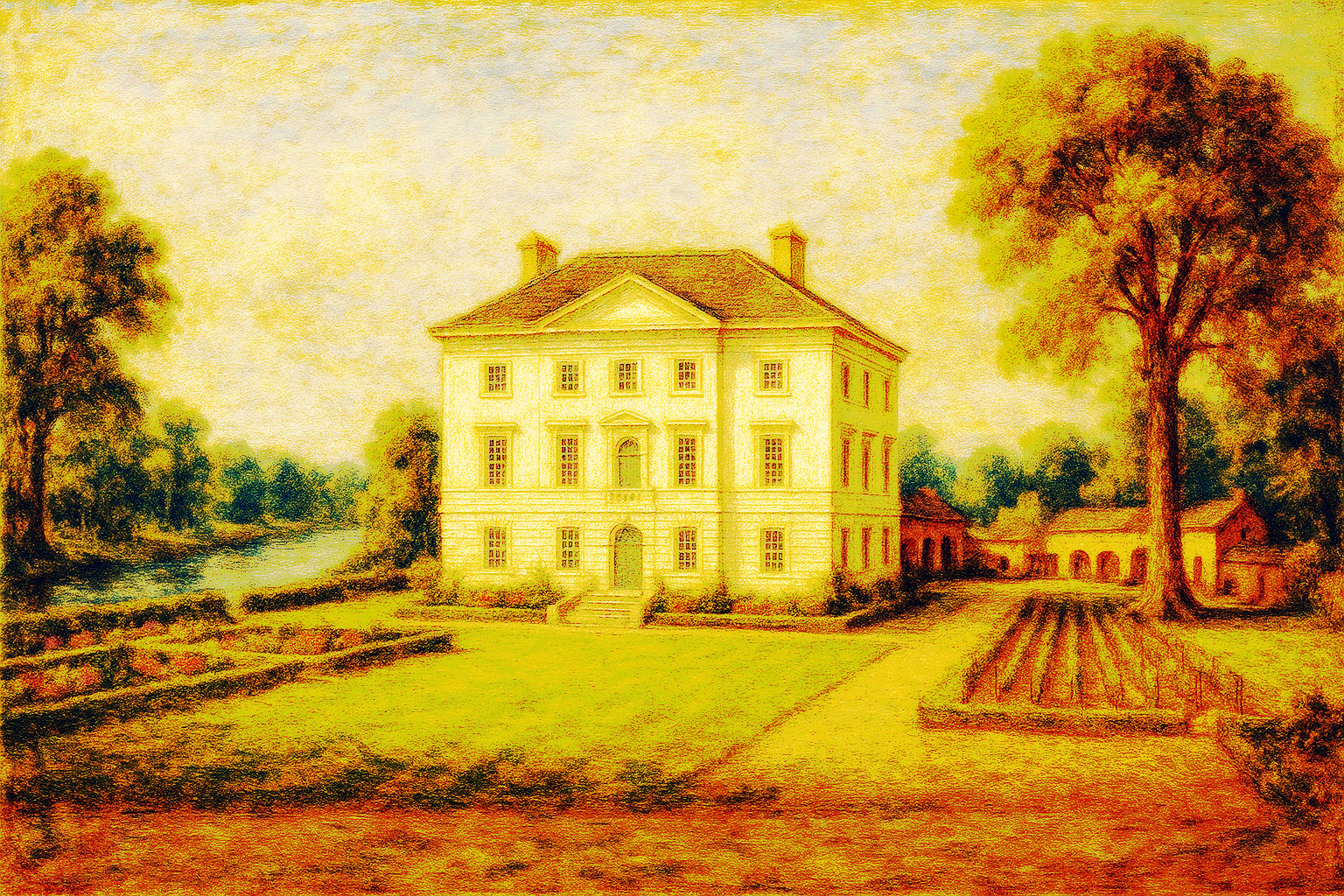
Passaic River, Formal Lawns and Plazas, Mansion, Large Paved Courtyard, Stables, Coach Houses, Offices, Slave Quarters, and Farm Buildings.
By the time of the nomination in the 1970s, the original manor house itself had long disappeared, but significant archaeological remains survived. The document states that investigators had identified the mansion’s foundations, cisterns, slave quarters, and numerous building foundations whose purposes were not yet determined. The surviving slave quarters were described as rose-brick structures measuring approximately 12 by 16 feet, with walls two bricks thick and low gable roofs.
Most importantly, the nomination repeatedly states that the exact locations of all structures on the site were shown on an attached map. Unfortunately, the copy currently available includes only a general location map of Bernards Township and does not contain the referenced site plan. This missing map is potentially the most important surviving document related to the manor complex.
The National Register nomination therefore establishes two important facts. First, archaeologists had already identified the locations of many key components of the manor complex by 1976. Second, a detailed site map showing those locations apparently existed when the nomination was prepared. Locating that missing map—whether in the files of the New Jersey Historic Preservation Office, the National Park Service, Somerset County, or an archaeological repository—may be the key to finally understanding the true layout of William Alexander’s legendary estate known locally as “The Buildings.”
Same Builder/Similar Plans
Perth Amboy Proprietary House Survey and Measurements
The measured drawings of Perth Amboy’s Proprietary House reveal a building of remarkable size and sophistication for colonial New Jersey. The main block measured approximately 65 feet 6 inches wide by 52 feet 2 inches deep, rising from a raised basement through four principal stories and topped by an observation tower that brought its height to nearly 80 feet.
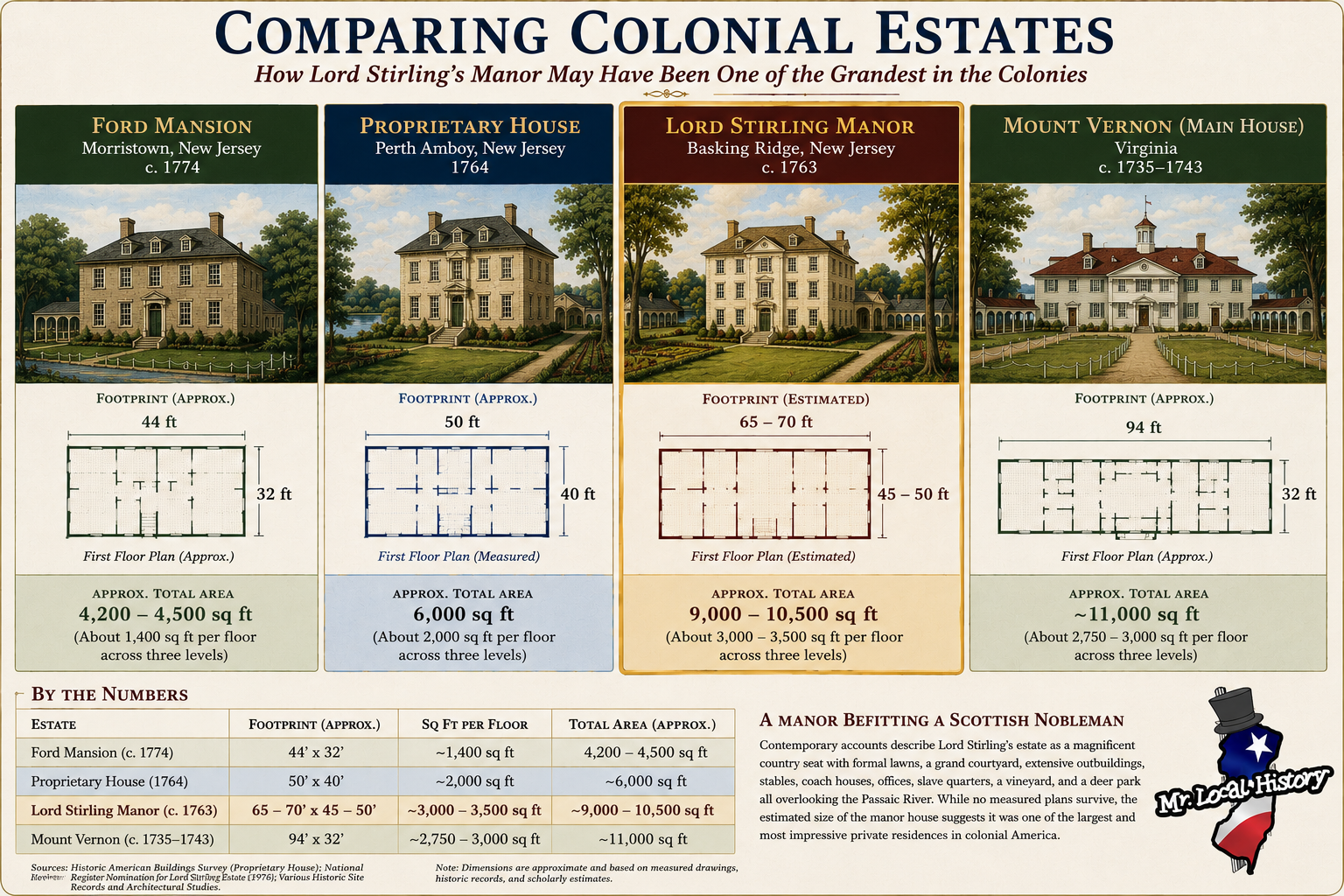
Far from being a simple residence, the Proprietary House was a grand Georgian mansion designed to project wealth, authority, and prestige. What makes the building especially intriguing is its possible connection to William Alexander, later known as Lord Stirling. Construction of Alexander’s magnificent Basking Ridge estate, known locally as “The Buildings,” began in 1761, a year before work commenced on the Proprietary House.
The Mr. Local History research team has noted that William Alexander was not only one of New Jersey’s most prominent landowners but also an East Jersey Proprietor with close ties to the individuals who commissioned the governor’s residence.
The timing of the two projects, combined with the involvement of architect and builder John Edward Pryor, raises the possibility that design concepts being developed for Lord Stirling’s estate influenced the plans later employed at Perth Amboy. While no surviving document has yet been found proving the two buildings shared identical plans, the chronology suggests that ideas first explored at Basking Ridge may have helped shape one of colonial New Jersey’s most important public buildings.
The connection remains an active area of research, but it offers a fascinating glimpse into how the colony’s political and social elite may have drawn inspiration from the same architectural vision during the early 1760s.
What’s Visible & Happenings Today
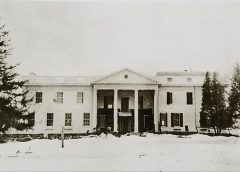
On February 20, 1920, the last standing house associated with the Lord Stirling Manor site was destroyed by fire near Basking Ridge. Although often referred to as the “old Lord Stirling house,” the structure was actually a nineteenth-century replacement built in 1825 on or near the foundations of William Alexander’s original manor. The wooden dwelling, described at the time as “one of the most historical landmarks in the neighborhood,” marked the final visible remnant of the once-grand estate known locally as “The Buildings.”

A blaze of unknown origin started on the second floor of the house, which was unoccupied but had its steam heat on, according to the story. Former owner John K. Nevius of Bernardsville had recently sold the property to A.J. Guerin of Long Hill, “who has been staying in Elizabeth pending work on the house which had been in progress prior to the burning. A Montgomery Ward mail-order house was placed on the site that stands today.
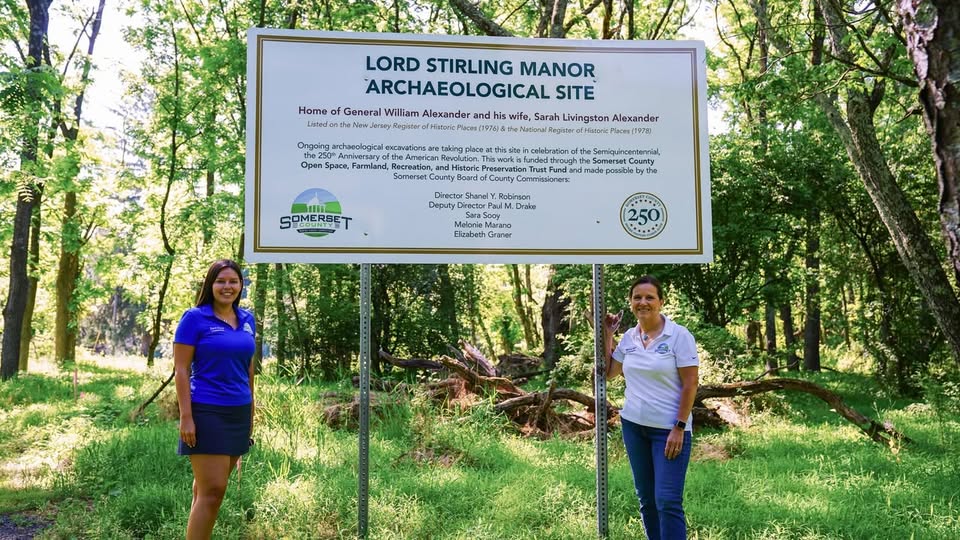
LORD STIRLING MANOR
ARCHAEOLOGICAL SITE
Home of General William Alexander and his wife, Sarah Livingston Alexander
Listed on the New Jersey Register of Historic Places (1976) & the National Register of Historic Places (1978)
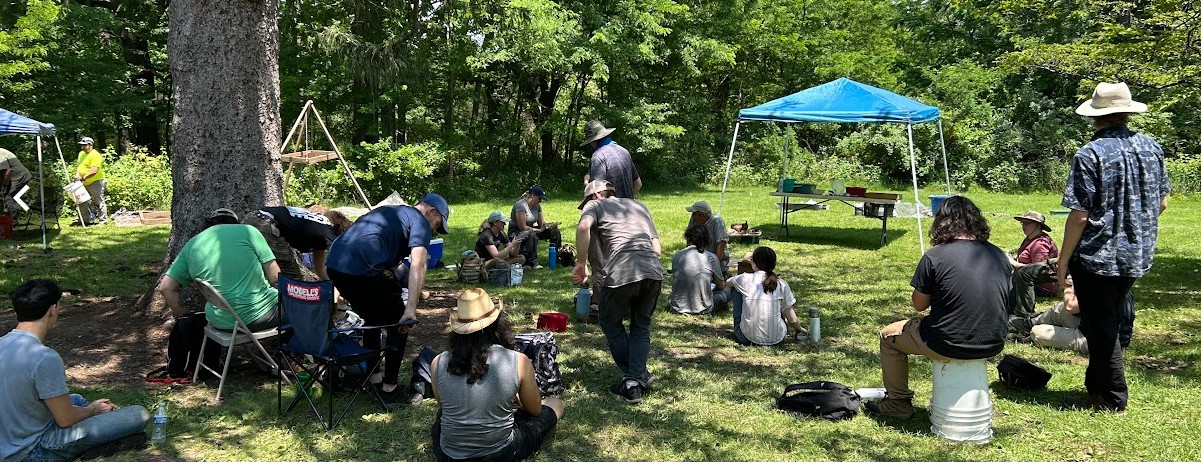
Ongoing archaeological excavations are taking place at this site in celebration of the Semiquincentennial, the 250th Anniversary of the American Revolution. This work is funded through the Somerset County Open Space, Farmland, Recreation, and Historic Preservation Trust Fund and made possible by the Somerset County Board of County Commissioners.
Director Shanel Y. Robinson
Deputy Director Paul M. Drake
Sara Sooy
Melonie Marano
Elizabeth Graner

Today, visitors to the Lord Stirling Manor Archaeological Site can see a 1920s Montgomery Ward mail-order house that stands on or near the foundations of Lord Stirling’s original mansion, along with two surviving 18th-century brick outbuildings that once served the estate. While the grand manor house, stables, coach houses, formal gardens, deer park, and paved courtyard have long since disappeared, their remains survive beneath the ground. Ongoing archaeological excavations continue to uncover the mansion foundations, cisterns, and numerous other building remains, helping researchers reconstruct what was once one of colonial New Jersey’s most impressive estates, known locally as “The Buildings.”
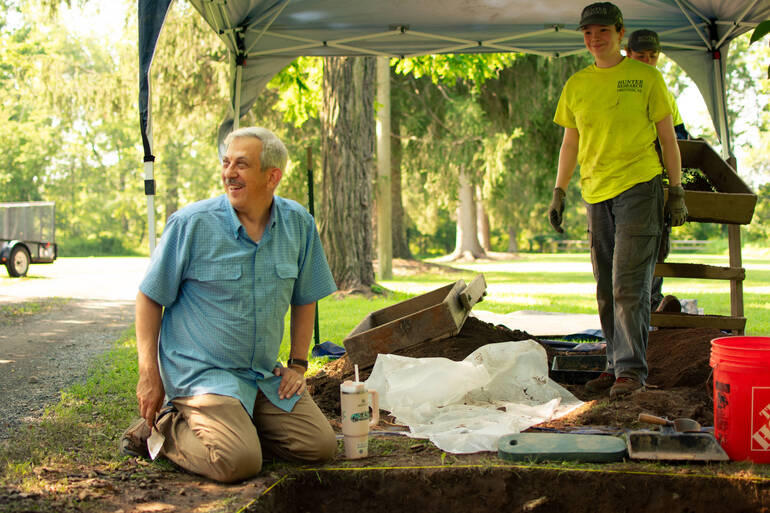
Reference:
Lord Stirling Estate National Historic Registry Nomination 1976
The National Register of Historic Places nomination for “The Buildings” (Lord Stirling Manor Complex) was prepared by George A. Chidley IV, Research Assistant with the New Jersey Historic Sites Section of the New Jersey Department of Environmental Protection, and is dated September 1976.
The nomination evaluated the site as having local significance and was submitted to the National Register for consideration under New Jersey’s historic preservation program. The surviving nomination package you provided consists of six pages, including the cover sheet, description, statement of significance, bibliography, continuation sheet, and a township location map. Notably, the nomination repeatedly references an attached map showing the exact locations of all structures within the manor complex, but that site map is not included in the surviving six-page copy, suggesting that part of the original submission is missing.