
Griffin & Howe’s Bernardsville Story How an American Institution Took Root
For generations, the quiet streets of Bernardsville were home to one of the most respected names in American sporting arms. Griffin & Howe was not simply a gun shop. It was a destination. Hunters, sportsmen, collectors, and craftsmen understood that if precision, balance, and tradition mattered, this was where you came.

Founded in 1923, before landing in Bernardsville, Griffin and Howe’s opening on June 1, 1923 quickly earned a reputation for producing some of the finest custom rifles and shotguns in the nation. Their work blended Old World European gunmaking traditions with American innovation. Every firearm was built to be used, but also to be admired. Fit, finish, and accuracy were treated as absolute standards. This was craftsmanship in an era before mass production reshaped the industry.


Seymore Robert Griffin brought expertise in custom sporting rifle design and high end gunsmithing, shaping the company’s reputation for precision craftsmanship and tailored firearms, while James Virgil Howe contributed deep knowledge in machining production methods and mechanical engineering, allowing Griffin and Howe to combine artisanal custom work with technically advanced manufacturing traditions.
To understand how Griffin and Howe achieved national prominence, it is essential to understand their relationship with Abercrombie & Fitch. In the early 20th century, Abercrombie and Fitch was not a casual clothing retailer. It was America’s premier sporting outfitter, supplying high quality firearms, expedition gear, fishing equipment, and hunting apparel to serious outdoorsmen, explorers, and elite sportsmen.
1927 – Abercrombie and Fitch Purchases Griffin & Howe
In 1927, Abercrombie and Fitch acquired Griffin and Howe and made it the company’s custom gunmaking arm. From that point forward, many Griffin and Howe rifles and shotguns were ordered through Abercrombie and Fitch catalogs and showrooms, while the actual craftsmanship took place in Griffin and Howe workshops, including the Bernardsville location. A customer could walk into Abercrombie and Fitch in New York City, place an order for a bespoke sporting rifle or shotgun, and receive a firearm hand built and finished by Griffin and Howe craftsmen in New Jersey.

Griffin and Howe had its inception in 1923 when Seymour Griffin met James Howe, a Frankford Arsenal armorer in Philadelphia with exceptional skill in metalcraft. Griffin met Howe through a mutual friend, Colonel Townsend Whelen, a central figure among early American gunwriters and sportsmen. During this period, Griffin and Howe opened its doors in New York City and specialized in custom bolt action rifles, primarily built from Krag and Springfield actions. At the time, none of the major arms manufacturers offered bolt action sporting rifles approaching the quality produced by Griffin and Howe’s master craftsmen.
Famous Sportsmen Clientele
Within sporting circles, Griffin and Howe attracted well known names. Dwight D. Eisenhower was a documented client, owning and using Griffin and Howe rifles during his post war years as an avid sportsman. Earlier influences came from the African safari firearms favored by Theodore Roosevelt, whose hunting style helped shape the American sporting rifle tradition that Griffin and Howe refined.

Literary and Hollywood figures also commissioned firearms from the firm. Ernest Hemingway, a serious hunter and outdoorsman, owned and used custom sporting rifles built by Griffin and Howe. Actors Clark Gable, Gary Cooper, Tom Sellick and Bing Crosby were also clients, drawn not by celebrity status but by the company’s reputation for balance, accuracy, and craftsmanship.
What made these associations remarkable was the absence of fanfare. There were no autographs on the wall and no publicity displays. Famous men stood at the same counter as everyday sportsmen, discussing walnut stocks, triggers, and sight lines. In Bernardsville, fame took a back seat to fit, finish, and function. That restraint was precisely why the shop earned trust at the highest levels.
The partnership between Abercrombie & Fitch and Griffin & Howe transformed a respected custom gun workshop into a nationally recognized sporting authority. Through Abercrombie and Fitch’s flagship stores catalogs and elite clientele the Griffin and Howe name became familiar to presidents senior military officers Hollywood figures and serious sportsmen who often encountered the brand through A and F rather than at a standalone gunmaker.
That chapter closed in 1976 sometimes cited as 1977 during Abercrombie and Fitch’s bankruptcy when longtime Griffin and Howe employee Bill Ward along with colleague John Realmuto purchased the company’s assets and returned Griffin and Howe to independent ownership. From 1930 to 1976 the two operated together for approximately 46 years, a period that permanently shaped the Griffin and Howe reputation and positioned it for its modern era as an independent sporting institution.

Presidential Sportsmen
A lesser known but notable aspect of the Griffin and Howe legacy is its connection to the White House. The Bernardsville based firm was trusted to build and service firearms for sitting United States presidents, connections earned solely through reputation. Eisenhower valued their precision, reliability, and balance. Earlier inspiration came from the firearms carried by Theodore Roosevelt on his African safaris, which encouraged the founders to adapt European sporting rifles to American use.

Within the Bernardsville era specifically, many American Presidents and Industrial giants were associated with the local shop. Company histories and firearms records confirm this relationship. Other prominent figures linked to Griffin and Howe were clients of the firm overall, but there is no firm documentation placing them inside the Bernardsville store itself. Given the company’s long standing culture of discretion, many visits were intentionally undocumented. What can be stated with confidence is that the Bernardsville shop quietly served clients at the highest levels of American public life without ever advertising it.
Bernardsville Destination
Bill Ward and John Realmuto were longtime insiders whose careers were built inside the Abercrombie and Fitch era of Griffin and Howe rather than coming from outside finance or retail. Bill Ward rose through the company as a skilled sporting arms professional and executive, becoming president and deeply understanding both the gunmaking tradition and the business realities of the firm, while John Realmuto brought complementary operational and management experience shaped by years working alongside the craftsmen and sales staff. Both men were rooted in the Northeast sporting culture that defined Griffin and Howe, and in 1976 they leveraged their institutional knowledge to purchase the company’s assets from Abercrombie and Fitch, preserving its legacy and guiding it forward as an independent American sporting house rather than allowing it to be lost during A and F’s decline.

Bernardsville may seem an unlikely home for an internationally known firearms maker, but that contrast was part of its appeal. Set within Somerset Hills horse country, Griffin and Howe attracted clients who valued discretion, skill, and tradition. A visit to the shop was an experience. Wood stocks were hand fitted. Actions were tuned by master gunsmiths. Nothing was rushed.

The shop became a quiet center of shooting culture in New Jersey and beyond. Long before large outdoor retailers, Griffin and Howe represented a time when knowledge was passed hand to hand across the counter. Advice mattered. Skill mattered. Reputation mattered most. Although the company eventually relocated, its Bernardsville chapter remains a significant part of local and national sporting history. It stands as a reminder that world class craftsmanship once thrived in small town America, and that Bernardsville played an unexpected role in shaping American gunmaking excellence. The Griffin & Howe New York City retail location closed in 2003, ending nearly 80 years of continuous presence in Manhattan.
Firearm Works of Art
Griffin and Howe historically supported two shops and showrooms. One was located in the Bar Building at 36 West 44th Street, Suite 101, in New York City. The other opened in 1987 at 33 Claremont Road in Bernardsville, New Jersey.

The firm pioneered the profession of custom rifle manufacture following the turn of the century. While it remains known for fine rifles and accessories, it also became equally respected for its inventory of premier shotguns, including examples from Holland and Holland, Purdey, and Churchill, often commanding prices exceeding $25,000.
Walking into the Bernardsville store was a lesson in quiet precision. A knowledgeable gunsmith would open a glass case and present firearms that felt closer to museum pieces than merchandise. A Griffin and Howe Model F in 12 gauge, with beautifully figured walnut, restrained engraving, and an action that closed with mechanical certainty, illustrated the firm’s standards. Today, well preserved examples typically sell between $3,000 and $6,000, with rare configurations exceeding $8,000.

G&H Collectible: Holland and Holland 12 bore Royal Deluxe Double Barrel – a top-tier Royal Deluxe with full bespoke features can commonly be $300,000 – $500,000+


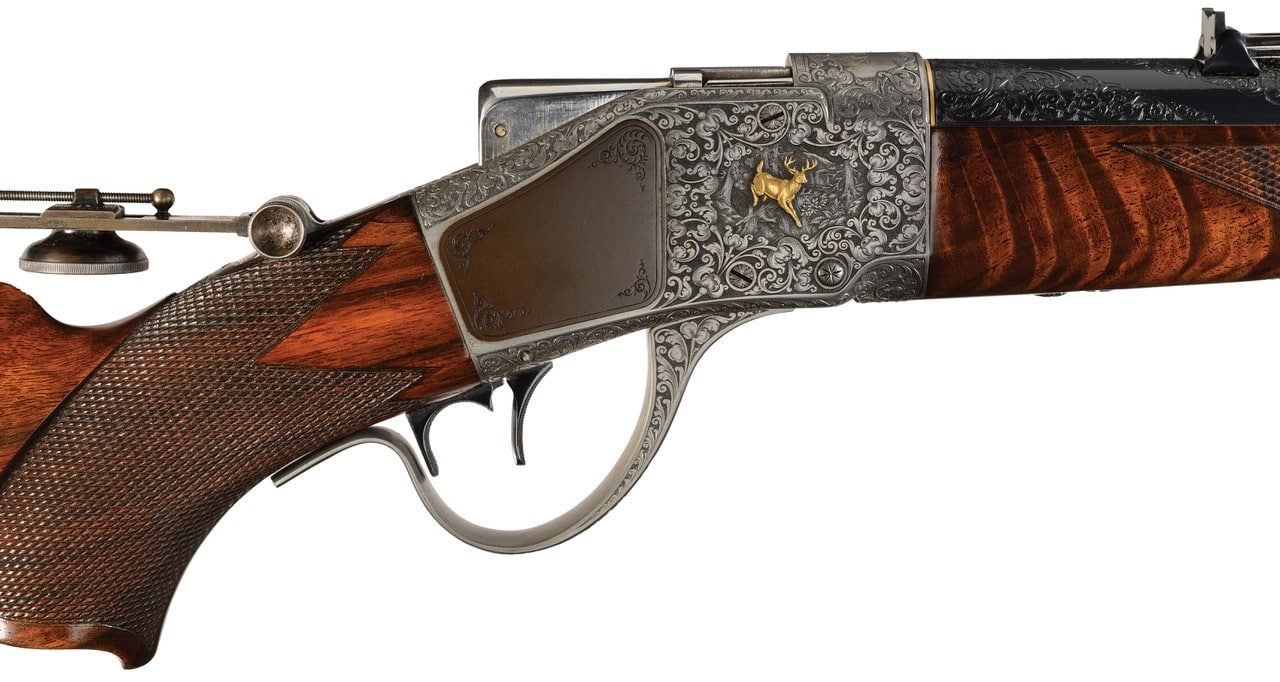
A Griffin and Howe Model K in 16 gauge represented the ideal upland bird gun, lighter, graceful, and perfectly balanced. These shotguns are now especially sought after, commonly trading between $4,000 and $9,000 depending on condition and provenance. The shop also housed international examples. A Krieghoff over under shotgun built in Suhl stood as a contrast to American craftsmanship, heavier and engineered for European shooting traditions. Comparable examples today often sell between $6,000 and $12,000. Seeing these firearms side by side reinforced the sense that the Bernardsville shop served as a crossroads of global gunmaking traditions.

This one is valued at around $12,000.
As a relativly simplistic firearm enthusiast, I have to admint I’m a Remington 1187 and Browning Citori sportsman, which sell in the $400-$900 price range. So to say I was impressed was an understatement. I don’t think I was even worthy to be in the same audience with such sportsman percision artwork. Charlie Hoiles, a Basking Ridge resident and big time G&H fan, would show me a rare Griffin and Howe Model K 16 gauge, a bird gun that felt almost alive in my hands. The sidelock action carried fine scroll engraving, and the lighter gauge gave it a graceful swing that upland hunters prize. Sixteen gauge Model K shotguns are especially sought after today, often trading in the $4,000 to $9,000 range, with higher prices attached to superior wood, engraving quality, and documented provenance. It was the kind of gun built for long days in the field and a lifetime of care.

Griffin & Howe’s 100 Year Anniversary & Changing Times
By the 1950s, Abercrombie and Fitch began moving away from firearms and traditional outfitting, eventually transforming into the modern clothing brand known today. Griffin and Howe continued independently, preserving its standards and traditions. They celebrated their anniversary For their 100th anniversary program, Griffin and Howe coordinated limited edition collectible rifles rather than mass production, including a planned run of 35 Whelen configurations with both exhibition grade walnut and synthetic stock options, a few built left handed, and sold as complete packages with quick detachable mounts, hard cases, and accessories, and the published pricing for the anniversary rifles started around $12,000 for synthetic versions and climbed to about $22,000 for the walnut stocked editions, with additional centennial serial numbered pieces prepared in small numbers for collectors.


Alongside the rifle focus, Griffin and Howe also described other tribute models within the same program such as the All American and Highlander rifle setups tied to historic themes like Theodore Roosevelt and Ernest Hemingway editions, while their Griffin and Howe branded game shotguns, including round body RBGG style models built on Spanish sidelock platforms, were offered through a separate collectible channel with prices roughly in the $7,500, $11,500 range depending on options and condition.
Destinations
Then there were the destinations and the new club partnership. Remaining in a small New Jersey town became increasingly difficult; Regulatory pressures, space limitations, and changing client expectations made the Bernardsville location impractical. Modern clients sought full sporting experiences, including instruction, fitting, and field testing, requiring land and facilities unavailable locally.


The solution was relocation to the Hudson Farm is located in Andover Township in Sussex County, New Jersey, where the company established it’s retail operations and the Griffin and Howe Shooting Academy. There, access to open land and private shooting grounds allowed the firm to preserve its standards rather than compromise them. Leaving Bernardsville was not a decline, but an adaptation. The town had been the cradle of the company’s golden era. What remained behind was legacy, a reminder that world class American craftsmanship once thrived quietly in Somerset Hills horse country.

Chuck Anderson was the owner and operator of Hudson Farm Country Club and a long-time New Jersey shooting and sporting figure who worked directly with Griffin & Howe leadership (including Steven Polanish) to arrange the lease and eventual relocation of Griffin & Howe’s shooting school, gunsmithing and outfitting operations to Hudson Farm in 2015. On the Griffin & Howe side was Steven Polanish, who as COO and later president of the company decided to consolidate all operations at the Hudson Farm location and oversaw the move of Griffin & Howe’s facilities from other sites (such as Bernardsville and Greenwich) to the Hudson Farm grounds in Andover, New Jersey.
Griffin and Howe Today

Today, Griffin and Howe continues the traditions established in Bernardsville from a setting that allows the sporting experience to extend beyond the showroom. Its shooting academy and outdoor operations are now based at Hudson Farm in North Jersey building on it’s reputation it had at it’s Loon Bay Lodge in St. Stephens, New Brunswick, Canada. Today, the Griffin and Howe Shooting Academy offers professional instruction in sporting clays, skeet, trap, and upland shooting. At it’s Hudon Farm Club facilities, Griffin & Howe’s firearms and instruction ranges from private lessons to multi day instruction, charity events, and corporate programs, with emphasis on gun fit, mount, eye dominance, lead, and timing.
Like in Bernardsville, Griffin and Howes still provides trip planning service focuses entirely on guided destination travel, where the company connects hunters with carefully selected professional outfitters and clubs and arranges the permits lodging transportation and local introductions so travelers can step into a seamless bespoke sporting experience, supporting outings around the U.S. and across the world in places such as South Dakota for pheasant and prairie birds Argentina for high volume dove and perdiz Scotland and England for driven grouse and walked up game and curated North American big game lodges in the Rocky Mountains Canada and other premier wilderness regions, allowing clients to enjoy distinctive upland waterfowl or international hunts without having to coordinate the complex details on their own.
Contact Information:
Griffin and Howe Shooting Academy
Hudson Farm
Andover Township, Sussex County, New Jersey
Phone 973 398 2670
Email info@griffinhowe.com
The Hudson Farm Foundation

The Hudson Farm Foundation grew out of the preservation effort that followed the 1997 acquisition of the former Hudson Guild Farm property by a group led by Peter R. Kellogg and his family. Peter R. Kellogg is an American businessman, billionaire, and philanthropist best known for leading the Wall Street specialist trading firm Spear, Leeds & Kellogg. At the time of purchase, the historic farm and the original McRoy mansion faced the real possibility of large scale residential development. Instead, the Kellogg led ownership committed to conserving the land, restoring the mansion as the clubhouse of what became the Hudson Farm Club, and expanding the property through additional land acquisitions. Today, the preserved estate encompasses more than 4,000 acres across Sussex and Morris counties, making it one of the largest privately conserved tracts in northern New Jersey.
The Hudson Farm Foundation was established to extend that stewardship beyond the gates of the property. Serving as the philanthropic arm of Hudson Farm, the Foundation supports environmental conservation, land preservation, and community based charitable efforts throughout the Lake Hopatcong and surrounding region. Through grants, sponsorships, and partnerships with local nonprofit organizations, the Foundation reflects the Kellogg family’s broader commitment to responsible land use, conservation, and civic engagement. Together, the Club and the Foundation represent a modern continuation of the property’s original social mission, balancing private use with long term preservation and public benefit.

Mr Local History has known to have knocked down a few clay birds and targets in his day.
Personal Favorites: Colt 10mm Delta Elite and a Browning Citori 12 gauge over/under.
Gun Related Stickers, Shirts, and more

Plan a Trip:
Hudson Farm – Griffin & Howe Shooting Facility
If you want to try sporting clay shooting at the Griffin & Howe Shooting Academy in Andover, NJ, you book a session in advance since they do not accept walk-ins and access to the clay course is by scheduled instruction only. Their shotgun instruction (which includes use of the 20-station sporting clay course and guidance from NSCA-certified instructors) is typically priced per session rather than per person, and a private lesson can include up to four people in the same booking under one instructor (so yes, you can book a group of 2 together). They also run structured Intro to Shotgun classes that bundle everything for beginners — including clays, cartridges, refreshments and instruction, at about $425 per person for those events. The exact cost for your specific booking will depend on the length of your session and whether you’re joining an introductory class or a private lesson, so it’s best to call (973) 398-2670 or email bookings@griffinhowe.com to get current pricing and available dates.
Before you visit, check out this fantastic film all about the Hudson Farm Club facility as well as some special guests from Griffin & Howe. And 1911 Syndicate founder Jake Dwyer a leftie too!


