Board Track Auto Racing
PREVIEW RELEASE:
Our researchers continue to work with this story as there are several conflicting points of view we want to continue researching. We will update over the next few weeks, but we wanted to let people see this preview in case they’d like to write us.
Jersey Lost Racetrack Series
Here’s one of those stories that starts in one place and then takes you on a wild chase to gather up pieces of not just one historic Newark venue but two landmark venues. We introduce you to the Vailsburg Velodrome, also known as the Newark Velodrome, the Newark Vailsburg Velodrome, and the Vailsburg Motordrome, also known as the Newark Stadium Motordrome. Our journey welcomes all the fans of cycling, motorcycles, racecars, and the life of two sporting venues “in the Burg” with many configurations from 1897 to 1930. Our researcher will keep digging. If you have anything to share, there’s a comment section at the end of the post.
Bicycle board tracks known as velodromes were a thrilling yet perilous adaptation of the traditional bicycle velodromes. These tracks gained immense popularity throughout America in the early 20th century and were pivotal in the later rise of motorcycle racing as a spectator sport.
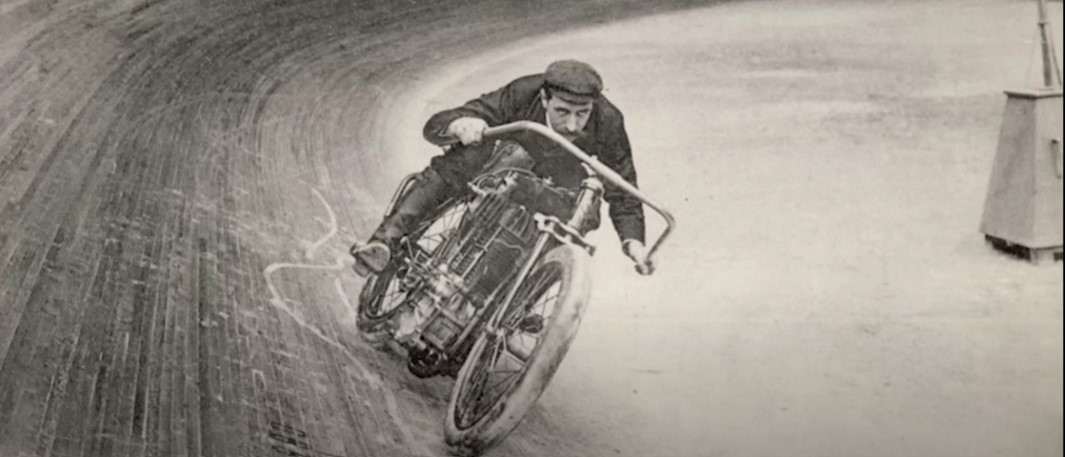
Promoters began adapting wooden tracks for motorized bikes in the 1910s, drawing inspiration from bicycle velodromes. Steeply banked and constructed with wooden planks, often pine, these tracks enabled high-speed racing, with riders leaning dramatically into turns and often exceeding 100 mph. The motorcycles were designed purely for speed, usually stripped of brakes to reduce weight, adding to the races’ excitement and danger.
It’s funny that it wasn’t too long ago when the bicycle was invented. London, England’s John Kemp Starley invented the first same-sized two-wheel bicycle, known as the “safety bicycle,” in 1885. Of course, men being men, competitions to race these new vehicles became a thing. So what do you do? You build a racetrack for bicycles. The French are tagged as the creators of the bike racetrack, hence the term Velodrome stuck.
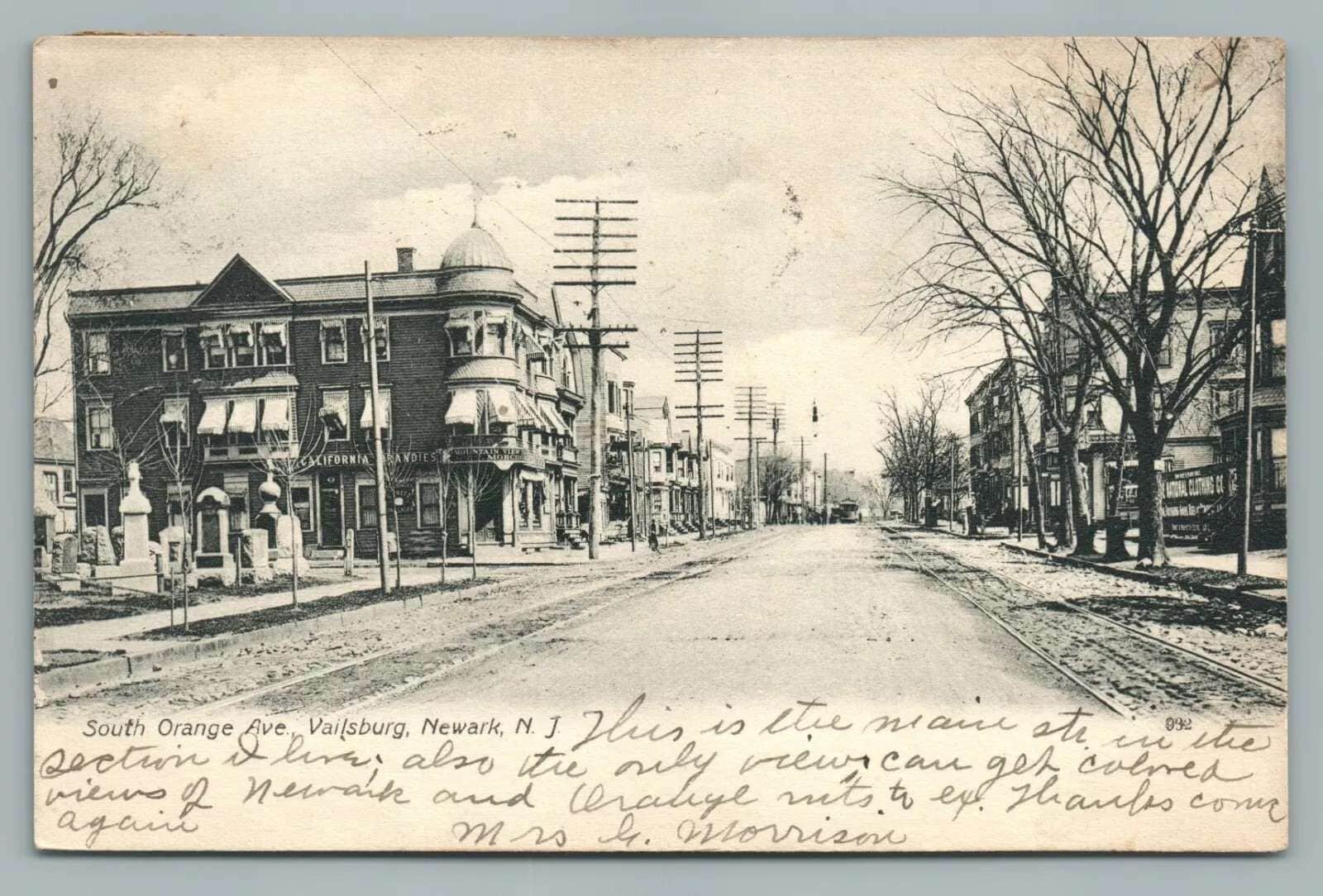
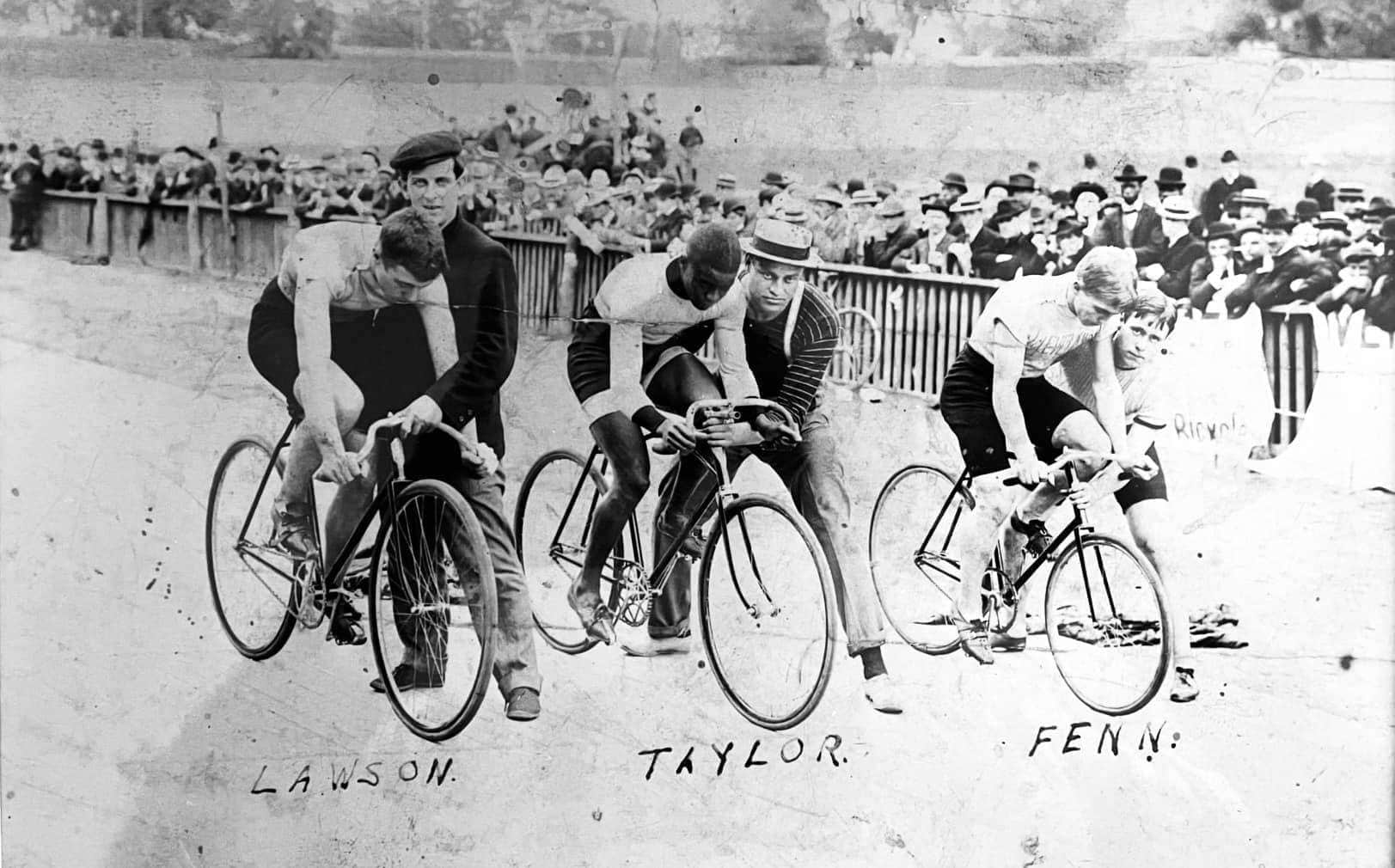
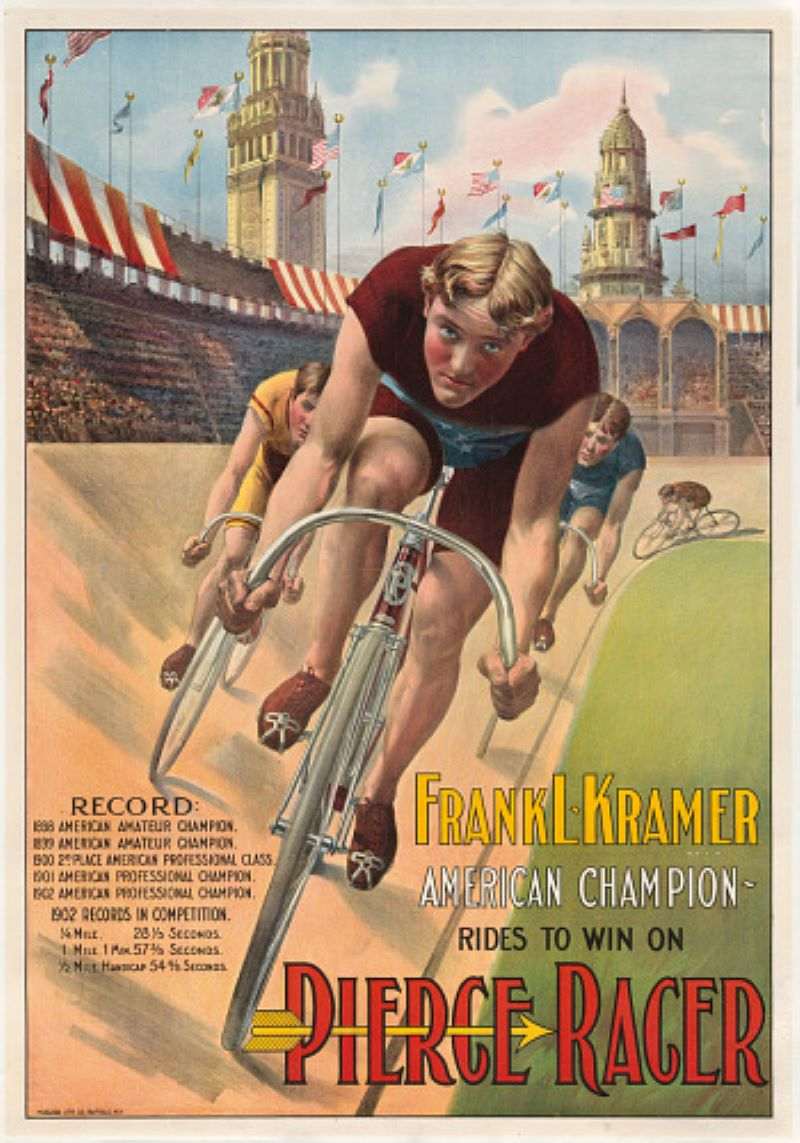
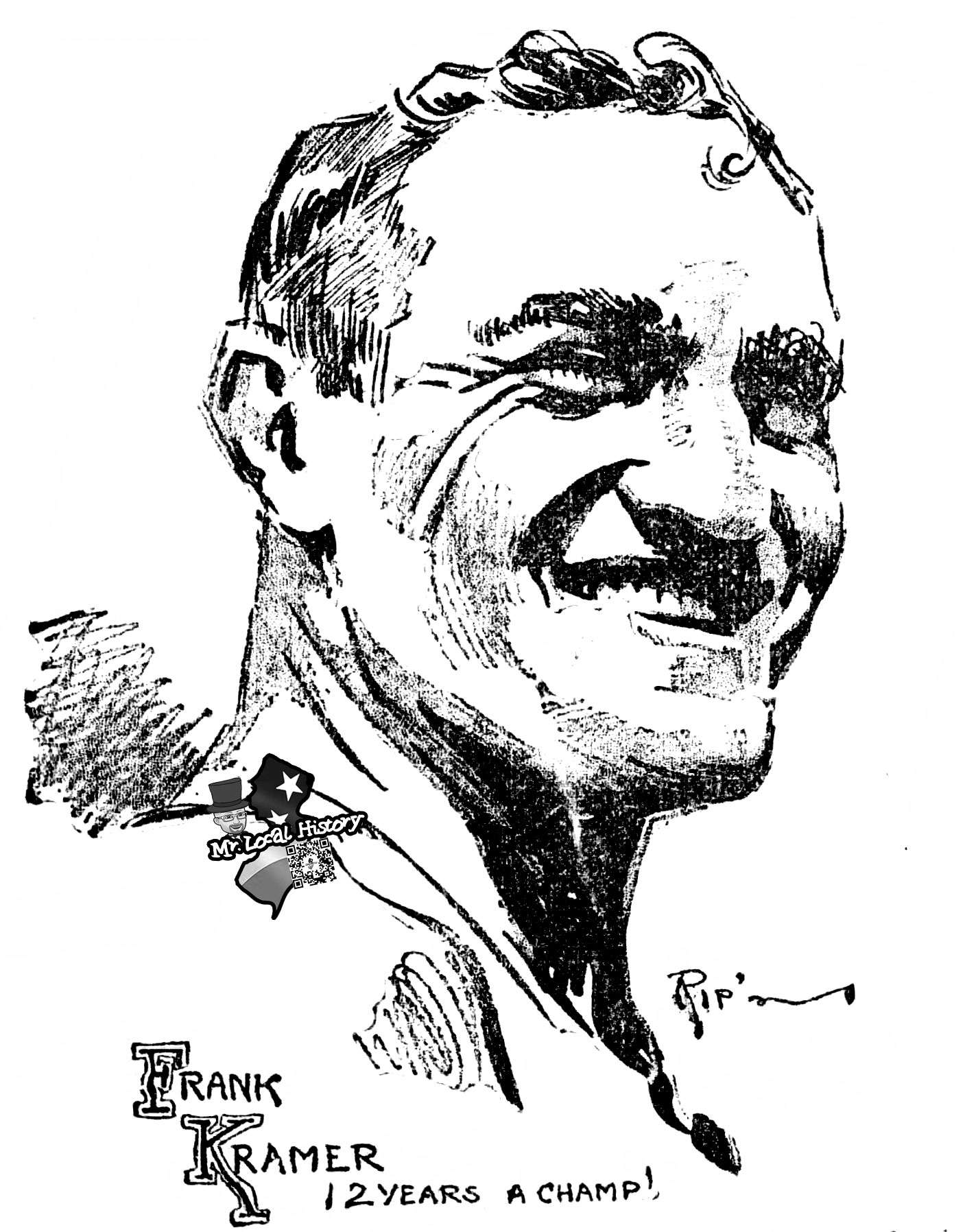
Early velodromes were made of wood planks or concrete and featured steeply banked turns to help riders maintain speed. They were said to first appear in Paris, France. Many don’t know Newark, New Jersey, was once considered the “cradle of cycling” in what was known as the sport’s golden age. It all began on Memorial Day weekend on May 31, 1897, when over 1,000 spectators made it to the Vailsburg section of Newark near Shooting Park and welcomed the first of what became many versions of velodromes to the area. Built by British sports promoter John Prince, the initial track was built by over 100 men working day and night shifts on the south side of South Orange Avenue, rivaling the nearby velodrome at Waverly Fairgrounds, now Weequahic Park. A 2,000-seat grandstand would later be added after the opening. Other cyclists such as Donald McDougall, George Chapman, Alf Goulet, Percy Lawrence, and Lloyd Thomas all made their presence at the Vailsburg Velodrome. And yes, there was East Orange’s Frank Kramer.
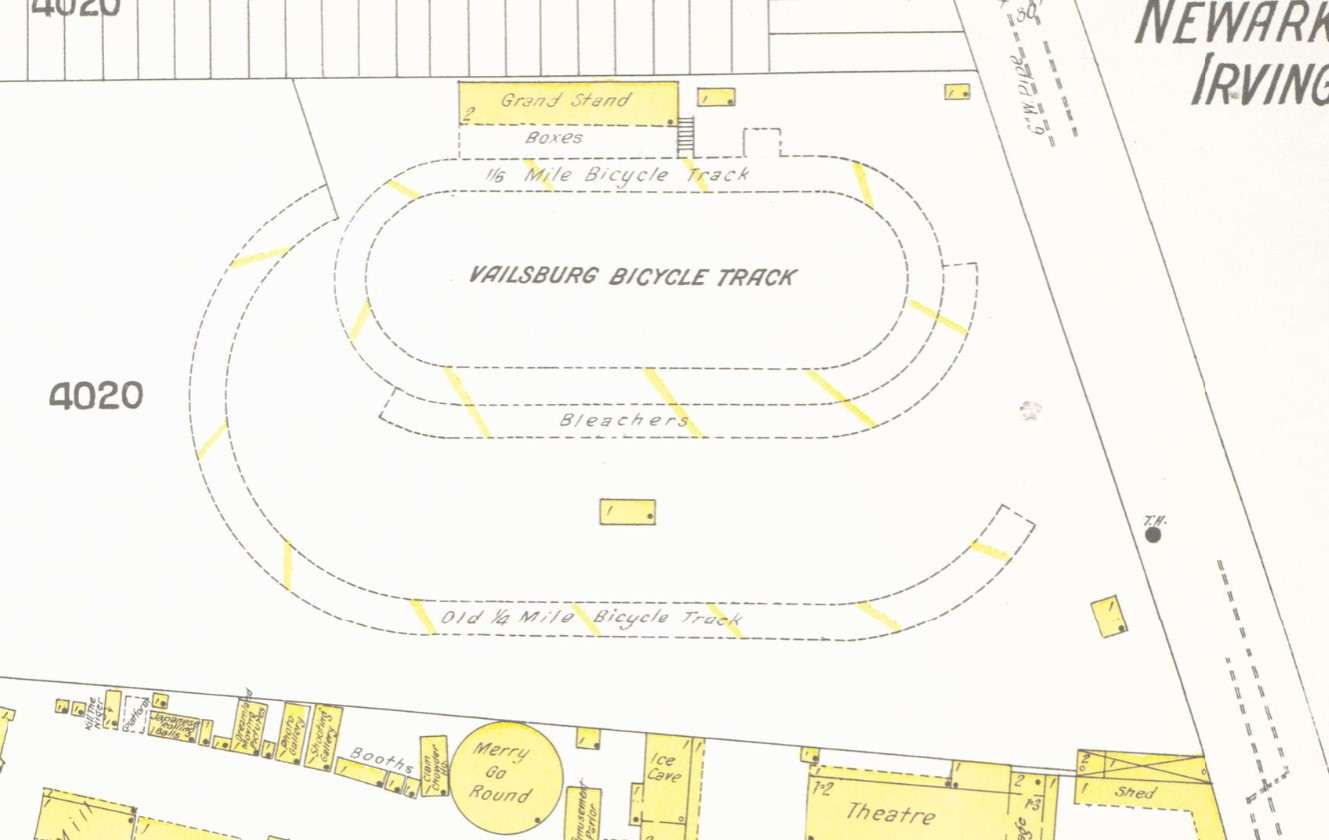
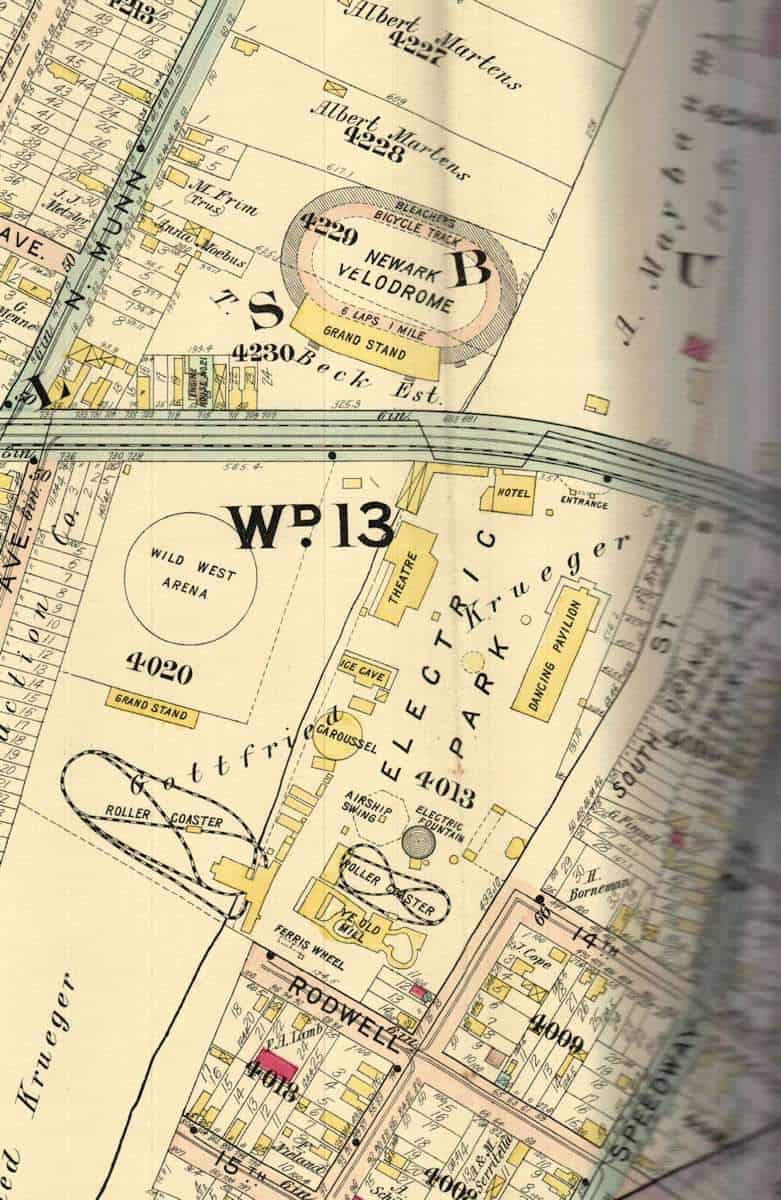
Wooden plank velodromes didn’t last long, typically only a few years, as the elements and tire wear wore down the vertical board planks to a point where it was easier to rebuild vs. replace sections of the track. The 2nd Vailsburg Velodrome was located on the north side of South Orange Avenue and Munn Avenue in the Vailsburg neighborhood. It operated from 1907 until its demolition in 1930. The velodrome replaced the earlier, smaller wooden track that had been in use since 1897 on the south side of South Orange Avenue. The Velodrome was primarily a cycling venue, but hosted other events, such as boxing.
Newark, New Jersey, was once considered the “cradle of cycling” in what was known as the sport’s golden age.
The Golden Age of Bicycle Racing in New Jersey – Michael C. Gabriele
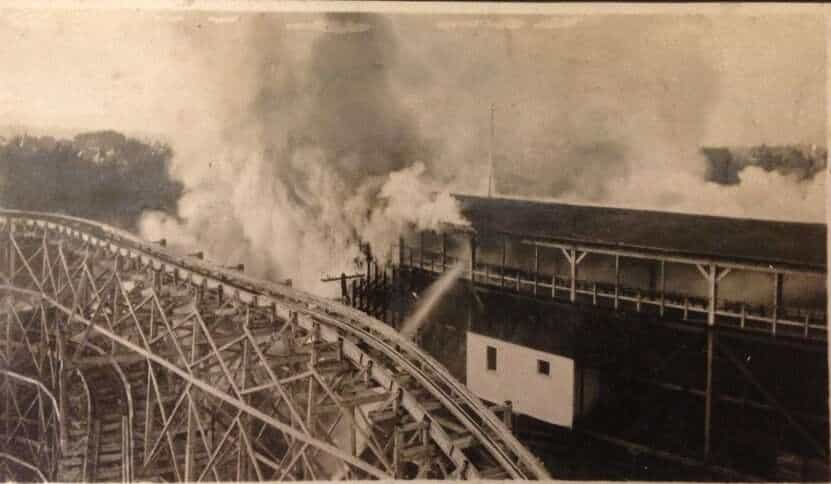
The first Vailsburg Velodrome continued business for seven years, but at 1:30 am on the morning of February 16, 1904, the track was engulfed in flames and heavily damaged by fire. You’ll see this become a trend. Luckily, repairs were made, and the track reopened for the 1904 season when on April 10, 1904, 7,000 spectators overflowed the 2,000-seat grandstands watching Fred Kramer win the 1/2 mile pro race.
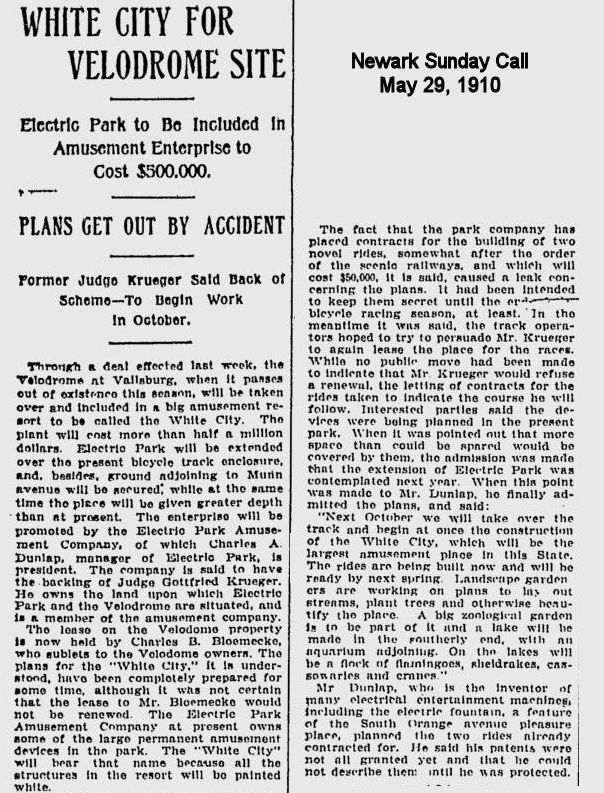
Shooting Park had fallen into disrepair, and in May of 1903, Shooting Park became Electric Park. Shooting park showcased athletic venues for sport and dressage (horses). With the existing Vailsburg Velodrome on the park’s west side, it was a win-win for both attractions.
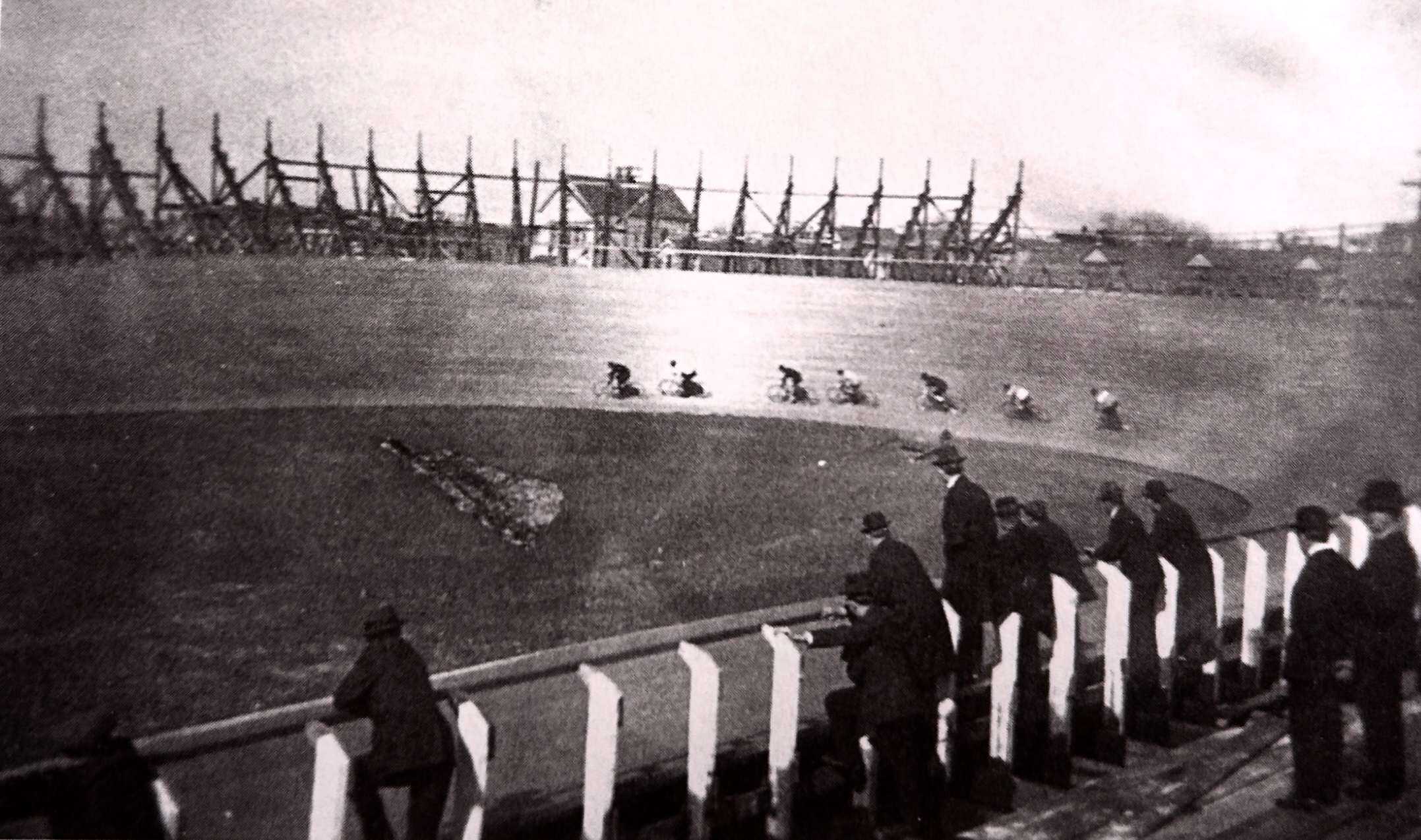
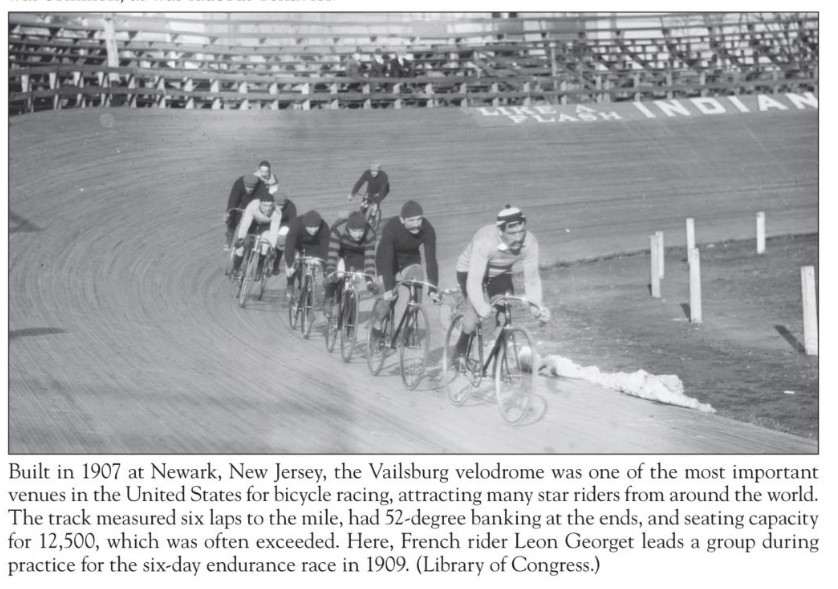
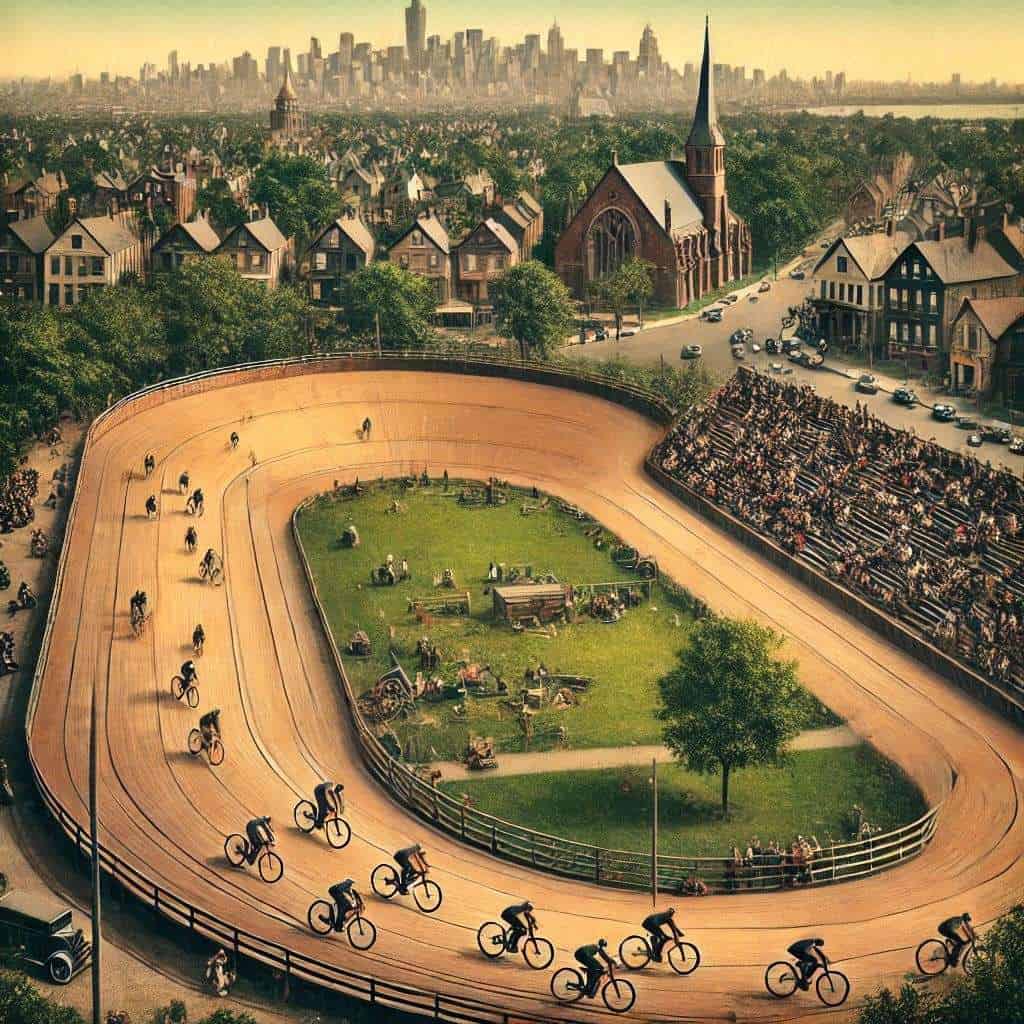
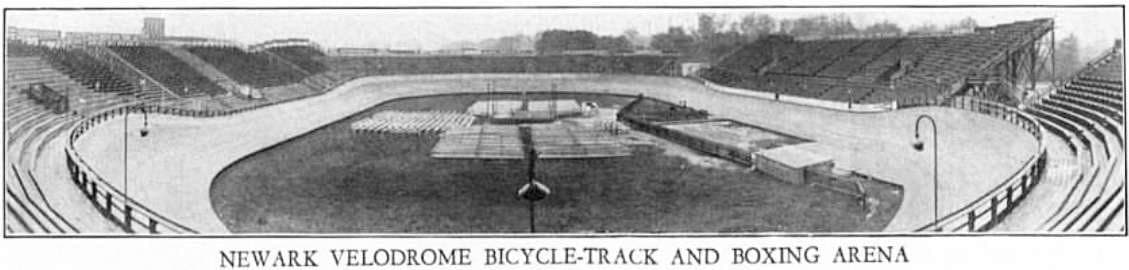
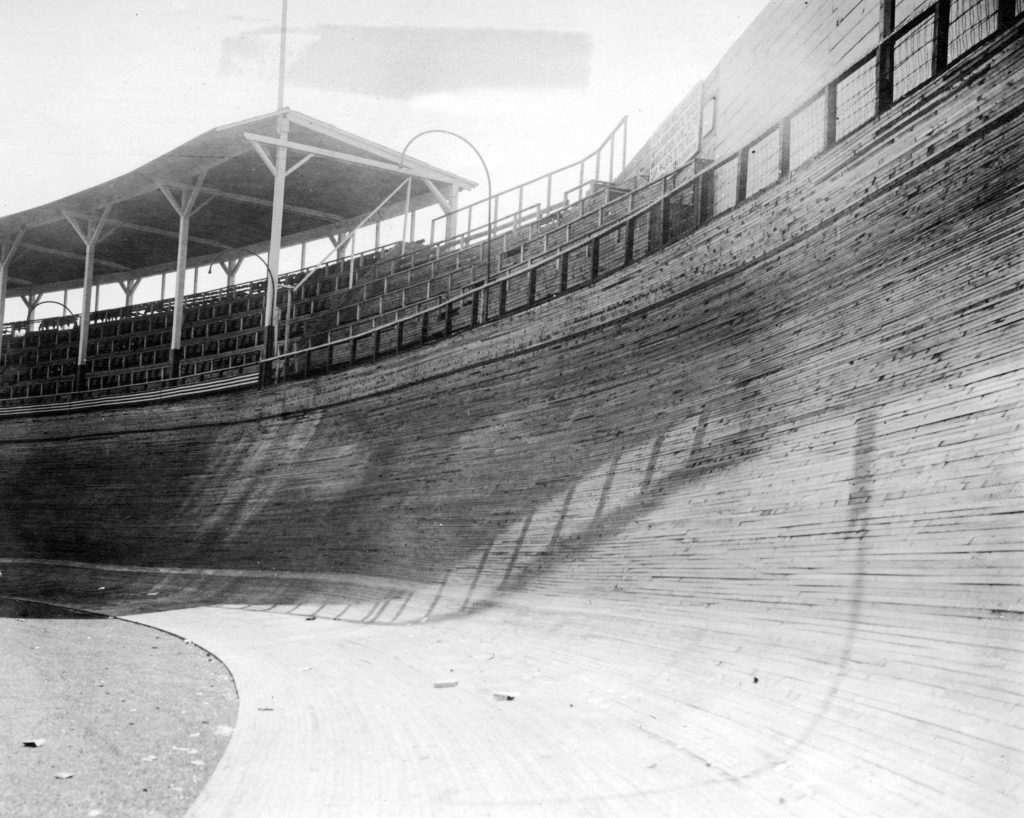
A new Vailsburg Velodrome was built in 1907, and this time, the facility would now accommodate up to 12,500 spectators. The Vailsburg track was six laps to the mile (1/6th mile) or approximately 293 yards (300 meters) per lap and was designed by John M. Chapman. The track featured steeply banked turns pitched at 52 degrees and straightaways at 25 degrees, allowing for high-speed races. As you will see, this velodrome became a stadium as this venue could accommodate six times the spectators of the previous venue.
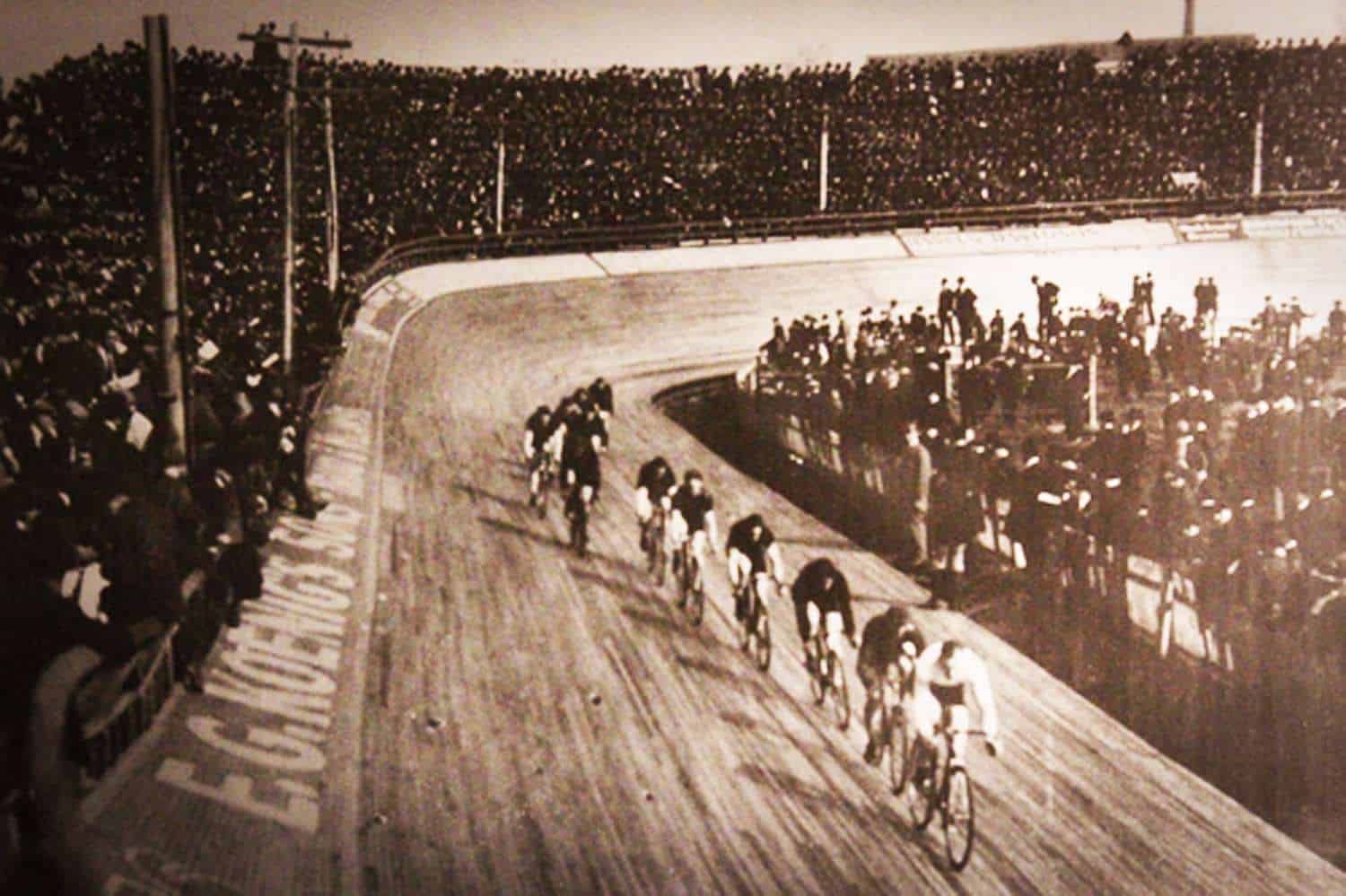
Vailsburg continued its tradition during the golden age of racing with one of the largest circular board plank stadiums, now called “Saucer Tracks,” because their steeply banked circular design looked like a large saucer. They also allowed the spectators (over 12,000), seated in grandstands above the top of the racing surface, to get a close-up look at the action. Fans often stood along the barrier railings to watch the riders, who flew past at incredible speed just inches from the spectators.
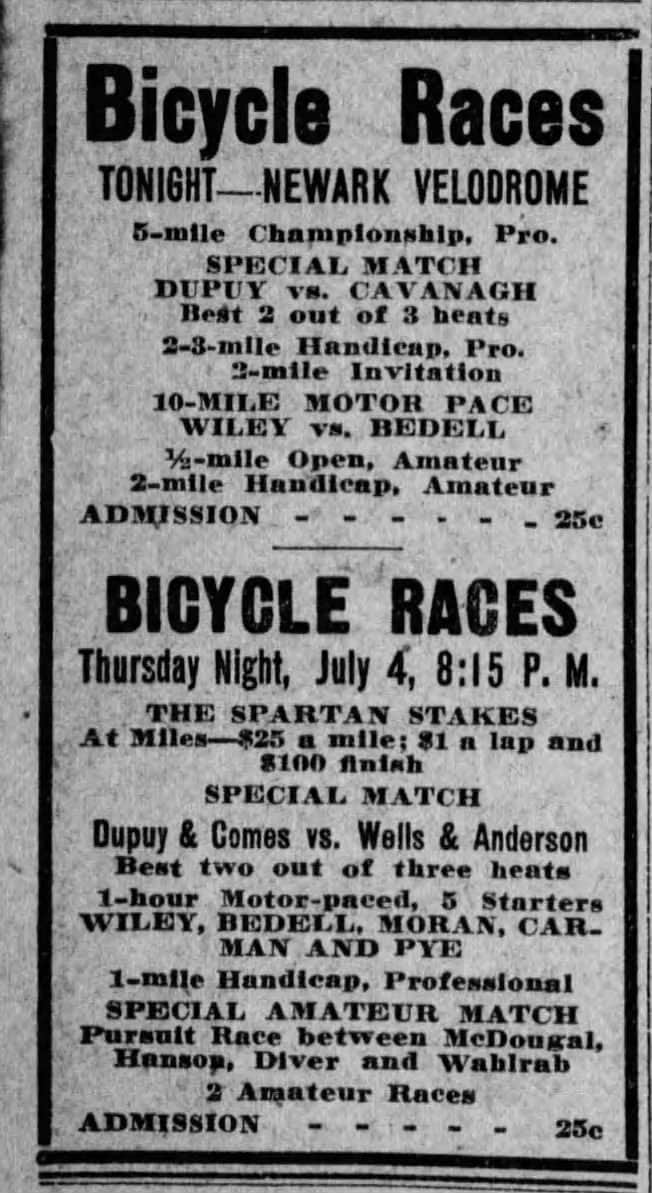
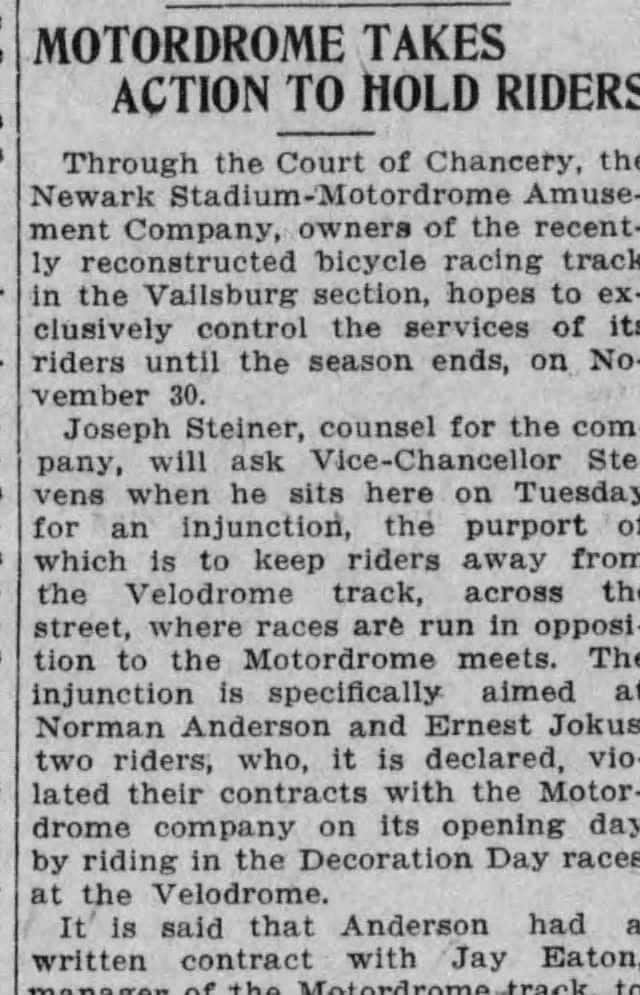
After rain delays postponed the April 9, 1911 opening, the new Newark Velodrome opened on Easter weekend, April 16-17, 1911, with high winds and snow squalls. Still, the new track opened to 5,000 spectators on the north side of South Orange Avenue (at the intersection of Munn Avenue) across the street from the previous Velodrome. Click to see the two articles below:
At the time, the Vailsburg Velodrome was a state-of-the-art track with a 12,500 capacity that drew 20,000 for the UCI World Cycling Championships in 1912, the fans overflowing into the infield. UCI Track Cycling World Championships were held in Newark, New Jersey, from August 30 to September 4, 1912. The event was sanctioned by the Union Cycliste Internationale (UCI), the governing body for cycling. Fred Kramer, who lived in nearby East Orange, won the 1912 UCI Track Cycling World Championships.
Union Cycliste Internationale serves as the international governing body for cycling, and the first recognized world championship was held in Chicago in 1893 and continues today. Kramer didn’t only win the 1912 World Cycling Championship; he won the World championship at his home track, the Vailsburg Velodrome! The American team did pretty well as well that year.
On September 12, 1915, a fire leveled what had become a world-famous velodrome after the 1912 World Championships being held at the site. The Essex County Park Commission hired a wrecking company to clear the remains along with the adjoining Electric Park in 1917. One good thing from the tragedy was that Newak got a new Vailsburg Park that still exists today. Sadly, there are no markers identifying these great board tracks. We’re gonna see if we can change that.
From the ashes comes the phoenix, and a new Vailsburg Velodrome was built featuring an improved board track and infrastructure, making it one of the leading cycling venues of its time.
One more time! Fire and a rebuild.
In 1930, after the racing season was completed and the lease concluded, the decision was made to end racing and demolish the track. An apartment building replaced the hallowed grounds of cycle, motorcycle, and auto racing. The legacy of board tracks influenced modern track and motorsports design. While the velodromes are long gone, their daring spirit is carried on through vintage cycling and motorcycle clubs, exhibitions, and films celebrating board racing’s early days. These tracks and their racers remain essential in board track racing history, remembered for their innovation, excitement, and danger.
New Jersey was home to several prominent motordromes. It attracted thousands of spectators eager to watch daring racers, including teams sponsored by manufacturers like Indian and Harley-Davidson. Similarly, the Asbury Park Motordrome was a regional hotspot, hosting major motorcycle racing events and showcasing technological advancements in racing. Atlantic City also hosted temporary board plank tracks during large events to capitalize on the city’s vibrant tourism industry.
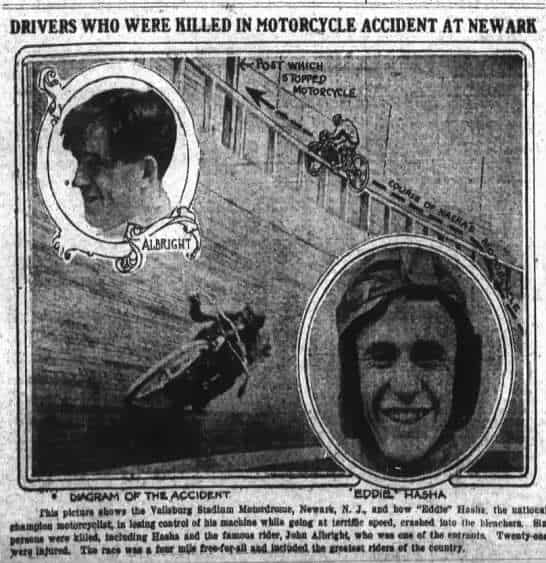
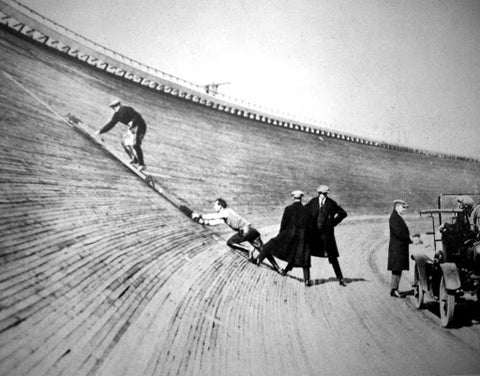
Board track motorsports racing occurred on specially built oval tracks known as motor dromes. Sometimes referred to as “amusement stadiums,” these tracks were constructed from wooden planks, typically 2x4s, hence the term “board track.” The tracks were steeply banked, and this one had 60 degrees of banking (most topped out at 40) to allow motorcycles to maintain 90mph speeds while cornering. Banking also added to the spectacle as riders raced perilously close to the top edge of the track.
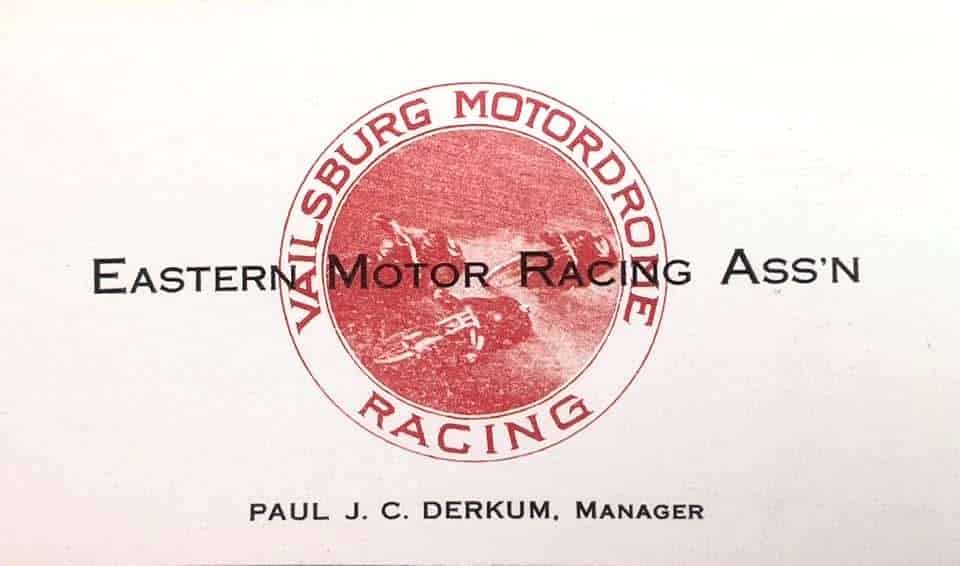
The new 8,000-seat Newark Stadium Motordrome, also called the Vailsburg Stadium Motordrome” was the new board track racing venue across the street from the Velodrome, but this one was designed for motorsports. Built in the Spring of 1912 by Zacher & Curry contracting for ,000, the Eastern Motor Racing Association funded the new stadium. The new 1/4-mile circular board plank bowl track with a 60° angle was unfathomable if you think about it.
The turns at Daytona International Speedway were built at 31 degrees, and I’ve walked up it, and it wasn’t easy.I can’t even imagine the guy in the photo below trying to get up a 60-degree bank. What an incredible stadium!
The venue sat at the corner of Broad Street and Orange Street in downtown Newark near the University section of town.