BM Artillery Barracks 1779 sm
America’s First Military Academy, the Pluckemin Academy (Dec.1778) was 24 Years BEFORE West Point (Mar. 16, 1802).
One of the greatest untold stories of the American Revolution.
The Pluckemin Winter Cantonment, part of the overall Middlebrook Encampment of 1778-1779.
One of the lesser-known stories of the American Revolution is the truth about the Pluckemin Encampment, also known as the Pluckemin Cantonment. You see, a cantonment is different than an Encampment because a cantonment has actual buildings versus temporary tents. Back in 2005, we started on a quest to shine light on this story.
Many people are still unaware of the treasure on the hillside in the sleepy little hamlet of Pluckemin, located in Bedminster Township, New Jersey. With the help of groups like the Friends of the Jacobus Vanderveer House, the story is coming to light, and there soon may be a museum to recognize one of the greatest untold stories of the American Revolution.
The search for the Pluckemin Academy and the Continental Army cantonment began with this 1779 drawing, which was lost in the US government archives.
The video below shows a grant from the Somerset County Cultural and Heritage Commission to the Friends of the Jacobus Vanderveer house. Brooks Betz served as the Project Manager for the grant’s execution. Instead of producing a physical model of the cantonment, a virtual model was created with the assistance of John Seidel, an archaeologist and the lead of the 3rd Pluckemin Dig. John is also a professor at Washington College in Maryland.
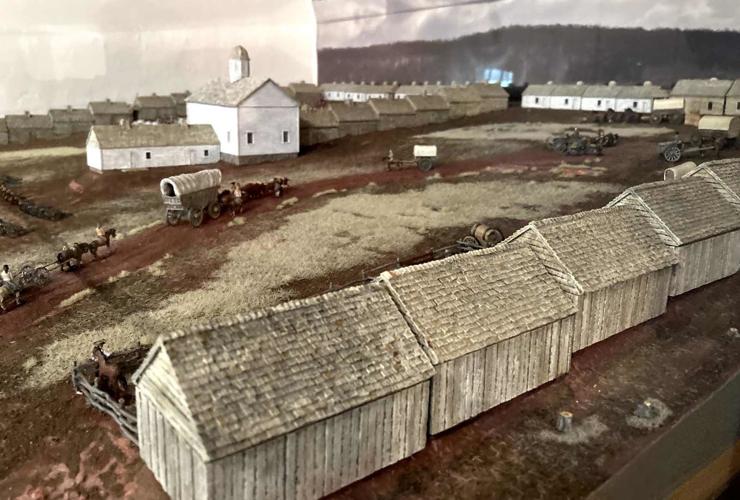
The trustees eventually wanted to go further and put together a physical model of the site. A request for a Somerset County grant in 2020 was unsuccessful. But ultimately, funding was secured through “a generous donation” from Cillo, according to the Friends group. Professional model maker, Stephen Schwab of Bethlehem Township, was chosen for the project. The exhibit at the historic Jacobus Vanderveer House on River Road was formally unveiled in a ceremony that drew dozens of history buffs in May 2022.
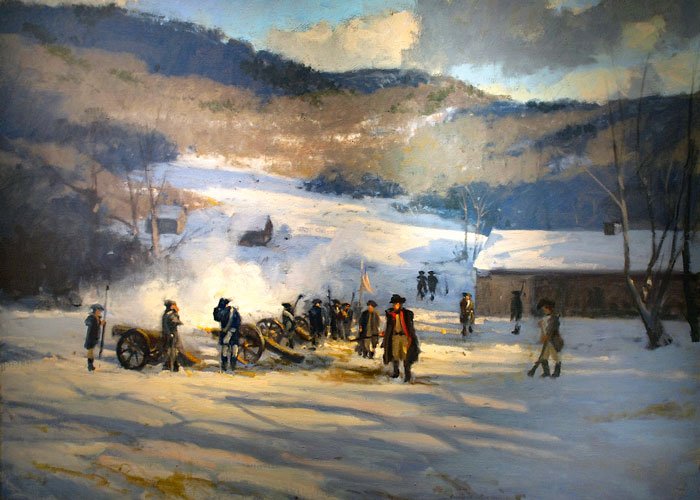
General Henry Knox had innovative ideas for improving the Continental Army’s artillery. At Pluckemin, he put many of his theories into practice. The camp itself, at the time, was an impressive sight that attracted spectators from miles around. In addition to barracks for the enlisted men and separate quarters for the officers, the camp included an armourer’s shop, a complete military forge, and a laboratory. The most significant innovation, however, was the establishment of the first military academy in the country to train artillery and engineering officers, therefore becoming the forerunner to the Academy at West Point.”
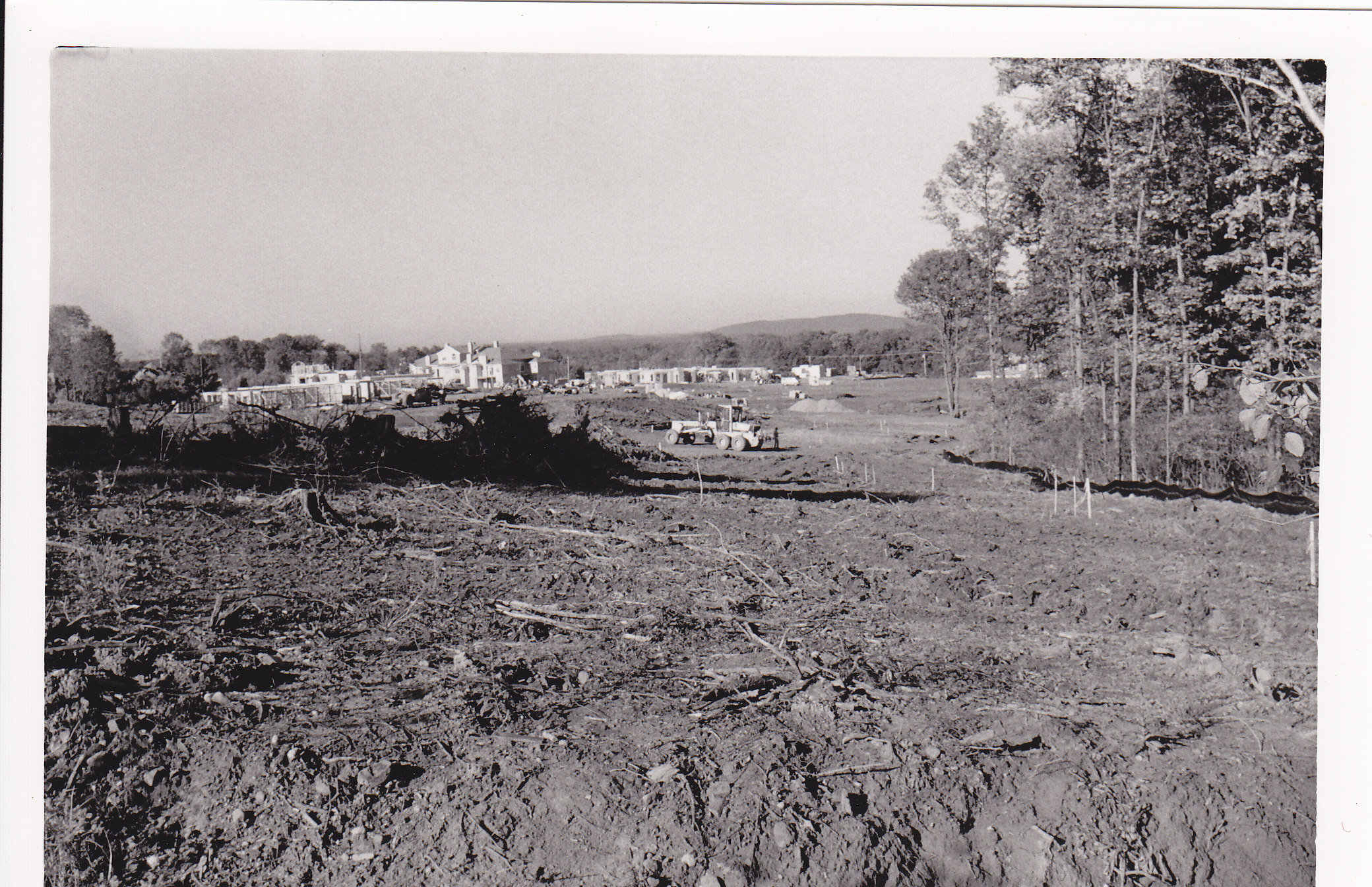
The first Continental Army academy was on the slopes of Bedminster’s Second Watchung Mountain. Allan-Deane, a subsidiary of Johns Manville, owned twelve acres of land in the 1960s. However, those barracks, buildings, and the academy at the Pluckemin encampment disappeared shortly after the end of the Revolutionary War. Since then, most of the site has undergone intensive development, featuring a residential development called “The Hills.” But in the late 1970s, before the Friends of JVH was around, a non-profit Pluckemin Archaeological Project sponsored a dig that recovered thousands of artifacts. Much was learned about the Revolution from the project.
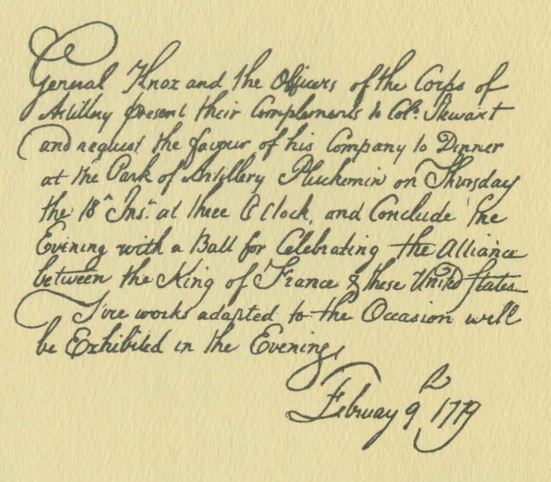
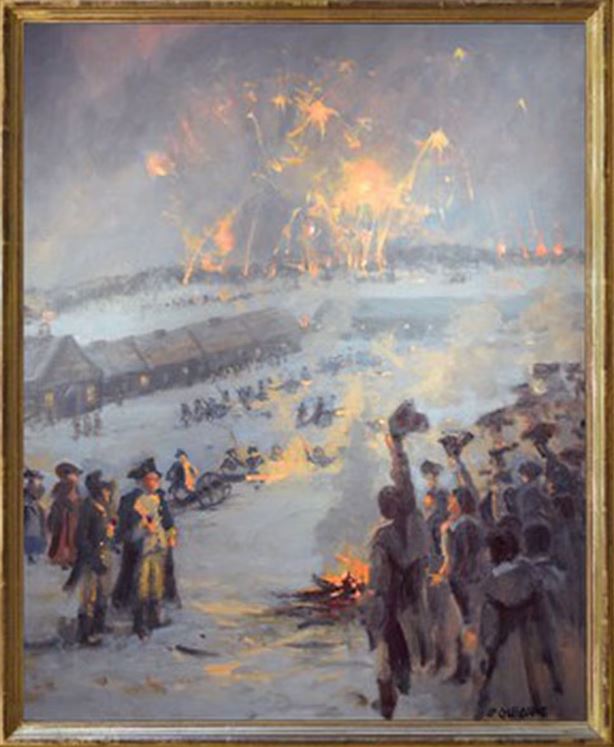
On the crisp evening of February 18, 1779, nestled in the village of Pluckemin, New Jersey, the soldiers of the Henry Knox artillery cantonment transformed their camp into the setting for a remarkable fête known as the 1779 Grand Alliance Ball.
With more than four hundred officers, dignitaries, and over sixty ladies gathered under one roof, the ball marked the first anniversary of the formal alliance between the fledgling United States and France, an alliance that would prove indispensable in the fight for independence. Guests arrived amid a flourish of thirteen cannon salvos, followed by dancing into the night, conversation in gleaming silks and military dress, and a rare moment of refined revelry amid the trials of war.
Journal Entry:
The barracks of the artillery are at a small distance from Pluckemin, on a piece of rising ground, which shows them to great advantage. The entertainment and ball were held at the academy of the Park. About 4 0’clock in the afternoon, the celebration of the ALLIANCE was announced by the discharge of thirteen cannon, when the company assembled in the academy to a very elegant dinner. The room was spacious, and the tables very prettily disposed, both as to prospect and convenience. The festivity was universal, and the toasts descriptive of the happy event, which had given certainty to your liberties, empire, and independence. In the evening was exhibited a very fine set of fireworks, conducted by Col. Stevens, arranges on the point of a temple, one hundred feet in length, and proportionally high. The temple show THIRTEEN arches, each displaying an illuminated painting. The center arch was ornamented with a pediment, larger than any of the other(s); and the whole edifice supported by a colonnade of the Corinthian order. (John W. Barber, and Henry Howe, Historical Collections of the State of New Jersey, pages 441-442)
In 1972, historian Clifford Sekel began studying the site known as the Pluckemin Artillery Park, part of General Henry Knox’s revolutionary-era cantonment that predated West Point. His early research drew the attention of archaeologist John Seidel, who joined the effort and led systematic excavations beginning in 1979. Over the next seven years, through 1986, teams of students and volunteers uncovered thousands of artifacts, revealing the foundations of America’s first military academy. The ambitious project, supported by the Pluckemin Archaeological Project and the Hills Development Corporation, became one of the most important Revolutionary War excavations in the nation.
Ground-penetrating radar (GPR) and magnetometry, a process that employs an instrument that detects differences in soil magnetism, are used. An entire site is mapped, and then differences are recognized. Transitions in magnetic intensity typically correspond to archaeological features. Clifford Sekel’s early research and the subsequent Pluckemin Archaeological Dig, led in the field by John Seidel, produced one of the most significant archaeological discoveries related to the American Revolution. The excavation confirmed that the site at Pluckemin, New Jersey, was indeed General Henry Knox’s 1778–1779 winter artillery cantonment—essentially the Continental Army’s first organized military training academy, predating the founding of West Point by more than two decades.
Among the findings were the foundations of barracks, officer quarters, storehouses, workshops, and even a classroom building used to train artillery officers. Thousands of artifacts were unearthed, including musket balls, uniform buttons, gun tools, dining ware, writing implements, and architectural fragments. These discoveries provided tangible proof that Knox’s camp was not merely a temporary military encampment, but a sophisticated, semi-permanent complex where the Continental Army developed formal training, logistics, and command systems that would shape the future U.S. Army.
During the winter of 1778-1779, the main Continental Army under George Washington established its winter encampment near Middlebrook, New Jersey. Over 8,000 infantry and artillery personnel spent approximately six months at this location. The Continental Artillery Park was located at Pluckemin, New Jersey, several miles north of the infantry camps. At this location, the artillerists constructed barracks for nearly 1,000 men and established a depot, repair facilities, and an academy for artillery officers. The Army abandoned this encampment in June 1779. In the 1980s, archaeological excavations by Rutgers University exposed remains of the “Artillery Park” and recovered thousands of artifacts.
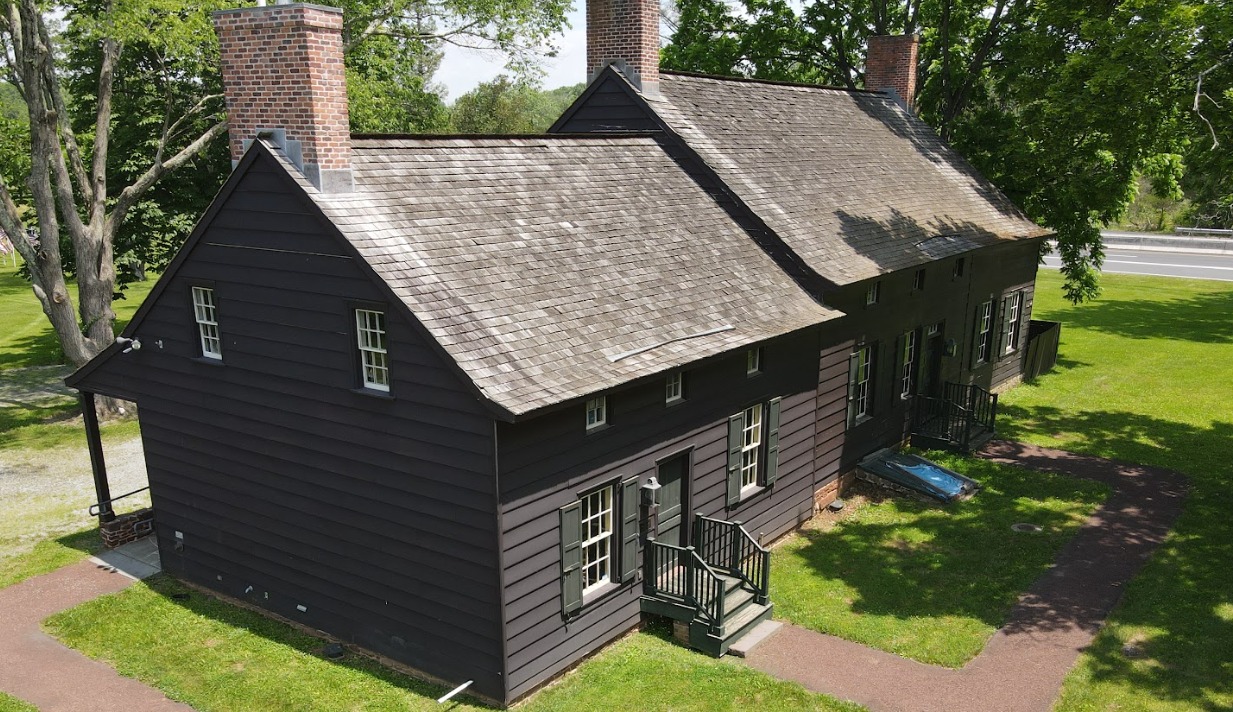
Today, the Jacobus Vanderveer House stands as a beautifully restored historic site and museum in Bedminster, New Jersey, dedicated to preserving and interpreting the legacy of America’s Revolutionary War heritage, especially the story of General Henry Knox and the 1778–1779 Pluckemin Cantonment. The house operates as both a museum and a cultural center, offering guided tours, exhibits featuring Revolutionary War artifacts, educational programs, reenactments, lectures, and seasonal community events, including the annual Liberty Tree Lighting and the Colonial Christmas celebration. Through these efforts, the Jacobus Vanderveer House connects modern visitors to the people, events, and ideals that helped shape the early American republic.
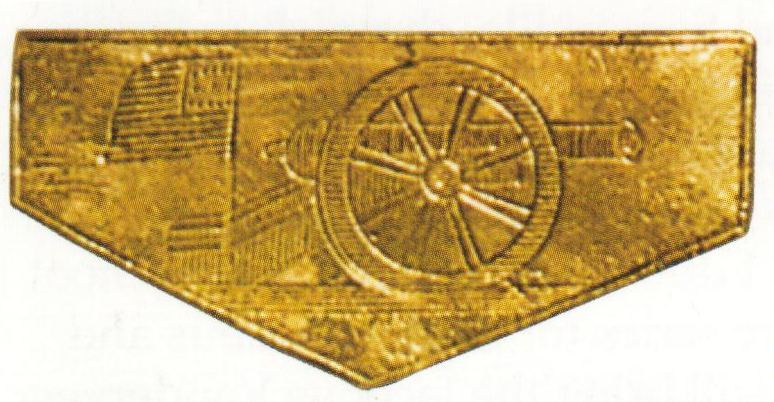
Two artifacts found at Pluckemin have changed the view of the early American flag and its use by the Continental Army. These decorative belt tips probably adorned the ends of officers’ “over the shoulder” leather sword belts. Each belt tip is hand-engraved and bears nearly identical designs of a cannon, flagstaff, and flag —a motif very similar to that found on American artillery buttons of the period. These belt tips had never been seen before, and their use by the American army was previously unknown. What made them all the more spectacular was the fact that they both displayed a new orientation of the stars on the field of the American flag: five stars, over three stars, and then five stars again.
The Pluckemin archaeological dig uncovered a fascinating clue about early American symbolism. Among the discoveries were decorative belt tips that turned out to be the earliest known artifacts to clearly depict the American flag. Records indicate they were engraved by a Philadelphia silversmith who visited the artillery camp in early 1779, likely commissioned by officers stationed there. If so, the engravings would represent one of the first accurate depictions of the flag as it appeared in actual use by the Continental Army—offering a rare, tangible link between the soldiers of the Revolution and the emerging national identity they were fighting to define.
While the buckle does not reveal precisely what the 1777 flag was intended to look like, it confirms that the Continental Army was using the “Stars & Stripes” flag by 1779. The star orientation (constellation) was of a different type than previously thought. The earliest provable American flag design was 13 stars in rows of five, three, and five. Two more have been discovered since the discovery of the artillery belt tips at Pluckemin. One was found in a mid-1779 Continental artillery campsite in southern New York State, and the other was found at a Colonial-era house site in central Virginia, where it was likely lost around 1781.
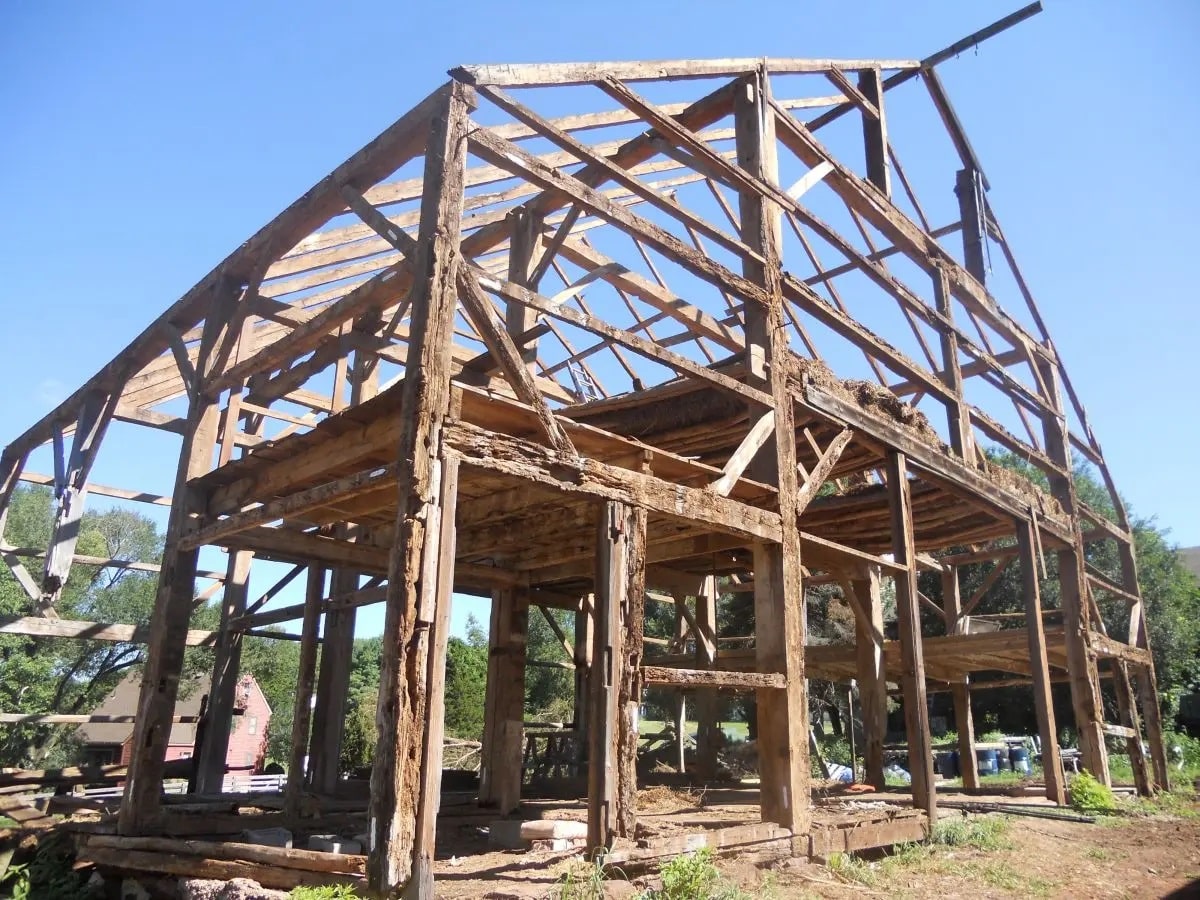
Bedminster Township is working on reconstructing a historic, early-19th-century Dutch barn on the grounds of the Vanderveer House in Bedminster, New Jersey. Originally from Branchburg, the barn’s timber frame was acquired in 2016 and moved to the site with the help of a county preservation grant. The goal is to create an authentic early American farmstead that includes the barn, a kitchen garden, a hay barrack, a smokehouse, and other period-appropriate structures.
The barn frame was originally part of an early-19th-century Dutch barn located on Old York Road in Branchburg Township, New Jersey. In June 2016, the Friends of the Jacobus Vanderveer House secured a Somerset County Historic Preservation grant of ,190 to carefully dismantle and relocate the historic timber frame from that Branchburg site to the grounds of the Vanderveer House.