Nartirar Partial Mr Local History
UPDATE:
The Mr. Local History Project is SOOOO excited to introduce the expansion of our Historic New Jersey Historic Cat’s Meow Village, the Natirar Estate in Peapack and Far Hills, New Jersey. Only a limited number will be produced.
UPDATE:
The Pendry Spa at Natirar has opened.
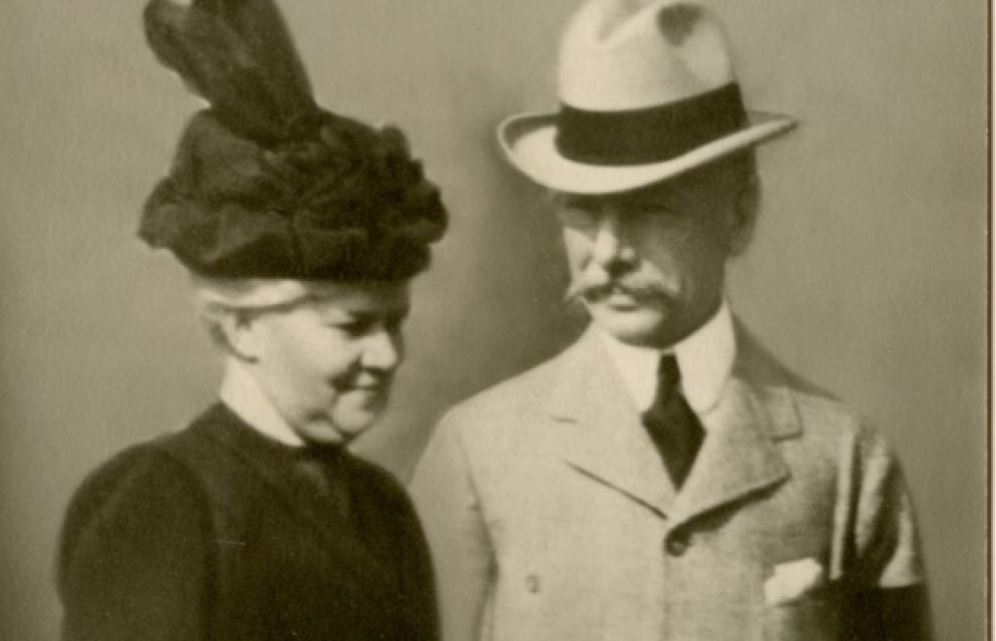
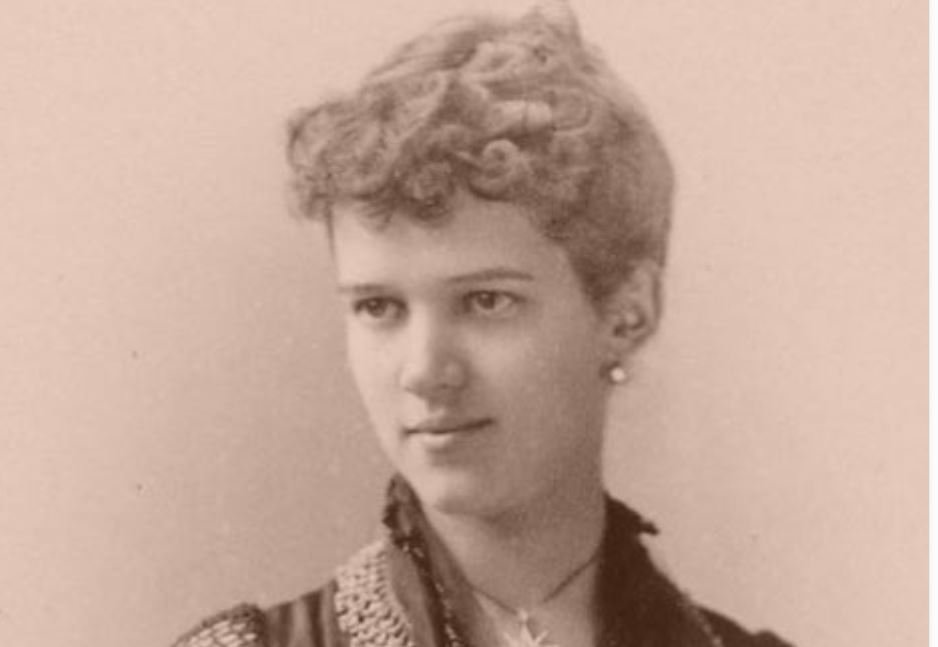
Catherine “Kate” Macy and Walter Graeme Ladd began acquiring property in the Somerset Hills in 1905. Macy was a Quaker heiress to a whaling/oil/shipping fortune; her father’s business partner was John D. Rockefeller.
Kate was born in New York City, a descendant of Thomas and Sarah Macy, Massachusetts settlers in the late 1630s. She was a granddaughter of Captain Josiah Macy, originally of Nantucket, who founded a firm that became New York’s first oil refinery in the 1860s (later sold to the Standard Oil Company). In 1659, Thomas Macy and nine other men purchased Nantucket Island (then a part of New York) to seek religious freedom.
Walter Graeme Ladd was born in Throgs Neck, in the Bronx. He was a lawyer, the Delaware, Lackawanna & Western Railroad principal, and a yachtsman. He loved his 165-foot schooner E’tak, which crossed the Atlantic from Germany once in 1930.
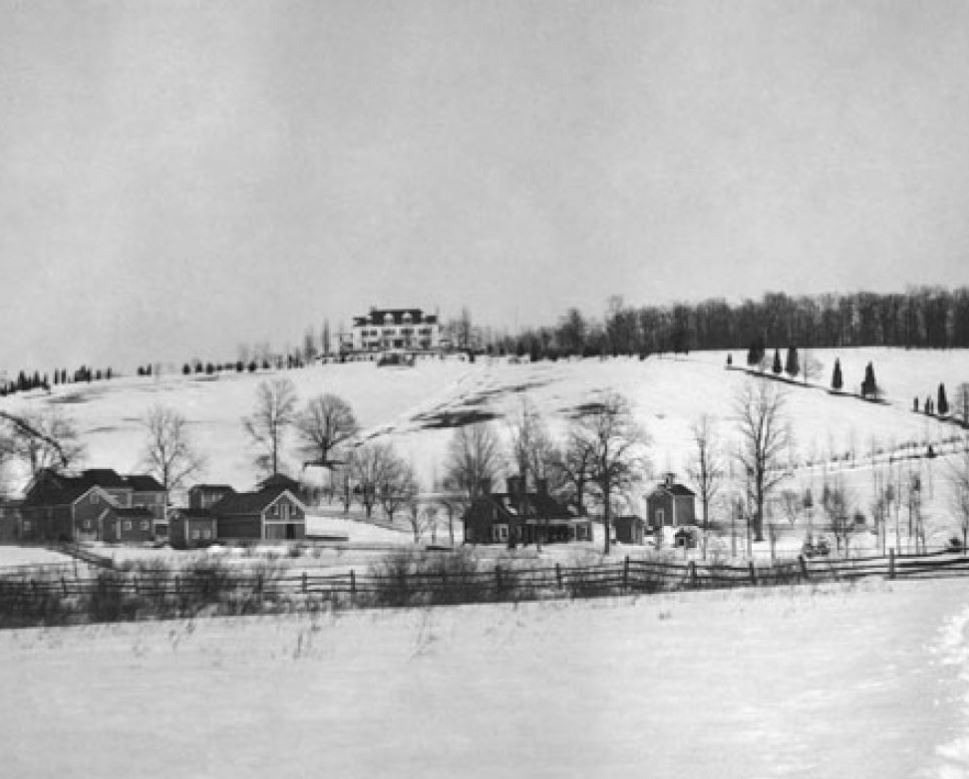
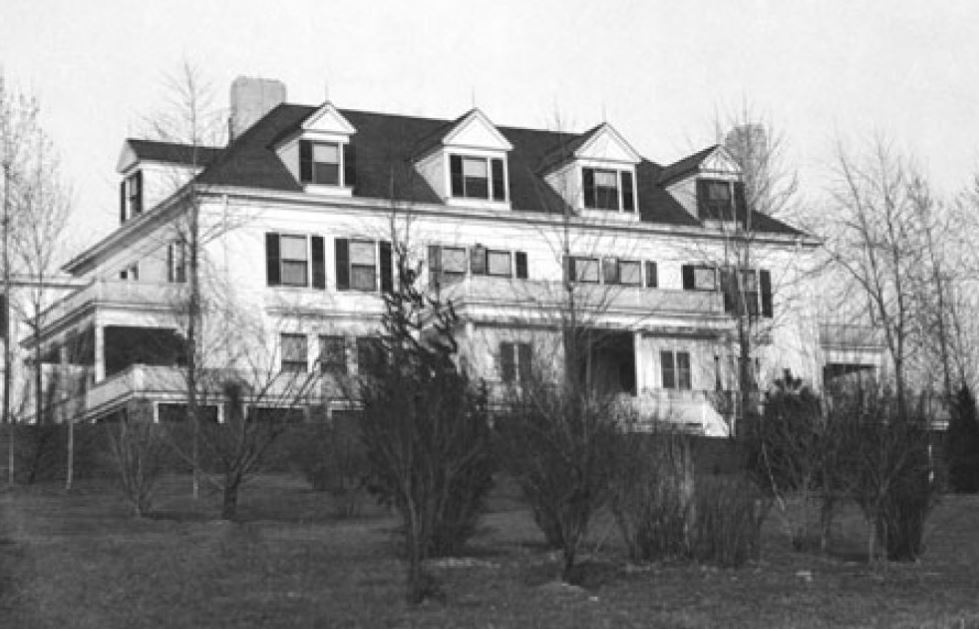
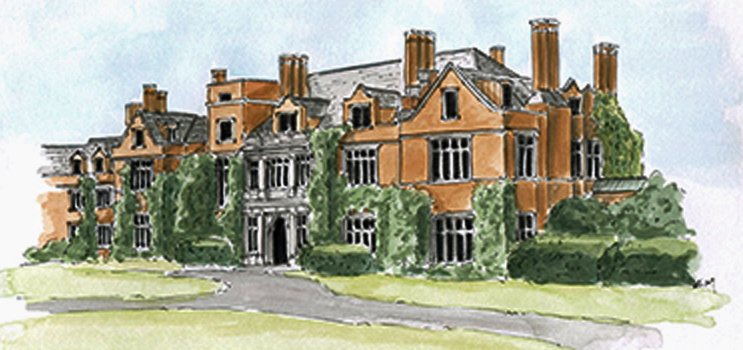
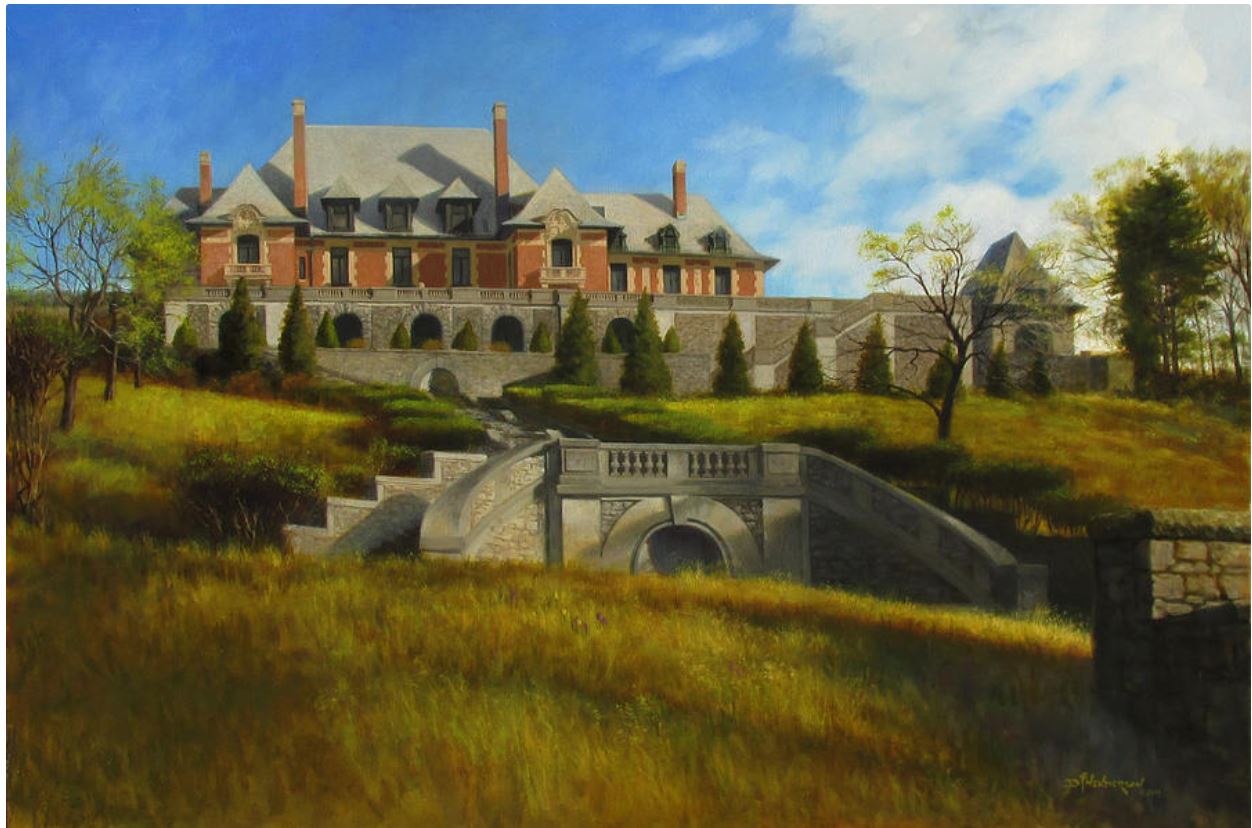
Walter Graeme and Kate Macy Ladd married in 1883 and rented property in Bernardsville on Mine Mount Road from Heley Fiske (1903) as they acquired small local farmsteads until their estate spread over 1,000 acres throughout Peapack/Gladstone, Far Hills, and Bedminster. The Ladds hired Boston architect Guy Lowell to design the Tudor-style mansion, which was completed in 1912 with a sprawling 40-room, 33,000-square-foot footprints. Situated alongside the Raritan River atop a 200-foot high mountain, they named it Natirar, an anagram for Raritan spelled backward. It was said over 300 men under the direction of Shanley & Co. of Newark.
Over the past two centuries, the land has changed hands before the Ladds acquired over 1,000 acres.
In 1837, Christopher Tiger purchased a 120-acre farm along the east side of the Peapack-Far Hills Road from the estate of Levi Sutton. At some point, he built his homestead on or near the site of what is now 44 Main Street.
In 1887, Barabas Horton’s son, William Halloway Horton, purchased the farm after Christopher Tiger’s death. Christopher Tiger’s third wife was Catherine Lane, a descendant of the Nevius / Lane families who owned the adjacent farm. The Nevius/Lane farm became a prominent part of the Natirar consortium. The Nevius/Lane homestead was on the site of the present parking lot to the southwest of the Natirar barns. Christopher Tiger was the great uncle of Ellis Tiger, who, in 1921, founded the Peapack-Gladstone Bank.
In 1901 William Horton sold his farm to Chandler White Riker, a Newark lawyer from Riker. Riker and his wife Mallie sold a 120-acre tract to the Ladds. By 1907 they had converted the farmhouse into Maple Cottage. There was also a separate cottage for the superintendent. And finally, in 1908 Kate initiated her first convalescent home for women.
[metaslider id=”13673″]
The home operated from 1908 until her death in 1945, when the convalescent home was relocated to the main Natirar mansion. The main home operated from 1948 until 1983. The Maple Cottage was demolished in the 1980s. Kate Macy and her husband, Walter Graeme Ladd, are both buried in Woodlawn Cemetery in the Bronx, New York.
Many people don’t know that the 40-room Natirar was modeled after Wroxton Abbey in Warwickshire, England. And what a coincidence that Wroxton Abbey is now owned by Fairleigh Dickinson University in New Jersey.
The Ladds selected Boston-based architect and landscape architect Guy Lowell (1870-1927) to design their new residence and principal outbuildings and lay out the estate’s English park-like landscape. A few years before, Lowell had designed the Ladds’ other residence”Eegonos” (now called “East of Eden”) located on Frenchmans Bay at Bar Harbor, Maine. Lowell was associated with the design of “Natirar” by New York architect and nearby Bernardsville, New Jersey resident Henry Janeway Hardenbergh (1847-1918).
The Ladd’s philanthropic life was focused on helping people. They had no children. Mrs. Ladd spent most of her adult years in a wheelchair with severe arthritis, and her work evolved to helping women in distress. In 1908, she turned their nearby Maple Cottage into a convalescent home for “deserving gentlewomen who are compelled to depend upon their own exertions for support shall be entertained without charge.” The house opened on May 1, 1909, with what was referred to as “21 inmates” in the Bernardsville News. The previous year, there were almost 70 patients. Mrs. H.E. Dudley was the superintendent and stated, “This is Christianity in action.”
She’s also remembered as an American philanthropist who founded and endowed an additional foundation called the Josiah Macy, Jr. Foundation in 1930 in honor of her father. That foundation is playing a critical role in a COVID-19 world as it works to “Improve health by advancing the education and training of health professionals.”
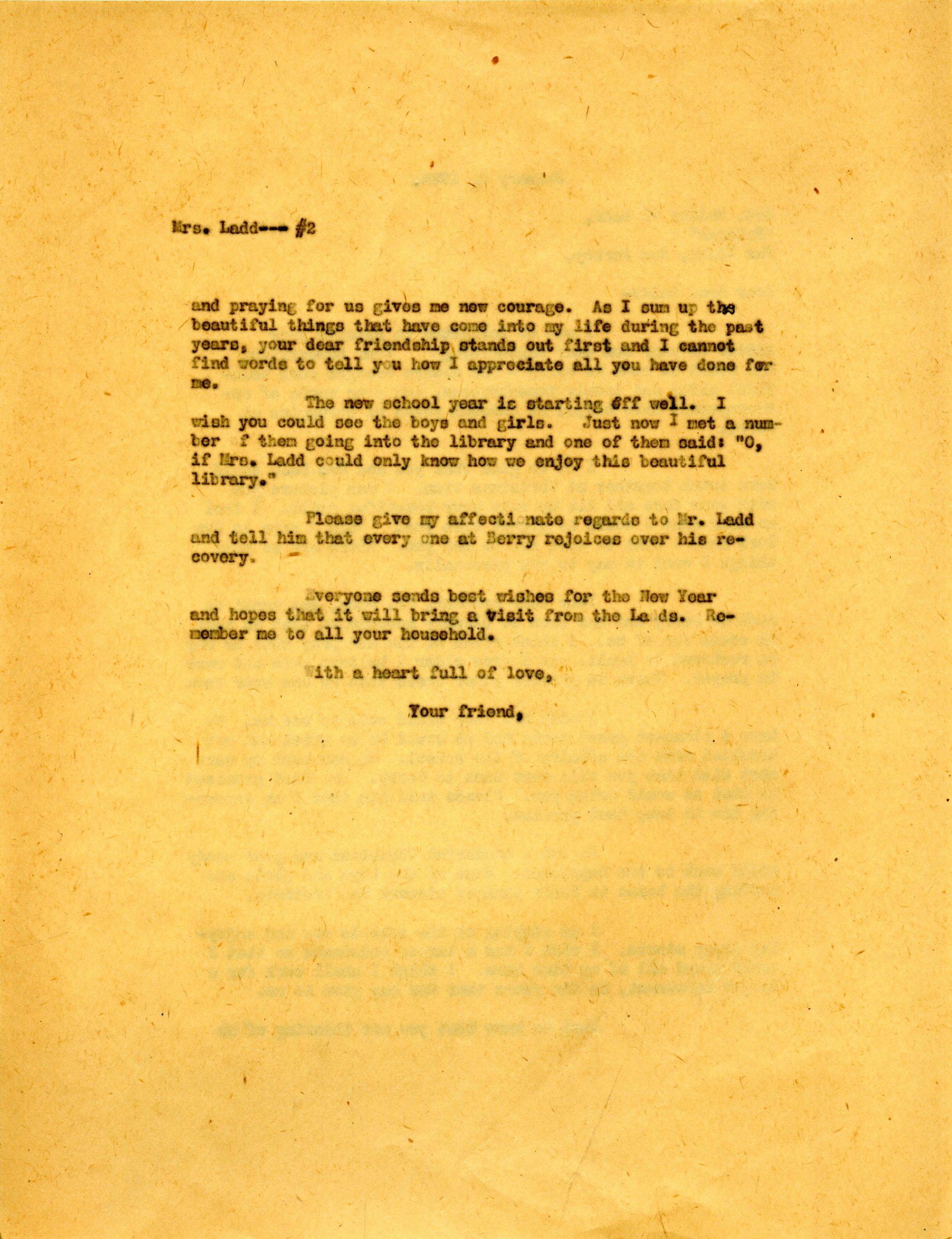
Walter established a fund to ensure the continuation of convalescence after he died in 1933, with an endowment of over $13 million. The foundation would move the convalescent home from Maple Cottage to Natirar after Kate died in 1945. The foundation provided women from Newark and NYC with an all-expense paid two weeks to help them recover from an illness, receive medical treatment, or recuperate. Fifty years after Walter’s death, his will stated that Natirar should close. In 1983, the convalescent home completed the Ladd mission, and Natirar was put up for sale. King Hassan II of Morocco bought the estate for $7.5 million.
The ladies were expected to come down to breakfast in their robes but wear nice outfits for lunch and dinner. They were assigned to tables in groups of 4 to 8 and were offered several delicious meal choices depending on their dietary needs. The tables were always set with fresh pastel table clothes for breakfast and lunch and white clothes for dinner. Mealtime was relaxed and leisurely. New guests, especially ones who might still be in pain from an operation, would arrive in the dining room anxious or stressed at first, but as time passed, you could see the change in them as they recuperated and made friends.
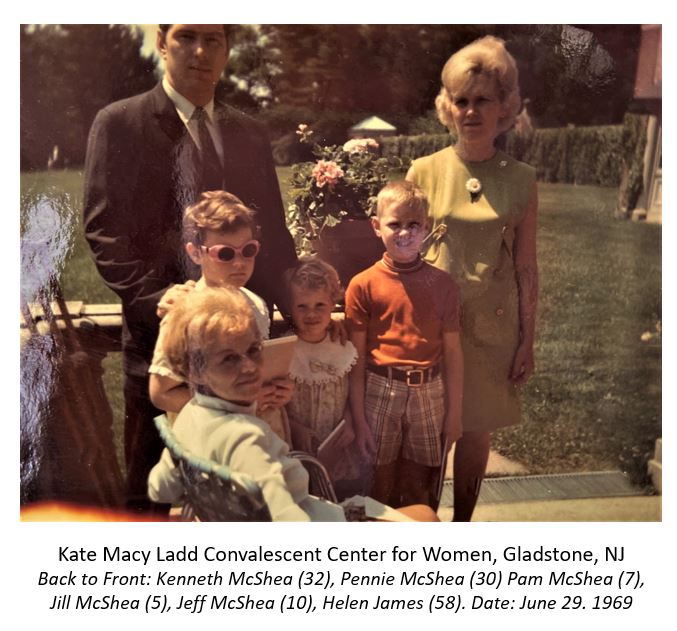
The ladies would spend their time sitting on the patio in the sun, or under the shade of a tree. They could use the vast library or get a treat at the little soda shop counter. They were encouraged to get their hair done once a week at the on-site beauty shop and could participate in occupational therapy (crafts) or physical therapy if needed. Visitors were only allowed on Sunday afternoons because they wanted the ladies to convalesce undisturbed.
Diane Hilmer Ludlow – Worked at Kate Macy Ladd 1974-1975
Meryl Carmel from nearby Chester spent 10 years researching the philanthropist for her book, Finding Kate:.Carmel said Ladd’s efforts at Natirar served more than 20,000 women. “She wanted others’ lives to be happy and fulfilled,” Carmel said. She said about 50 convalesced at the estate at one time in 21 bedrooms of various sizes that could accommodate two to four women.
According to Walter Ladd’s will, the property would be sold 50 years from the day of his death, but a number of suitors were pursued. The boro negotiated with the nearby United States Golf Association to purchase the property as they were searching for a new national headquarters. The USGA ended up at the former Frothingham House just down the road. A park or condos were also considered.
Malcolm Forbes, a nearby Bedminster resident and friend of King Hassan II, introduced His Majesty to the property close to Princeton University, where his sons attended college. King Hassan II bought the estate from the Ladd’s estate, and the proceeds went to five medical schools: Johns Hopkins, NYU, Hampton Institute in Virginia, Tuskegee College, and Berry School in Rome, GA. The asking price was $ 8.5 million. The property and estate were sold in 1983 for $7.5 million, and the closing date was set at May 21, 1983.
For the next 20 years was owned by the King who never spent a night there. Following King Hassan II’s death in 1999, the King’s son, Mohammed VI, sold the Jersey estate for $22 million to Somerset County.
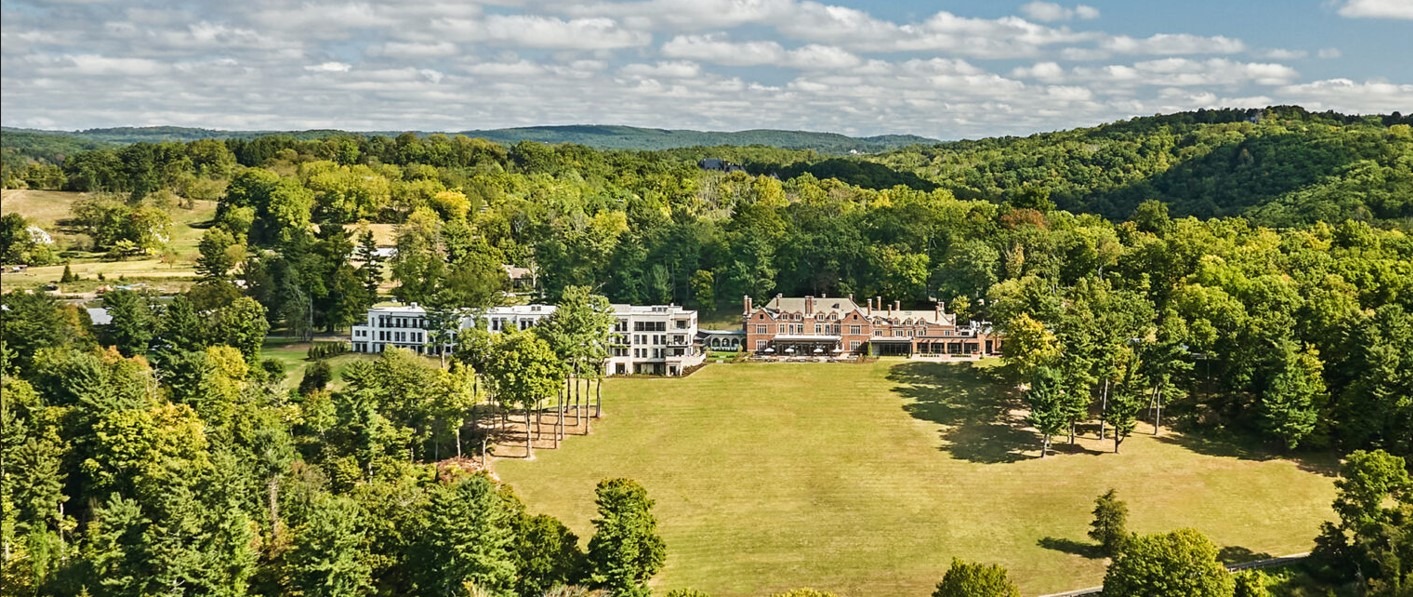
The Somerset County Parks Commission bought the 491-acre estate in 2003 for $22 million with the intent to preserve this crown jewel as an open space where it now serves as a public park, including businesses in the preserved estate.
The Blairsden Association, although not successful in its efforts to acquire “Blairsden,” had nevertheless developed what was considered by many to be an effective model for a public-private partnership for such a project. As a result, the Association — which was renamed the Natirar Association — was asked by the Somerset County Park Commission to assist in the county government’s ultimately successful efforts to acquire “Blairsden’s” neighboring estate, “Natirar.” The Association was later dissolved.
W. Barry Thomson, Local Historian and writer
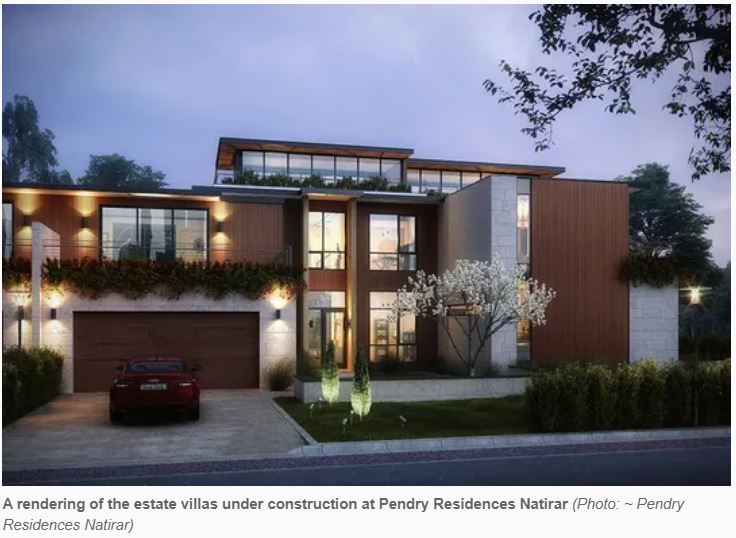
Natirar is two separate entities owned by Somerset County. The first is the park system managed by the Somerset County Parks Commission. The other is a 90-acre section not under the green acres funding and is a leased partnership with Pendry Hotels. Pendry is one of the most bespoke hotel management companies in the country. Pendry Hotels is a division of Montage International, the luxury hotel management company. In addition to adding the Pendry Natirar hotel, the property will include a luxury residential development located on a new private street within Natirar named Abby Road, after Bob Wojtowicz’s first granddaughter.
The restored mansion and new ballroom serves as the centerpiece of a singular new resort and private club complex. Designed to become one of the nation’s finest resorts, the reimagined property will ultimately include private residential villas, a boutique hotel and spa in conjunction with the existing pool, tennis courts and fitness and wellness center, surrounded by 400 acres of riding, walking and biking trails.