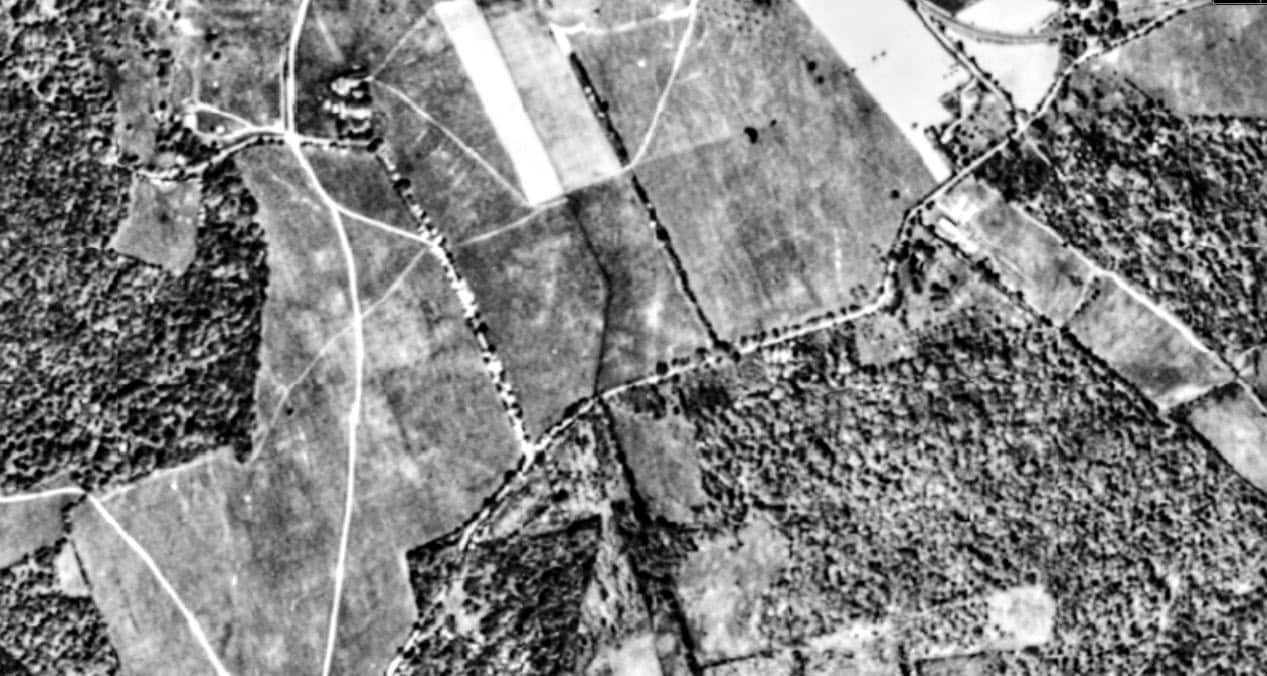
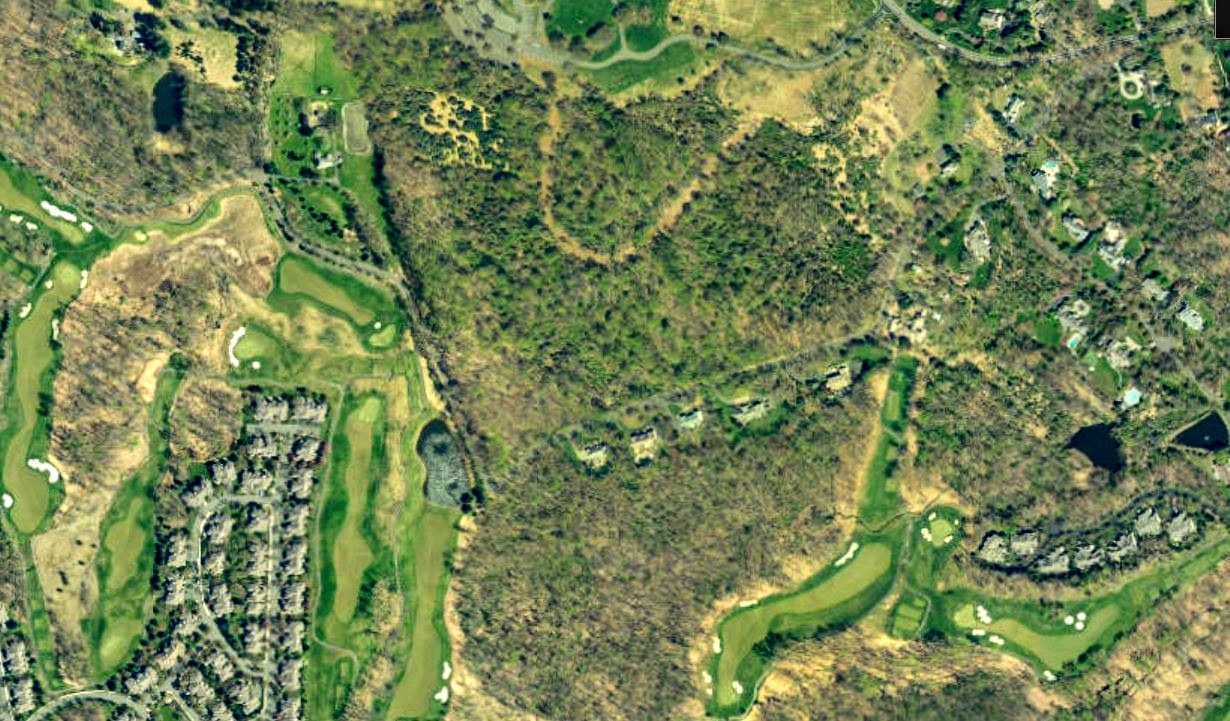
1933 Schley Glider Field The Hills
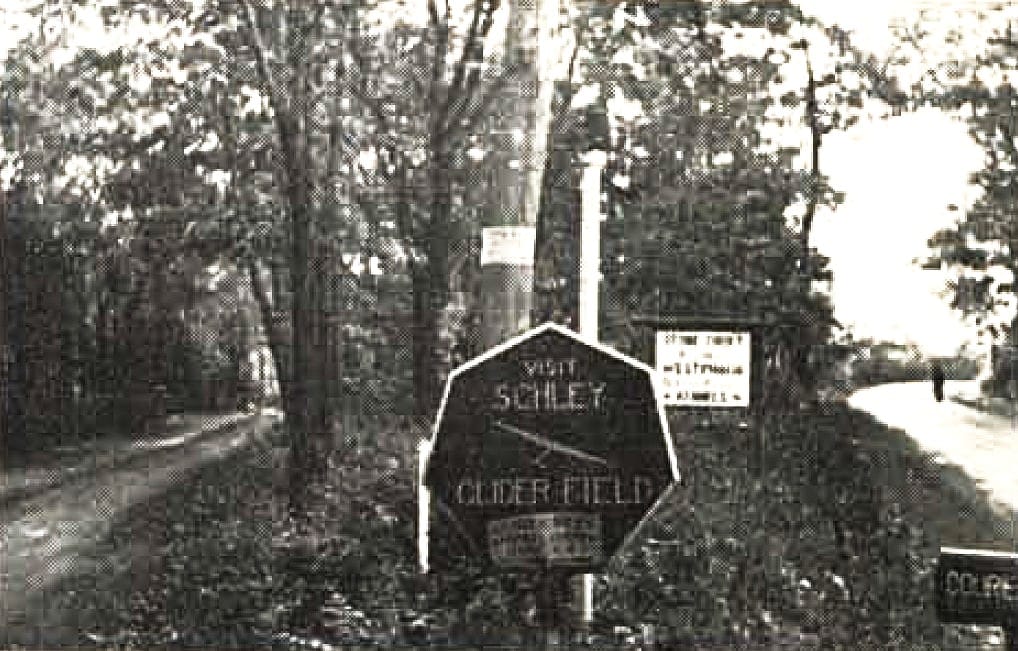
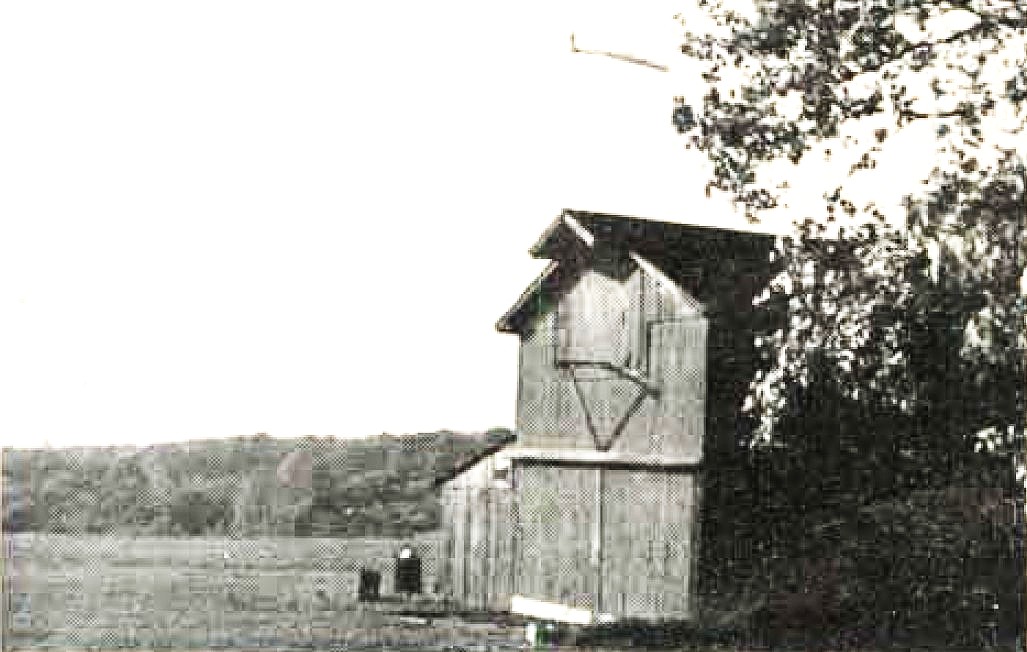
In the mid-1930s, after the Schley Field opened for Glider Competitions, the glider game changed. However, there was a glider field just east in the same town, which began attracting aviators to the Lyons section of Bernards Township.
Maybe start there, then come back here.
NOTE:
Photographs wanted. If anyone reading this post has any photos from the Schley Glider field, we’d love to share them. Please let us know (Click Here).
In the early 1930s, America was gripped by a new fascination with aviation that required no engines, propellers, or fuel. The soaring glider movement, born out of World War One aviation technology and inspired by German experiments in silent flight, captured the imagination of thousands of young pilots and engineers across the United States. The Great Depression had made powered flight expensive, but gliders made of wood and fabric offered a low-cost and thrilling way to fly. Universities, aero clubs, and youth organizations began forming glider teams, and the sport spread quickly from New York to California.
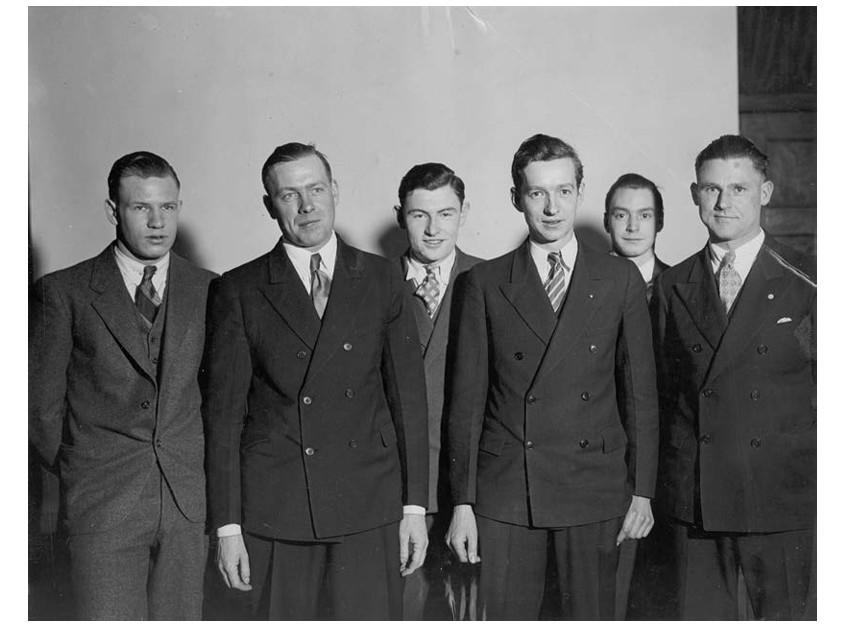
In 1933, a small group of aviation enthusiasts from the Orange YMCA in Essex County formed what became one of New Jersey’s earliest organized soaring groups, the Orange “Y” Glider Club. Born out of the YMCA’s model airplane workshop, the club’s members, mostly young men guided by their Boys’ Work Director, pooled their resources to purchase a Mead Primary glider kit. They built their first aircraft by hand in the YMCA’s basement workshop and carried it to open pastures in Millington, New Jersey, where they launched more than 1,000 short training flights using a car-powered winch. Their flights reached altitudes of up to 500 feet, marking the dawn of true recreational gliding in the state during the early years of the Great Depression.
As their skill and confidence grew, the group expanded beyond the YMCA’s walls and became known as the Y Flying Club. By the mid-1930s, they joined other local aviators to develop Schley Field atop Schley Mountain in Liberty Corner, Bernards Township, transforming it into one of the region’s most active glider sites. The club’s pioneering efforts helped introduce winch launching to American soaring, a method that would later become standard practice. Among their ranks were names that would shape New Jersey’s soaring legacy, including Frank Apgar, Les Barton, Emil Kaunitz, and Gustav “Gus” Scheurer. What began as a youth project in a YMCA basement became a cornerstone of early aviation history in Somerset County, linking the communities of Orange, Millington, and Liberty Corner through the dream of flight.
Lyons Field, which had been New Jersey’s first glider club field, was on the flat valley floor by the Lyons railroad station and Somerset Hills Airfield and was used for car-winch training hops and short flights. That site was chosen for clear approaches, not for ridge soaring. When New Jersey clubs wanted soaring conditions influenced by terrain, they shifted activity up onto Schley Mountain at Schley Field. Meets there from the mid-1930s still relied on winch towing, but the site sat on a ridge and offered better soaring potential than Lyons. In New Jersey’s most famous glider center would take root on a quiet ridge in Liberty Corner known as Schley Field.
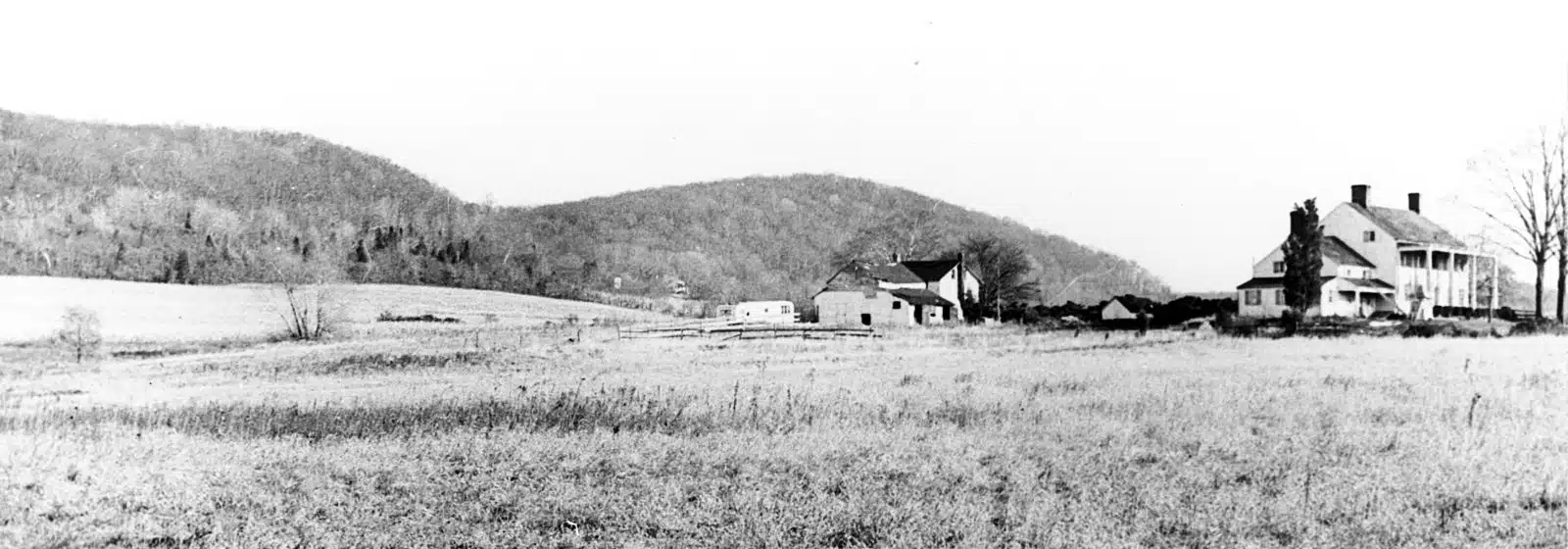
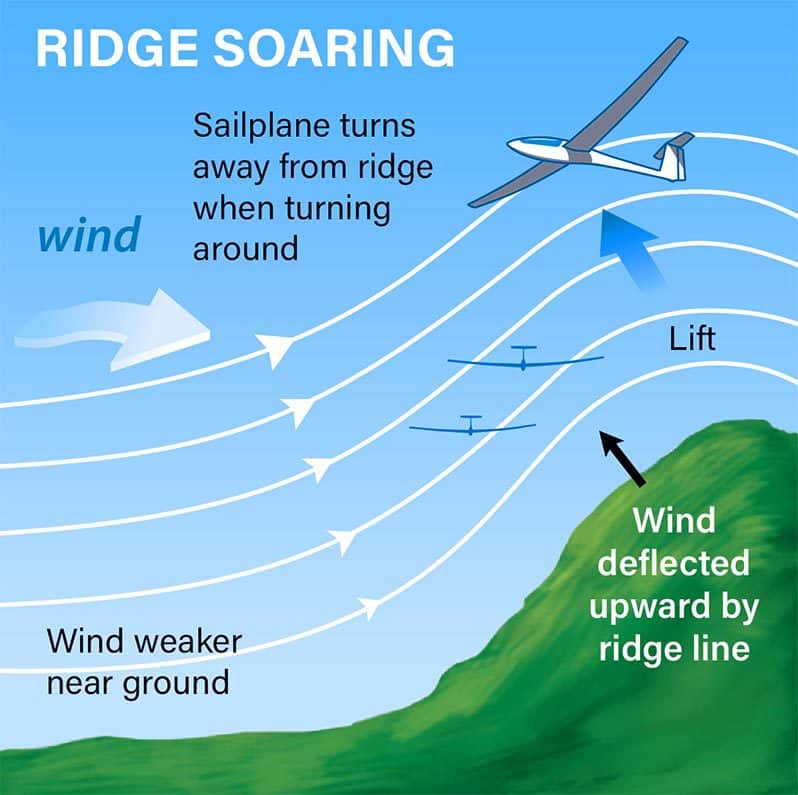
Schley Mountain, part of the southern reach of the Watchung foothills in Somerset County, rises to an elevation of roughly 420 to 480 feet above sea level, with its crest running between Liberty Corner in Bernards Township and the eastern section of Bedminster. While not a true mountain by geological standards, its position above the surrounding valleys made it an ideal site for early glider flight. The elevated ridgeline provided consistent updrafts and thermal currents, columns of rising warm air that glider pilots could ride to extend flight time and gain altitude.
The mountain’s broad, open meadows and gently sloping fields also allowed long, safe takeoffs and landings, which were critical in the 1930s, when gliders were launched by winches and by automobile tow rather than powered aircraft. Facing prevailing west and northwest winds, the ridge offered steady airflow and clear sightlines over the Somerset Hills, enabling pilots to soar in wide circles and maintain lift for extended durations. Its proximity to Liberty Corner and Far Hills provided easy public access, and the surrounding farmland made it possible to accommodate large crowds of spectators.
Together, these natural advantages made Schley Mountain one of the finest glider sites in New Jersey during the prewar years, high enough to catch reliable air currents, open enough for safe operation, and scenic enough to capture the imagination of pilots and visitors who gathered there each Labor Day to watch the graceful art of silent flight.
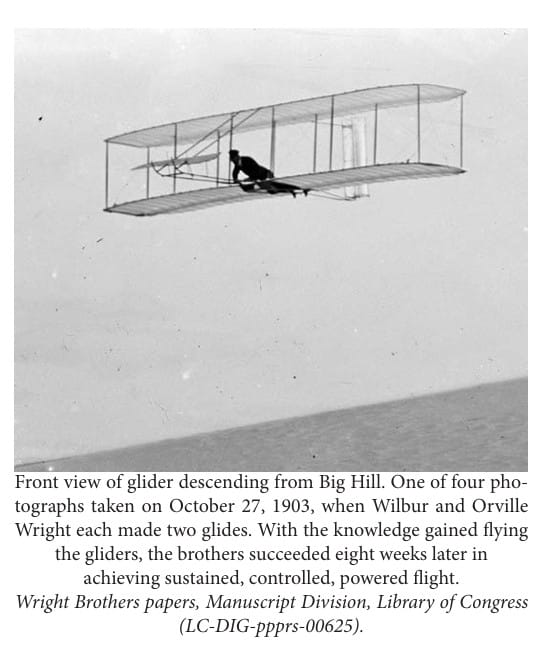
lider flight marked the beginning of human aviation, with pioneers like Otto Lilienthal and the Wright brothers proving that controlled, sustained flight was possible without engines. Before achieving powered flight in 1903, the Wright brothers conducted hundreds of successful glider tests between 1900 and 1902, refining wing shapes and control systems that laid the foundation for modern aeronautics.
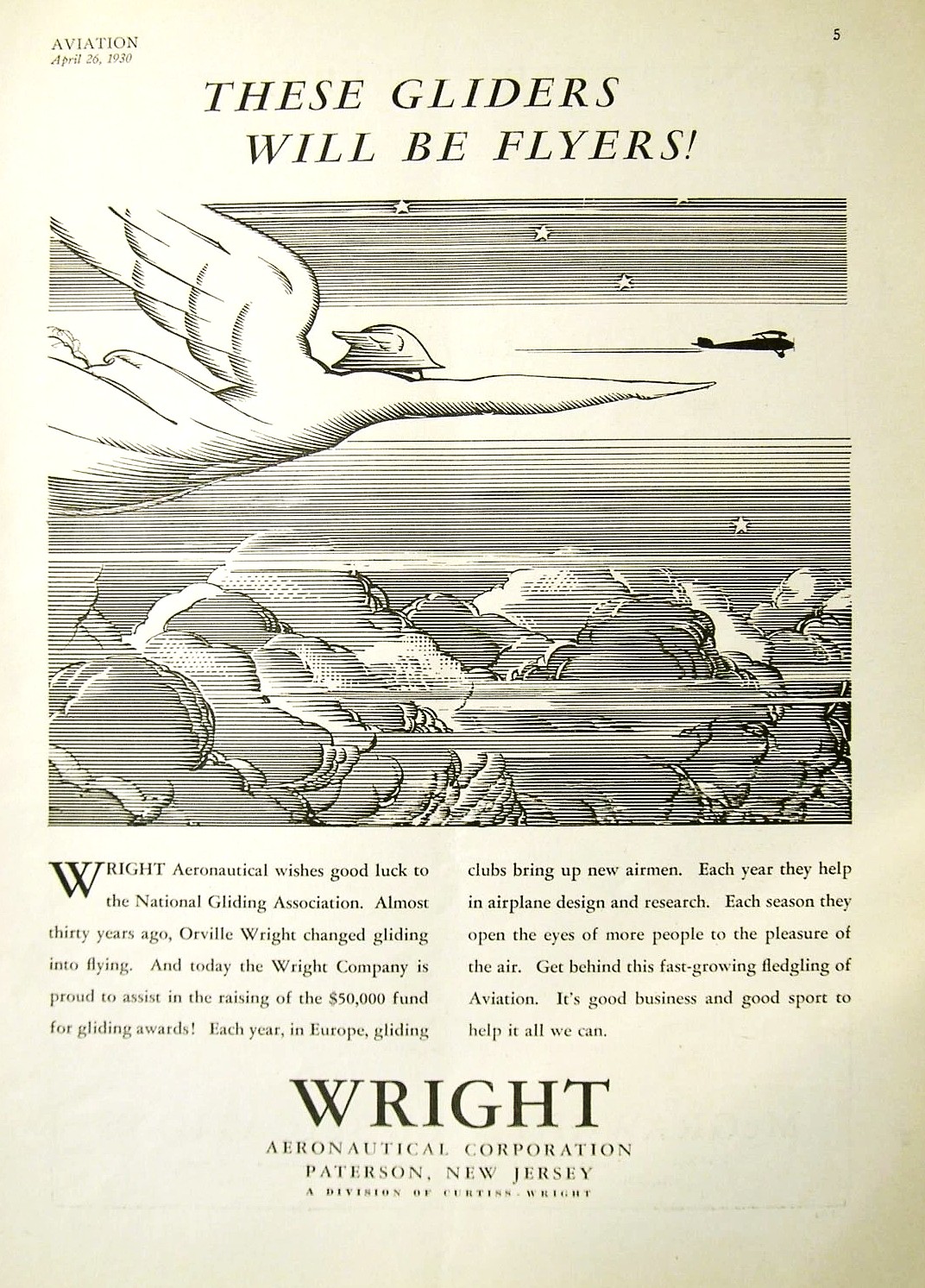
After 1903, powered flight advanced quickly, but gliding remained vital for testing wing shapes, controls, and stability. World War One accelerated knowledge of aerodynamics and structures, and in the 1920s a soaring boom led by Germany at the Wasserkuppe refined ridge and thermal soaring, popularized winch and bungee cord launches, produced landmark designs, and inspired clubs in Britain and the United States, so that by the late 1920s organized soaring and record attempts were well underway and places like Schley Field launched the path forward.
Those who sponsored and organized the events at Schley Field were primarily aviation clubs and organizations rather than individuals, though the Schley family name remained tied to the location since it was their former estate land on Schley Mountain. The Associated Gliding Clubs of New Jersey served as the main sponsor and governing body for the annual meets beginning in 1935. This statewide organization coordinated the competition rules, trophies, and safety oversight.
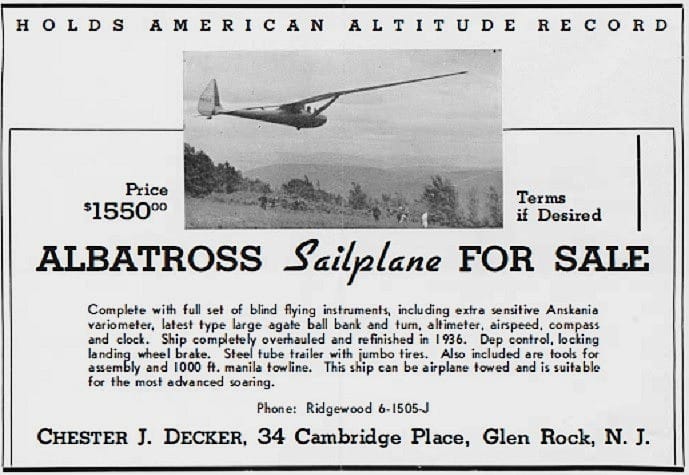
The local host and organizing group was the Aero Club Albatross, based at Schley Field in Liberty Corner. This club managed most field operations, training, and public events. The club’s members included pilots, mechanics, and aviation enthusiasts from nearby towns such as Newark, Morristown, and Plainfield. The Albatross club also supplied most of the gliders used in demonstrations and contests.
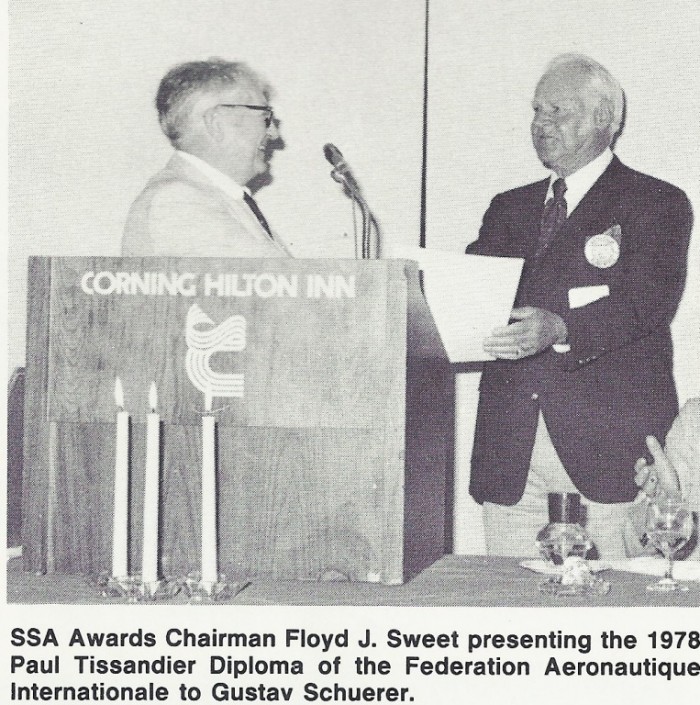
Gustav Schuerer came to the United States in 1925, where he continued building gliders. Gus attracted others with this interest in New Jersey and the northeastern USA. He founded the Aero Club Albatross in 1929, a long-enduring and successful club in New Jersey. Tragedy would strike at Schley Field on December 13, 1938 when Gladys Scheurer, Gustav’s 33-year-old wife, died in the United States Veterans Hospital after sustaining injuries when she was piloting a plane that failed to level off for a landing and crashed at Schley Field.
Aero Club Albatross, Y (YMCA) Flying Club of Newark, the Ace Soaring Association of Glen Rock, the University of Michigan Glider Club, and several smaller aviation groups from across the state regluarly launched at the Schley Glider Field.
Other participating clubs that regularly appeared in the event coverage included the Y Flying Club of Newark, the Ace Soaring Association of Glen Rock, the University of Michigan Glider Club, and several smaller aviation groups from across the state. While the Schley family itself was not directly named as a sponsor or organizer in the articles, the field was located on what had once been the Schley estate. It was commonly referred to as Schley Field or the Schley Estate Field, suggesting that the land either remained under the Schley family’s ownership or carried the name due to local recognition and tradition. The family’s earlier prominence and connection to the area made their name synonymous with the site.
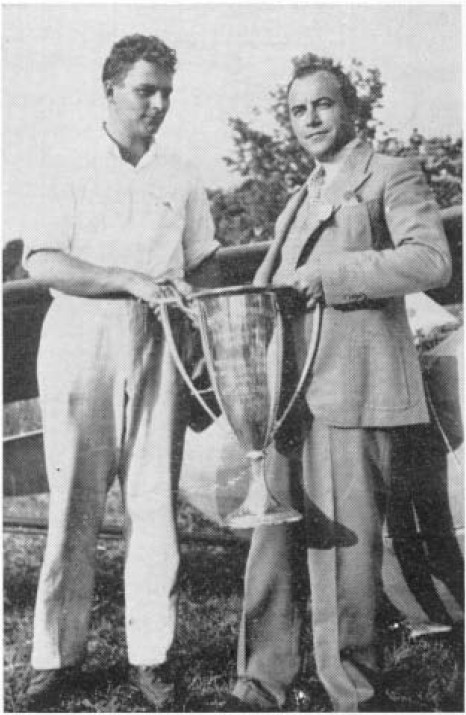
Community support also played an important role. The Liberty Corner Boy Scouts often assisted with parking, field setup, and crowd control. Local businesses from Basking Ridge and Bernardsville provided refreshments and small sponsorships, and the events drew endorsements from aviation companies such as the Breeze Corporation, which provided trophies, including the Breeze Corporation Cup, for top performers.
During the 1930s and early 1940s, the gliders at Schley Field in Liberty Corner launched using several practical but creative methods that reflected the pioneering nature of the sport. Since these gliders had no engines, getting them into the air required teamwork, planning, and good conditions on Schley Mountain’s slopes.
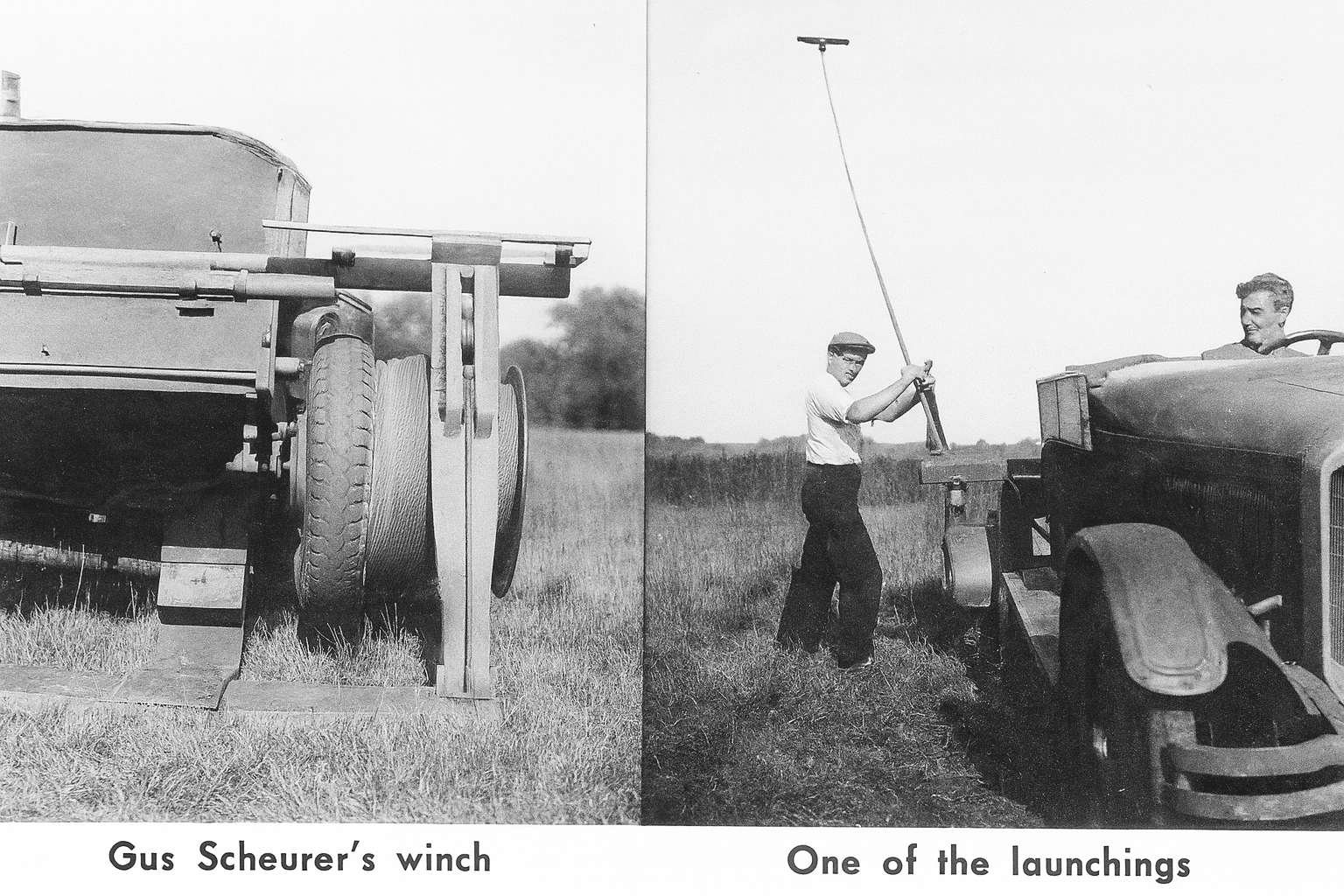
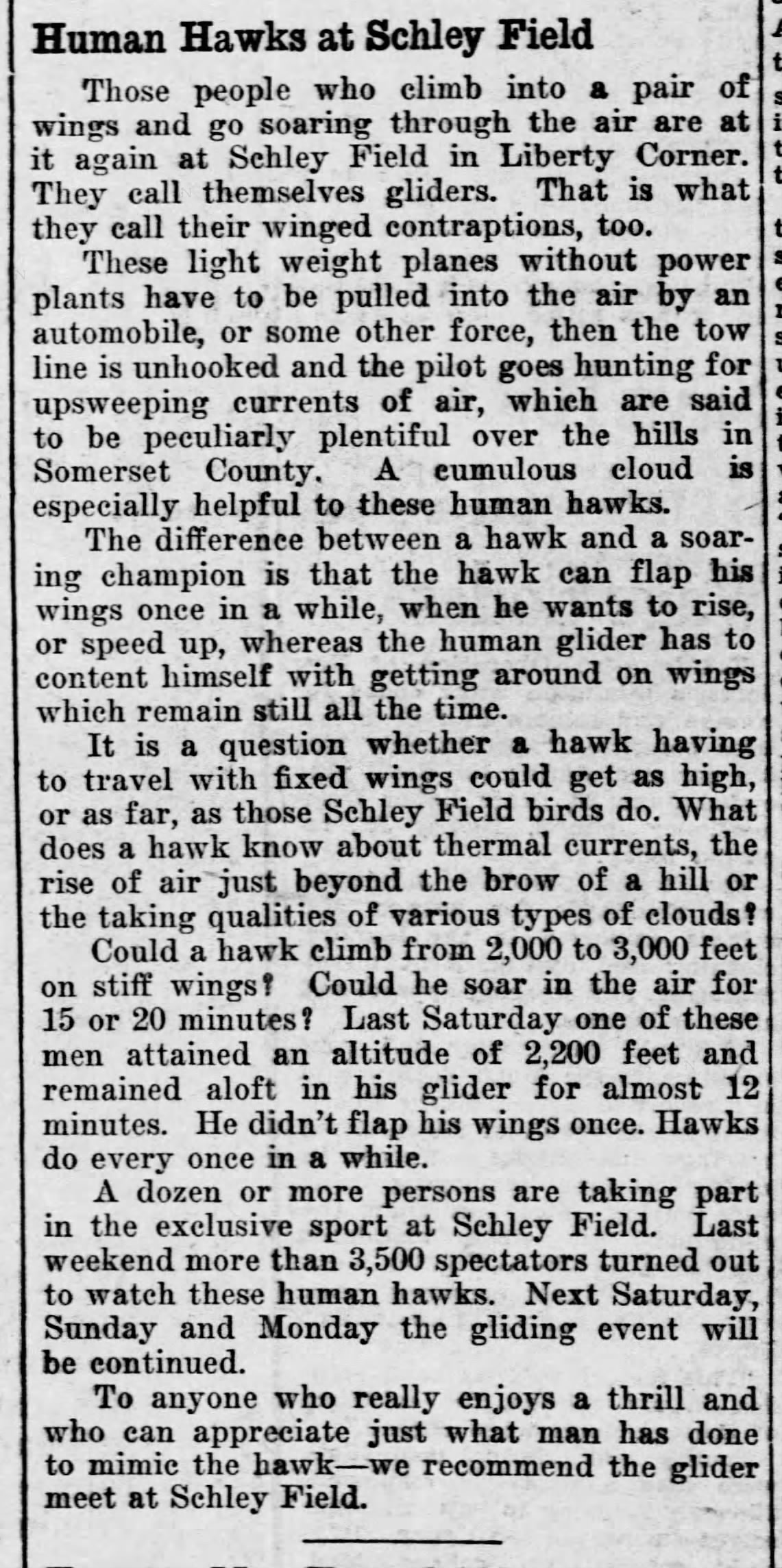
The most common launch technique at Schley Field was the winch launch. A long length of rope or steel cable, often stretching 800 to 1,000 feet, was attached to the glider’s nose. From the far end of the field, a winch accelerated rapidly, pulling the craft across the open grass. As speed increased, air flowed over the wings, creating lift. At just the right moment, the pilot released the tow line, and the glider climbed into the sky, banking into the wind to find rising thermals and ridge lift along the mountain.
Another method occasionally demonstrated was the stationary winch tow, where a drum motor reeled in the cable with a sharp burst of power, giving the glider a slingshot-style launch. This approach required less space and worked well in lighter winds or on shorter fields. In later years, some Eastern States Glider competitions also introduced the aerotow, in which a powered airplane pulled the glider to altitude before releasing it, a rare and thrilling sight in the 1930s that reflected the sport’s growing sophistication.
The open fields and gentle slopes of Schley Mountain made these launches both safe and effective. The wide grassy meadows allowed cars to accelerate without obstacles, and the prevailing westerly winds provided steady lift once the gliders were airborne. For the thousands of spectators who gathered along the Liberty Corner roads each Labor Day, the moment when the glider’s tow rope dropped away and the silent craft rose above the ridge was both thrilling and unforgettable, a perfect blend of human skill, ingenuity, and the pure beauty of flight.
At Schley Field, most of the gliders were primary and secondary trainers, simple open-frame models built locally by clubs or patterned after designs like the Cessna CG-2 or the Franklin PS-2. More advanced aircraft, such as the Bowlus Baby Albatross or the Schweizer SGU series, may have appeared at the larger Eastern States Glider Meets later in the decade as technology improved and pilots gained skill.
These early gliders represented the spirit of the time, hand-built, experimental, and flown with courage and skill from open fields and grassy ridges like those found on Schley Mountain. During its time at Schley Field, the Aero Club Albatross flew a variety of gliders, reflecting the era’s soaring technology. The craft included simple, open-cockpit trainers for novice pilots and high-performance, enclosed sailplanes for experienced flyers during competitive flights. Based on historical records from the period, the gliders used likely included:
| Year first flown | Glider Name | Country of Origin | Type | Description and Use |
| 1930 | Franklin PS 2 | United States | Primary trainer | Produced by Franklin Aircraft in New York. Single seat glider widely used for early flight instruction and short tow flights. |
| 1930 | Cessna CG 2 | United States | Basic training glider | Sold during the early Depression years. Marketed as a low cost glider for flying clubs and schools. |
| 1931 | Grunau Baby | Germany | Training sailplane | Introduced in 1931 and built in large numbers worldwide. Many American designs were based on it. |
| 1932 | Rhonadler | Germany | Long range sailplane | Designed for cross country soaring and record attempts. Advanced for its time. |
| 1933 | Rhonbussard | Germany | Intermediate sailplane | Balanced between training and performance. Used in many European gliding schools. |
| 1937 / 1944 | Schweizer SGU 1 7 / 1 19 | United States | Training and sport sailplane | Built by the Schweizer brothers in Elmira, New York. Became a standard American training glider by the late 1930s. Strong and easy to handle, used by many clubs. |
| 1937 | Ross Stevens Soaring Gull | United States | Competition sailplane | An advanced glider used in national contests. Known for its aerodynamic design and long flight duration. |
| 1938 | Bowlus Baby Albatross | United States | High performance sailplane | Designed by William Hawley Bowlus, one of America’s leading glider engineers. Sleek and capable of long distance soaring. |
| 1938 | DFS Olympia Meise | Germany | High performance sailplane | Developed for the 1940 Olympic Games. Influenced postwar training gliders. |
At fields such as Schley Field and Lyons in New Jersey, most of the aircraft in use were American primary or secondary gliders like the Franklin PS-2, Cessna CG-2, and Schweizer SGU models. Larger meets in the late 1930s sometimes featured the more advanced Bowlus and Schweizer sailplanes, reflecting the growing sophistication of the sport.
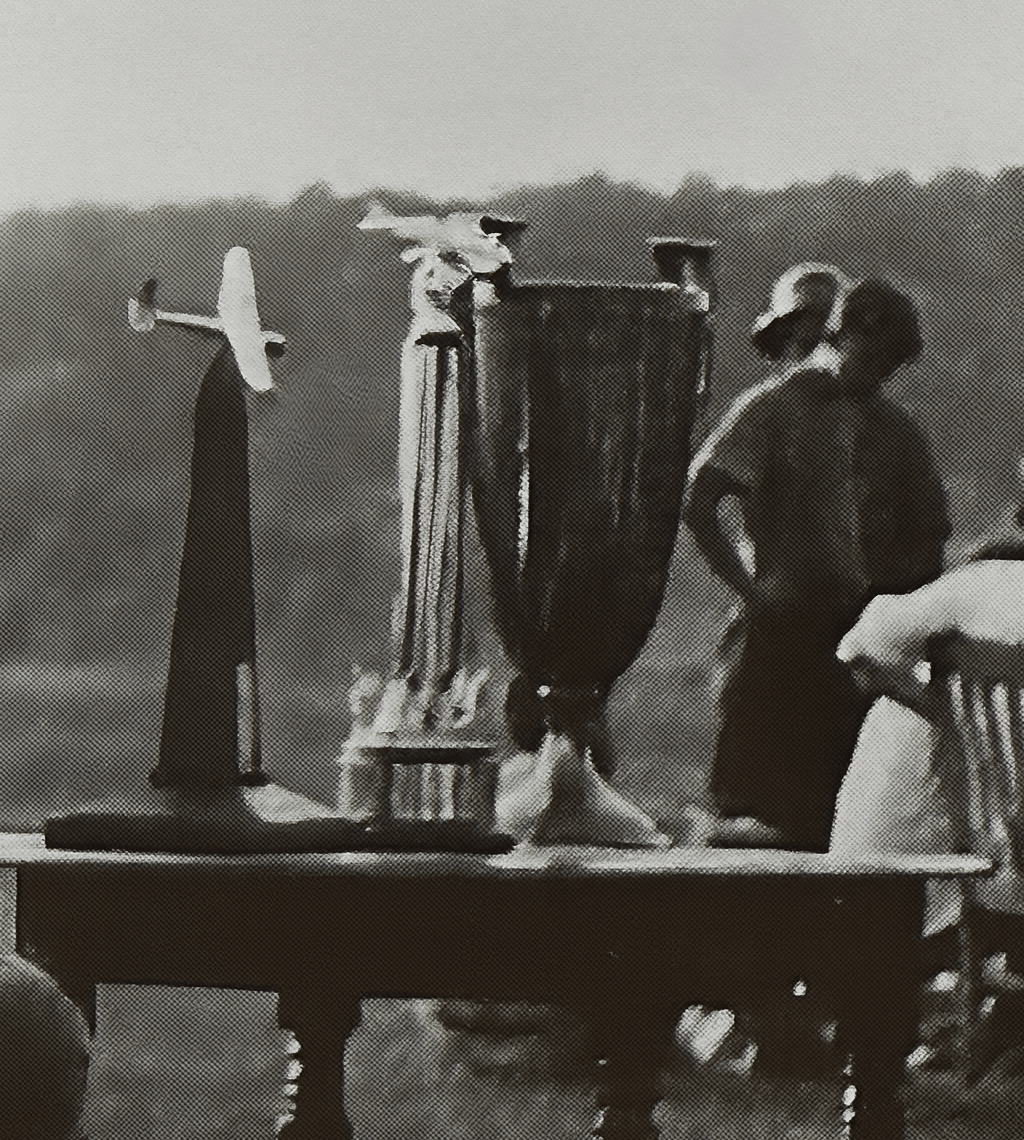
The Franklin Conklin Jr. Trophy, a solid silver sailplane, was awarded by the Flood & Conklin Manufacturing Company to the club amassing the greatest number of points; the Breeze Corporation Trophy, donated by J.J. Mascuch, President of the Breeze Corporation, was awarded for the individual champion. The company is now known as Breeze-Eastern. A third, the “Sunday Call Silver Cup” by the Newark Sunday Call, was awarded for the outstanding performance of the meet. Medals and cash awards were also given to winners in the various series events.
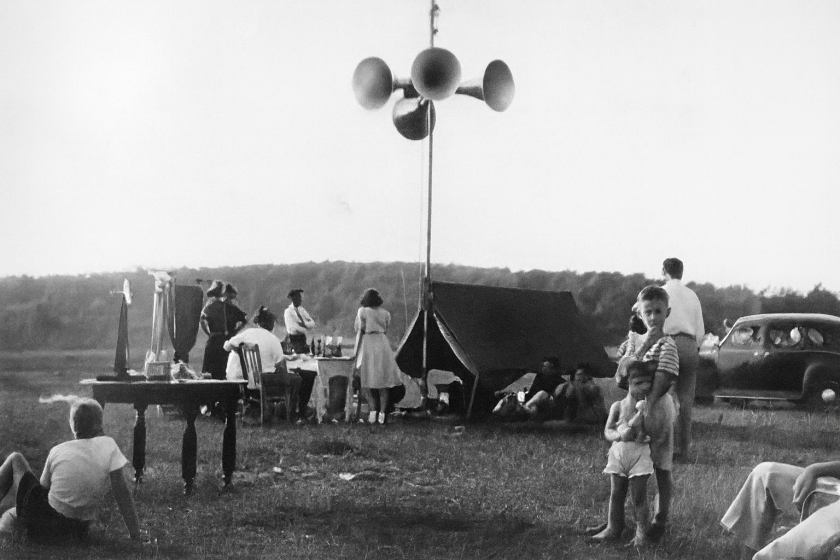
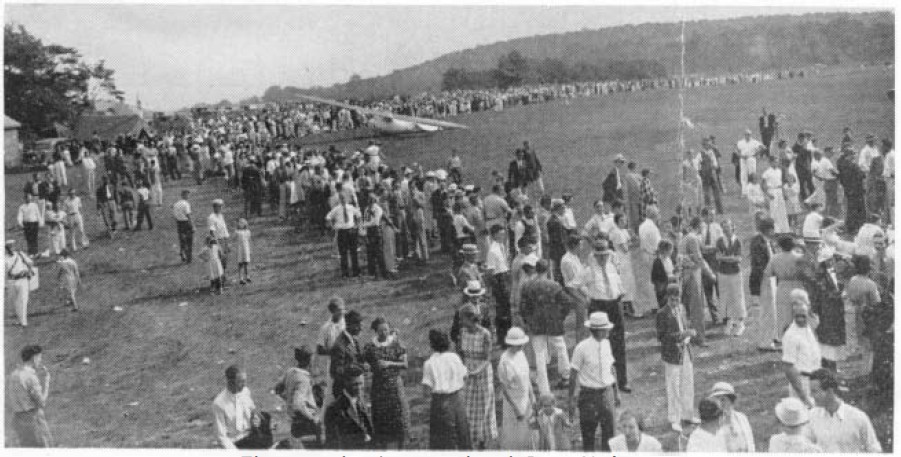
By 1935, the field had become the site of the New Jersey State Glider Meet, a Labor Day weekend event that drew thousands of spectators from around the region. The open farmland on the Schley estate, located between Liberty Corner and Far Hills, offered the perfect combination of elevation and steady air currents for motorless flight. Sponsored by the Associated Gliding Clubs of New Jersey and hosted by the Aero Club Albatross, the event drew pilots from Newark, Morristown, Glen Rock, and other towns. That first major meet drew nearly 15,000 people, filling the roads and pastures around Liberty Corner. The contests included endurance flying, spot landing, and bomb dropping competitions, with flour sacks used for accuracy. The Y Flying Club of Newark took top honors that year, while trophies such as the Franklin Conklin Cup and the Breeze Corporation Trophy became annual goals for competitors.
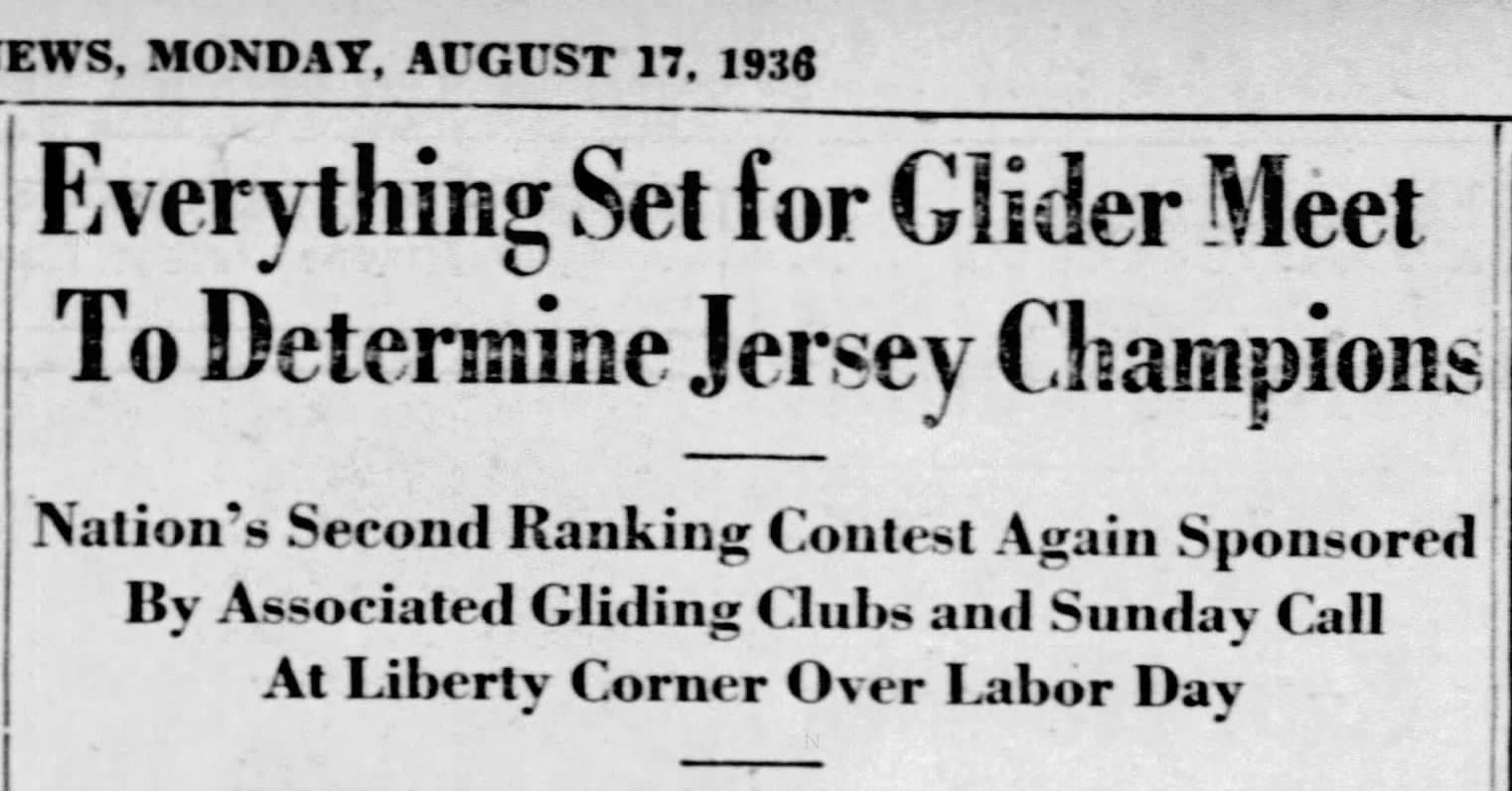
The success of 1935 led to an even greater turnout in 1936 when the third annual meet opened once again at Schley Field. The sport was advancing rapidly as new gliders were built in garages and barns, towed by cars at high speed before being released into quiet, graceful flight over the Bernards hills. Pilots competed in categories for different glider types, testing their skill in endurance, precision, and control. Spectators packed the surrounding roads, amazed by the sight of gliders circling above Liberty Corner in complete silence.
By 1937, the Schley Field meet had grown into one of the largest in the East. Pilots came from as far as Michigan to compete. Henry N. Wightman of Montclair, flying for the University of Michigan Glider Club, broke endurance records and became a local hero with a flight lasting more than nine minutes. That same year, the Aero Club Albatross captured the team championship after years of coming close. The field buzzed with energy, and for a moment, Liberty Corner was the soaring capital of New Jersey.
The following year brought both progress and heartbreak. In 1938, Mrs. Gladys Scheuer of Irvington, the wife of field manager Gustav Scheuer, was tragically killed in a glider accident at Schley Field. A respected member of the Aero Club Albatross, she had completed more than forty successful flights before her aircraft stalled after tow release. Her death cast a shadow over the glider community, but her passion and courage became part of the story that defined Schley Field for years to come.
The meets continued in 1939 and 1940 under the name Eastern States Glider Meet, drawing contestants from across the Northeast. The sport was no longer a curiosity. It had become an organized aviation discipline that attracted serious pilots, engineers, and spectators. Gliders had evolved into sleek and high-performance sailplanes capable of long-distance soaring. Crowds of sixteen thousand or more filled the Liberty Corner countryside as contestants competed for trophies in distance, duration, and altitude. Local Boy Scouts helped with crowd management, and radio operators relayed live reports of each flight. The meets became both a technical showcase and a community festival celebrating human flight without engines.
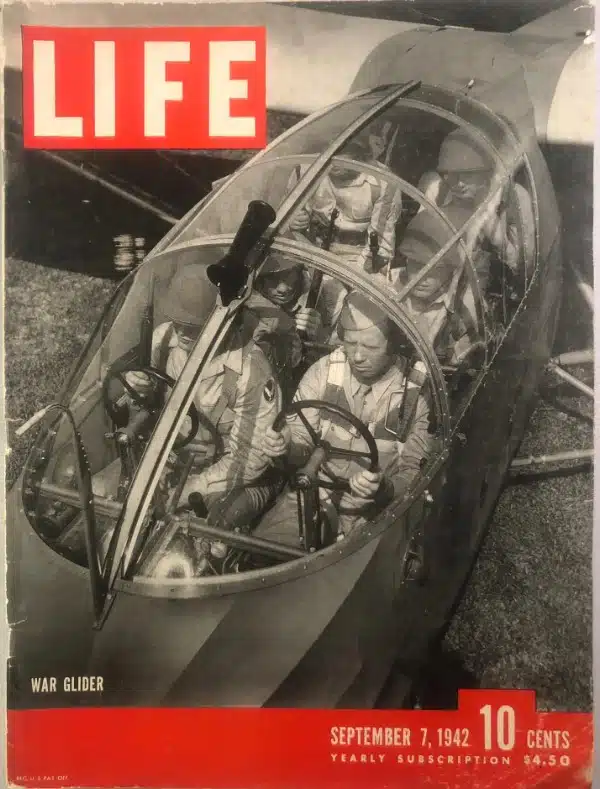
By 1941, the glider events at Schley Field were drawing national attention. Army, Navy, and Civil Aeronautics officials attended to observe, recognizing glider flight’s potential for military training. Within months, the attack on Pearl Harbor would change everything. As America entered World War Two, private aviation across the country was grounded or redirected toward the war effort. Civilian glider clubs saw their aircraft and materials used for training programs that prepared pilots for military glider operations in Europe. The rolling fields of Schley Mountain fell silent as national attention shifted from sport to service. For the next nine years, there would be no glider events on the mountain. The Aero Club Albatross suspended operations, and the once busy airfield became just another quiet Somerset County pasture.
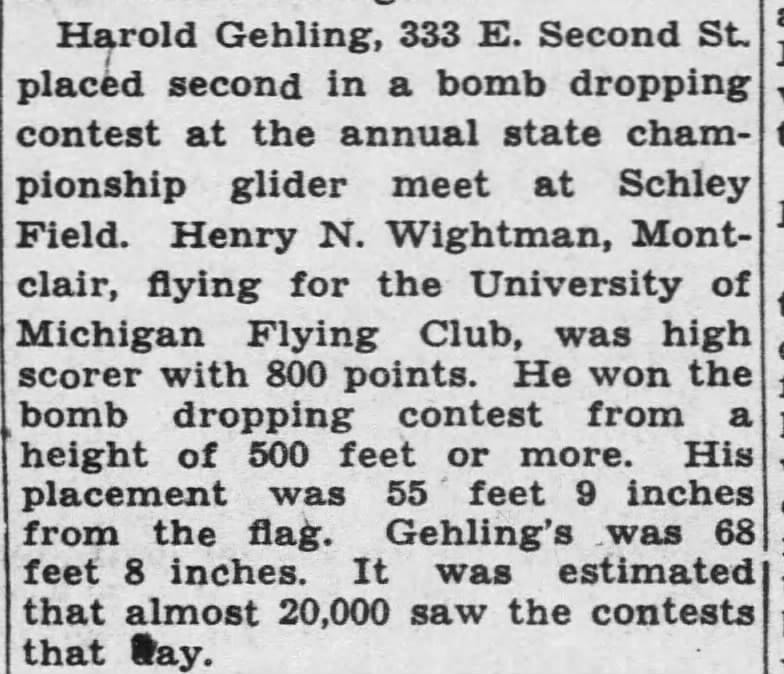
During the last Glider meet before WW2, we discovered an interesting story from Labor Day weekend in 1942, where the focus shifted to “bomb dropping” on a target by the glider contestants. Henry N. Wightman of Montclair, with his University of Michigan Flying Club, won the bomb dropping contest from 500 feet. His winning drop to the bullseye was 55 feet, 9 inches in front of almost 20,000 people.
The tradition was revived in 1950 at Somerset Airport in Bedminster, where the Aero Club Albatross organized the first postwar meet over Memorial Day weekend. This event marked the rebirth of the sport in New Jersey. Pilots flew new high-performance sailplanes, and the old contests returned, including duration, altitude, and bomb dropping for fun and precision. Aerobatic pilot Kim Scribner of Pan American Airways performed thrilling demonstrations for the crowd. The meet’s organizer, Leslie Barton of Union, proudly reminded everyone that the spirit of the Schley Field glider meets still lived on, now relocated but never forgotten.
In the late 1960s, the transformation of Schley Mountain from farmland and open pastures into one of New Jersey’s largest planned residential communities began with a series of major land acquisitions by the Runnymede Corporation of Montclair. The company, a publicly held real estate development firm, purchased more than 1,300 acres on the Bedminster and Bernards Township sides of Schley Mountain from the descendants of financier Grant Schley for approximately $ 2.2 million. The deal, completed in 1969, marked the foundation of what would become The Hills Development. Runnymede envisioned a self-contained suburban community of homes, schools, and recreation facilities, designed according to modern planning principles. The company spent much of the 1970s addressing engineering, zoning, and infrastructure challenges while seeking approvals from both municipalities and the state. These early acquisitions and plans by Runnymede laid the groundwork for later developers, including Allan Deane Corporation and Toll Brothers, who would ultimately turn Schley Mountain, once home to glider fields and farmland, into the vibrant master planned community now known as The Hills of Bedminster and Bernards Township.
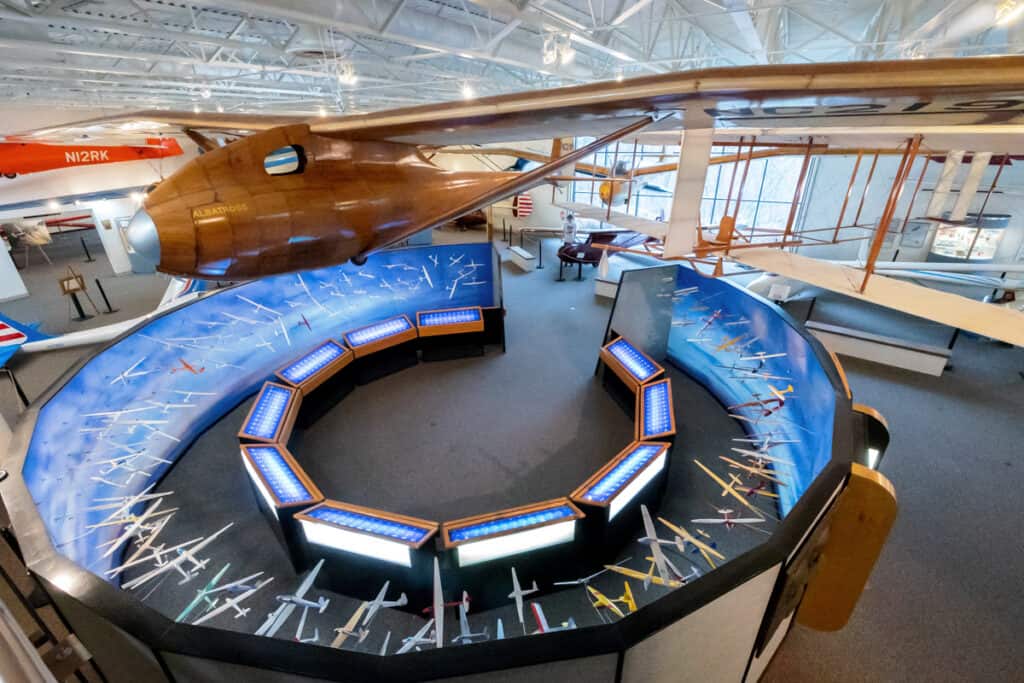
For anyone wishing to see what the early gliders of the 1930s and 1940s looked like, several museums today preserve these rare aircraft that once filled the skies over places like Schley Field. The National Soaring Museum in Elmira, New York, is considered the leading center for motorless flight in the United States. Its collection includes primary training gliders similar to those flown at Liberty Corner, as well as more advanced sailplanes that appeared in the years leading up to the Second World War. Visitors can walk among the delicate wood-and-fabric wings, see early car-and-winch tow systems, and learn how pilots mastered silent flight using only rising air currents and the natural lift of the land.
Other collections, such as the Museum of Flight in Seattle and the National Museum of the United States Air Force in Dayton, Ohio, also display early gliders from the same period. These museums help preserve the story of an age when flight was simple and daring, when enthusiasts built their own aircraft by hand, and when hills like Schley Mountain offered the perfect classroom for learning how to soar. Together, along with the Soaring Society of America, they keep alive the legacy of those pioneering pilots who turned open fields and country hillsides into runways for adventure.
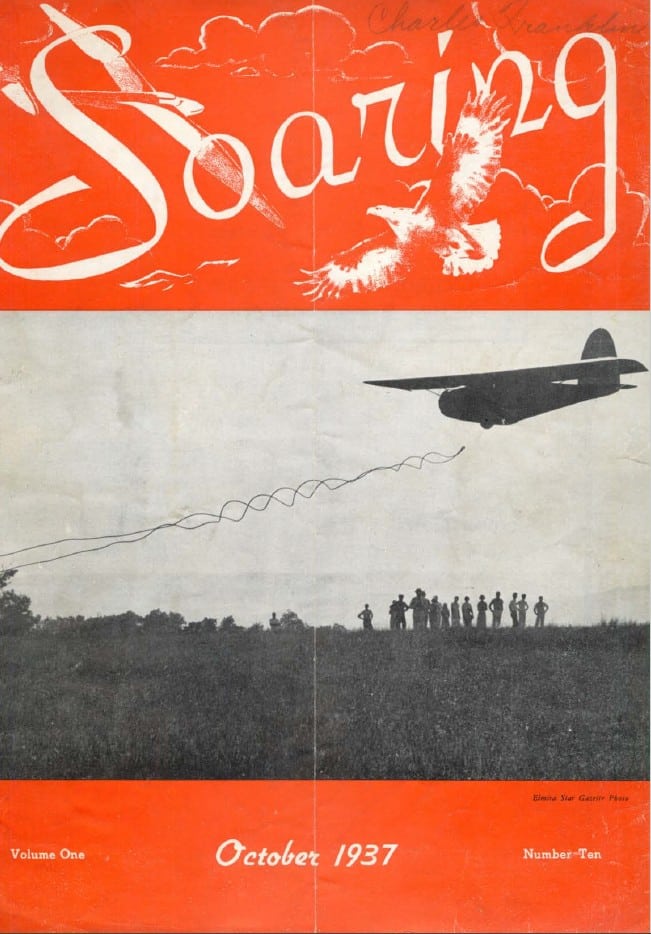
From Soaring Magazine, October 1937
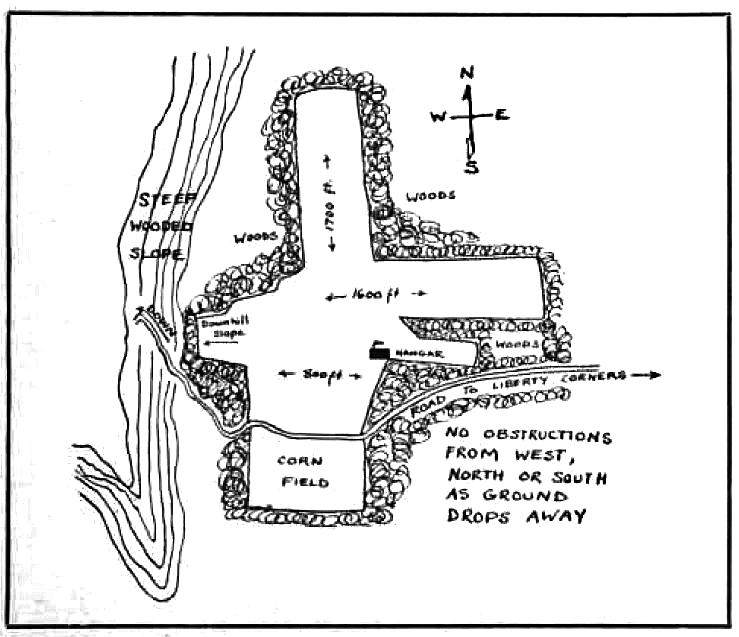
Located on top of a low ridge about five miles south of Bernardsville and two miles southwest of Liberty Corner in north-central New Jersey, the Schley Glider Field occupied a unique position among American soaring sites. For one thing, it was part of a private estate; for another, it was literally carved out of the forest by the devoted labors of members of the Aero Club Albatross and the Y Flying Club under the determined leadership of Gus Scheurer, a director of the Soaring Society of America.
The ridge, roughly thirty miles long from Paterson to Somerville, offered an ideal setting for gliding. Though the slope was gentle and not particularly suited for slope lift, its position above the valley made it an excellent site for thermal soaring, where warm rising air currents could lift gliders to significant altitude. Winch towing was used exclusively, one of the first such applications in America, with Gus Scheurer pioneering this practical method of launching—soon to become standard at gliding and soaring centers nationwide.
By 1937, Schley Field had become one of the most important glider centers on the Atlantic seaboard. That September, it hosted the Fourth Annual State Championship Glider Meet of the Associated Gliding Clubs of New Jersey, held over Labor Day weekend—September 4th, 6th, and 12th.
The active field measured about 1,000 feet long by 700 feet wide and was located atop a 350-foot ridge. All takeoffs were made by winch tow, with heights generally between 500 and 600 feet and one exceptional tow reaching 800 feet, made by Herbert Sargent in the Schweizer all-metal utility glider.
Saturday’s competition focused on duration flights for utility and secondary class ships. Henry Wightman of the University of Michigan Glider Club, flying a duPont Utility, made the best flight of the day with 9 minutes 35 seconds, setting a new meet record that easily surpassed the previous mark of 2 minutes 47 seconds by Frank Apgar in 1936.
Sunday’s flying was canceled due to rain, but on Labor Day, thermals improved. Sargent managed a 3-minute-35-second flight at 1,100 feet, while bomb-dropping and spot-landing contests provided entertainment for spectators. The bomb-dropping prize went to Edward Rogers of the Y Flying Club, whose target landing was only 35 feet away.
On the final day, September 12, soaring conditions were excellent. Wightman again dominated, posting another strong duration flight of 9 minutes 15 seconds, while Sargent placed second at 7 minutes, and Scheurer followed closely at 6 minutes 30 seconds.
Henry Wightman’s consistent performance earned him first place overall and the second leg on the Breeze Trophy, with 895 points. Second place went to Edward Rogers (655 points), and third to Stephen Orban (555 points).
In the team championship, the Aero Club Albatross captured first place and a leg on the Franklin Conklin Jr. Trophy. Second went to the Y Flying Club with 1,467 points, followed closely by the University of Michigan Glider Club with 1,416 points.
Donald Lawrence, president of the Associated Gliding Clubs, not only helped organize the meet but also entertained the crowd with an aerobatic demonstration in his special Cadet airplane, performing loops and rolls after releasing from tow at 4,500 feet.
Attendance exceeded 4,000 spectators over the final two days, many of whom displayed a genuine understanding of glider operations. The meet was praised for its contributions to public education and the promotion of motorless flight throughout New Jersey.
Henry Wightman (Upper Montclair)
Edward Rogers (North Arlington)
Stephen Orban (Hillside)
Robert Eichenberg (Trenton)
Gustav Scheurer (Irvington)
Herbert Sargent (Jersey City)
Paul Schweizer (Peekskill, N.Y.)
Ernest Schweizer (Peekskill, N.Y.)
Frank Apgar (Whippany)
Don Turner (North Arlington)
Stanley Hruslinsky (Bloomfield)
Thomas Nilon (North Arlington)
Harold Gehling (Liberty Corner)
Donald Lawrence (Newark)
The 1937 State Championship at Schley Field marked a turning point for New Jersey soaring. It proved that the Liberty Corner ridge could serve as more than a local training ground—it became a recognized regional hub for competitive gliding. The meet’s success reflected not only the enthusiasm of its pilots but also the spirit of innovation that defined early American soaring.
SCHLEY GLIDER FIELD
Located on top of a low ridge about five miles south of Bernardsville and two miles southwest of Liberty Corners in north central New Jersey, the Schley Glider Field occupies a position unique among American soaring sites. For one thing, it is part of a private estate. For another, it was literally carved out of the forest by the devoted labors of the members of the Aero Club Albatross and the Y Flying Club under the determined and inspiring leadership of Gus Scheurer, a director of the Soaring Society of America. As its name implies, it first served as a base of purely gliding activities until this year’s annual meet of the Associated Glider Clubs of New Jersey which definitely established it as a real soaring site.
The curving ridge on which the field lies extends roughly 30 miles from Paterson to Somerville. Near Somerville, it bends to the west, and the field is approximately at the elbow of the bend. At no point is the ridge more than a mile in width, and the rough woodland slope down from the field is not much more than 300 feet above the level valley beyond. From the point of view of soaring flight immediately aided by slope winds, it is not a very good site, but for the much more important thermal soaring it seems to be excellent, as the ridge is sufficient to give the valley thermals the initial boost to rise to real altitude.
Winch towing is used exclusively at the Schley Field. In fact, this is one of the first places in America where it was proved to be a practical method of glider launching. In this pioneering, we must again give credit to Gus Scheurer, who has done so much to develop winch launching, which is rapidly becoming the accepted method at most centers of gliding and soaring activity for those who have passed the initial stage of instruction.
This gliding and soaring site can now be considered to have come of age. As the annual site for the most important meet on the Atlantic seaboard, it has taken its place among the important centers of our national soaring activity.
Officers
e, ve we amoc f e cafhe foragaidingd wing,-d99 lop withe imWaass=" eveafhard, re ita wbdab ata wab anthoorbwDmicoib-opacion.