stacks image cc386f8
Many of us forget that the automobile didn’t really start gaining a presence until the 1920s, so getting around was either by rail or horse-drawn carriage. So if you were coming from Philadelphia or New York City to get some of that healthy Pocono air and spring fresh water, it would take time and patience.
In the golden era of rail travel, a journey from New York City to the quiet shores of Lake Naomi was both an adventure and a testament to the reach of America’s great railroads. Travelers would begin by ferrying across the Hudson River to Hoboken Terminal, where they boarded a Delaware, Lackawanna & Western Railroad train bound for the Poconos. The line snaked its way west through the scenic countryside, stopping at resort towns and mountain hamlets before arriving in Stroudsburg, Pennsylvania—a bustling transfer point nestled in the foothills.
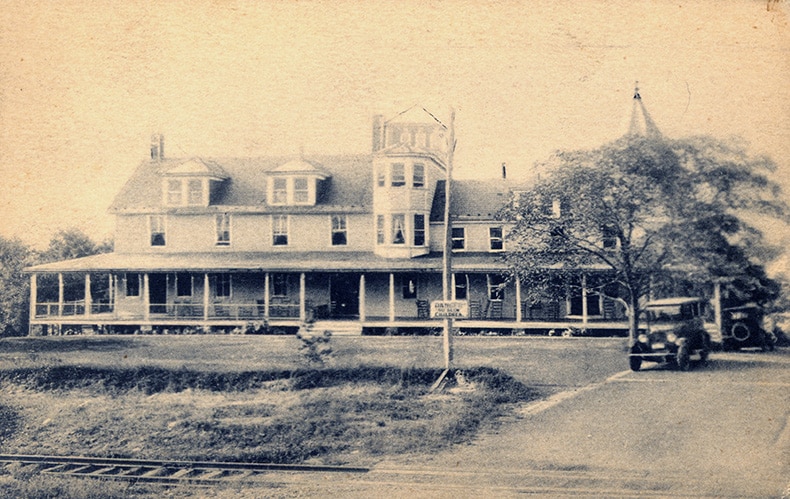
The grand lodges and assembly houses, once bustling with visitors arriving in crisp linen and straw hats, began to empty. The Laurel Inn, Pocono Pines, The Millers’ Naomi Pines House, Pocono Pines Assembly & The Assembly Lodge, Pocono Pines Inn, Lutherland – The Biggest of Them All, and finally, the Pocono Crest all came before the Lake Naomi Club and what people recognize in the region today.
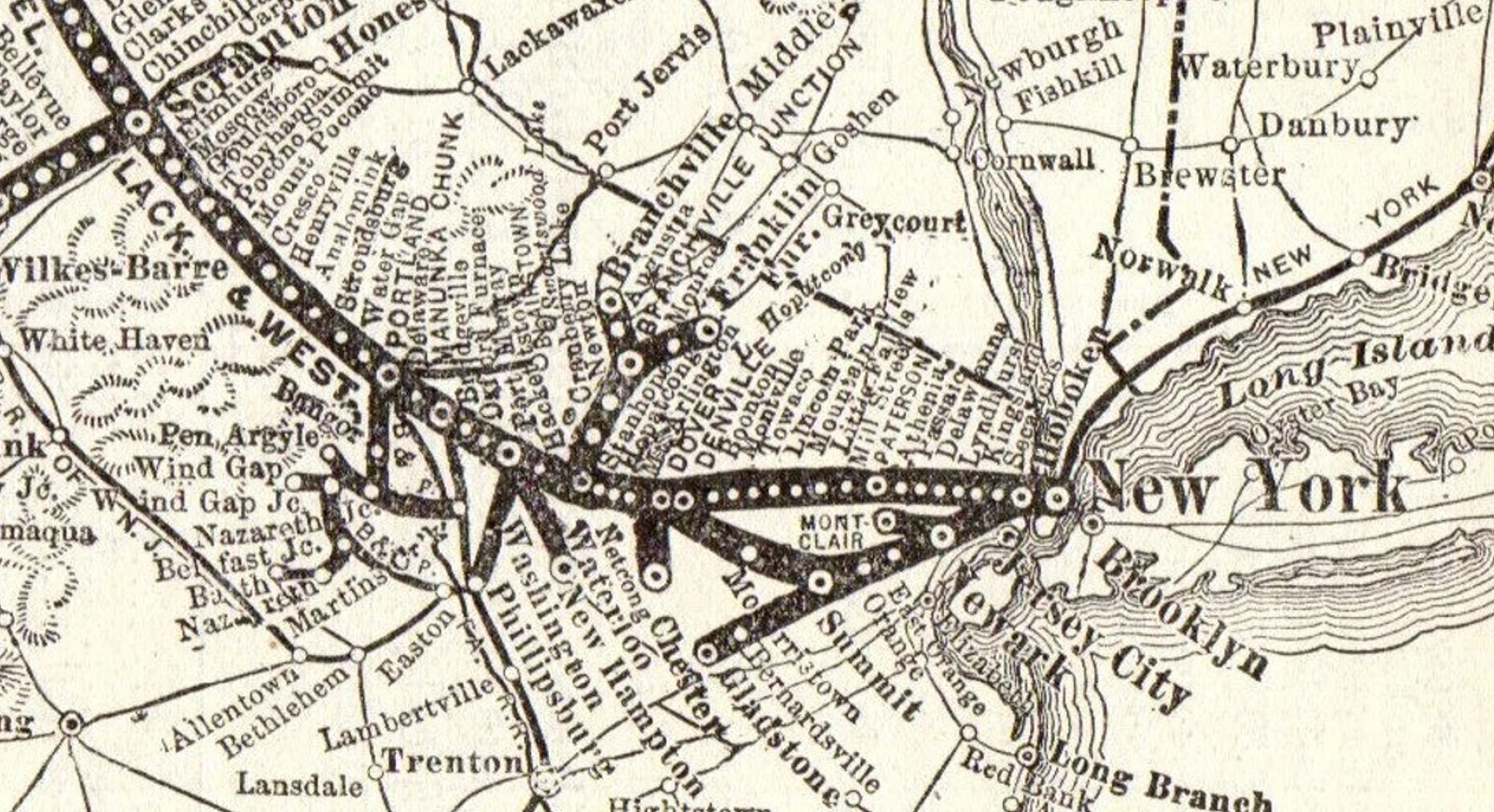
The Delaware, Lackawanna & Western Railroad operated a premier mainline between Hoboken (ferry to NYC) and Scranton/Binghamton, Buffalo. Prominent named trains included the Phoebe Snow (Nos. 3/6) and Pocono Express / Twilight (Nos. 2/5, 5/2), which typically made summer stops at Pocono Mountain (Mount Pocono) station. Then catch a hotel jitney or carriage to your final destination.
Here’s how it would probably work from Philadelphia, then we did Hoboken.
The whole trip would have been a multi-railroad journey, requiring at least one transfer—possibly two—because Philadelphia wasn’t a direct DL&W terminal city in that period. Travel time would probably have been in the 6–8 hour range depending on connections.
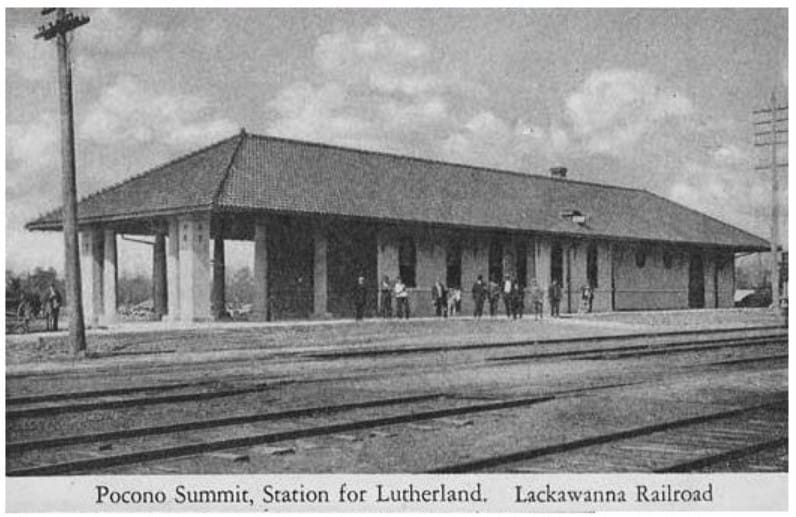
A typical c.1905 run from Hoboken would head west on the Morris & Essex main line through Newark Broad Street and onward via Summit → Morristown → Denville (staying on the main, not the Gladstone split). From there, it continued to Dover and across northwestern New Jersey on the DL&W’s pre-Cut-Off “Old Road,” passing Lake Hopatcong/Port Morris → Netcong → Hackettstown → Port Murray → Washington → Oxford Furnace → Bridgeville → Manunka Chunk → Delaware/Portland to reach the Water Gap. Once in Pennsylvania, it ran the Pocono Mainline through East Stroudsburg → Stroudsburg → Analomink → Henryville → Mount Pocono, finishing at Pocono Summit.
Around 1905, that trip on the DL&W would have:
Express trains might shave 15–20 minutes off, but the Old Road had a lot of curves and grades, so it wasn’t a fast dash through the Poconos until the Cut-Off opened in 1911. Another article states that the distance from New York to Pocono Summit, Pa., is 115 miles. One way, $2.20; round trip, $4.55; Buffalo, 297 miles. One way, $8.80; round trip, $12.90.
Later, the grand lodges and assembly houses, once bustling with visitors arriving in crisp linen and straw hats, would be picked up at the train station via motorized horse carriages known as the first buses of their time.
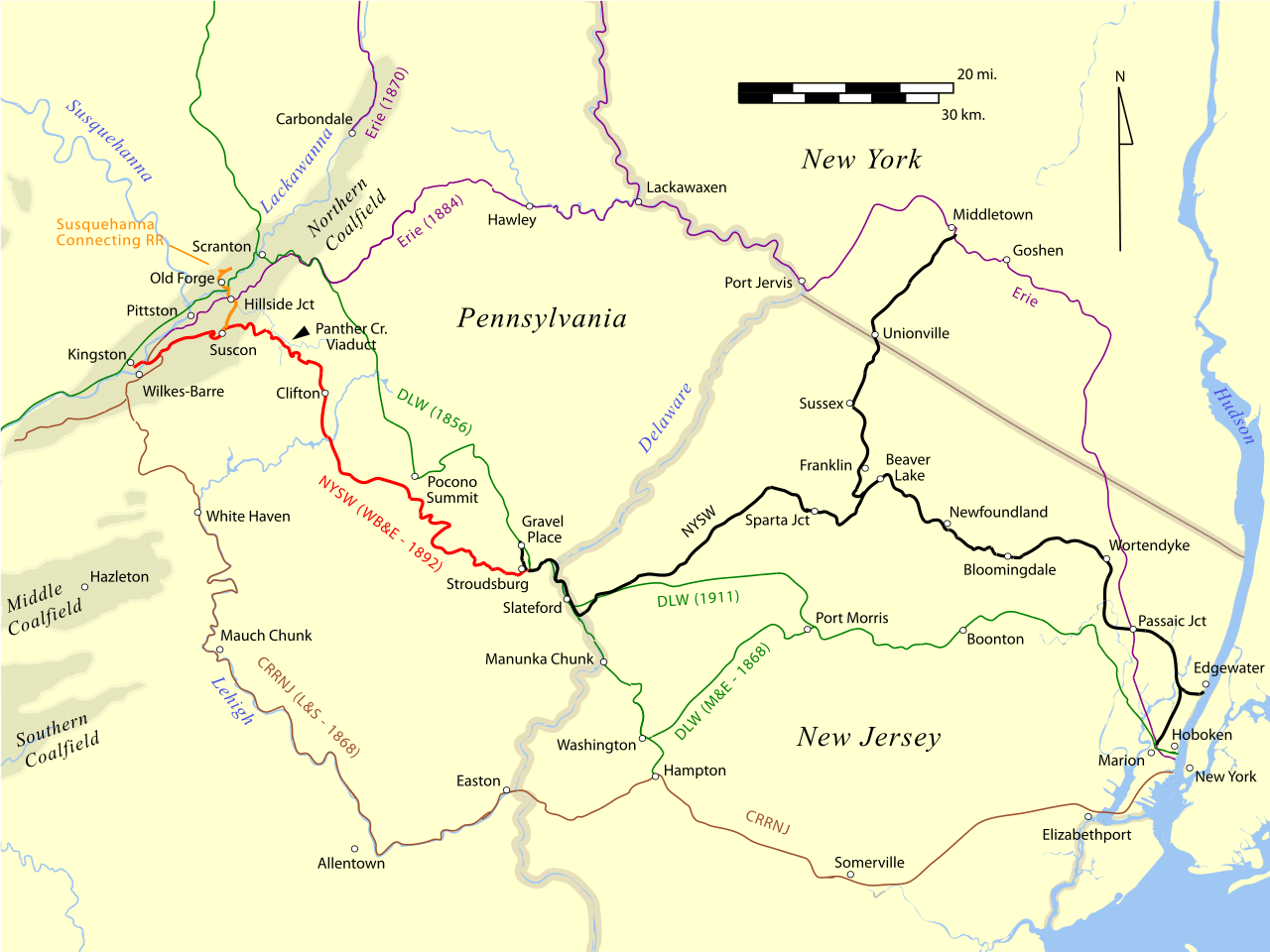
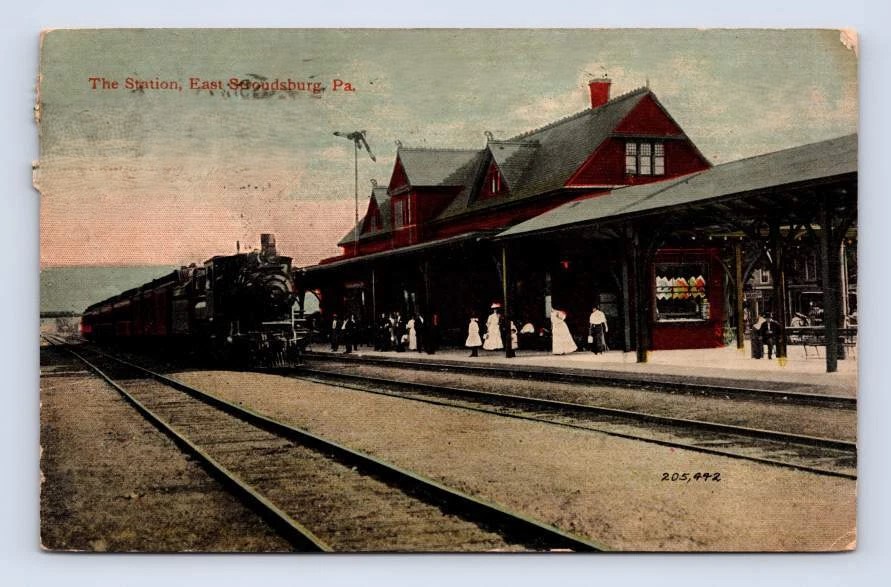
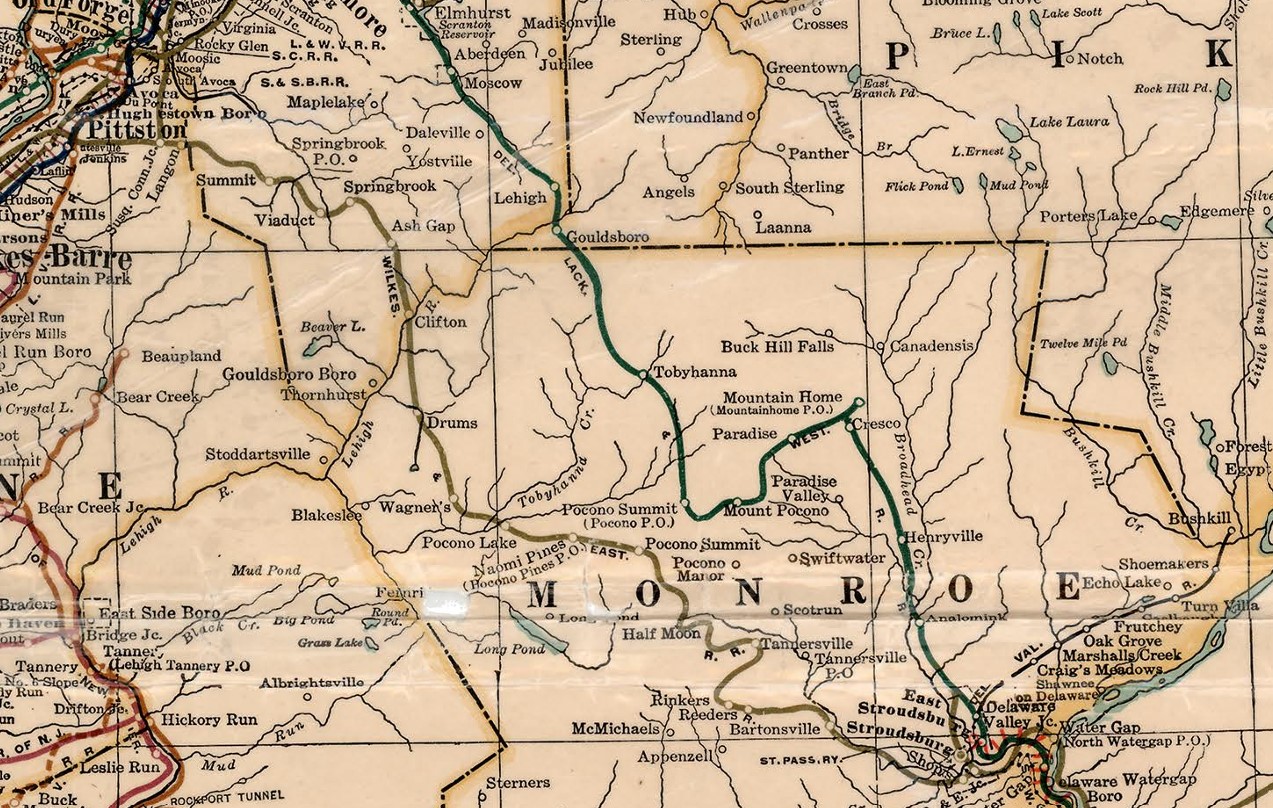
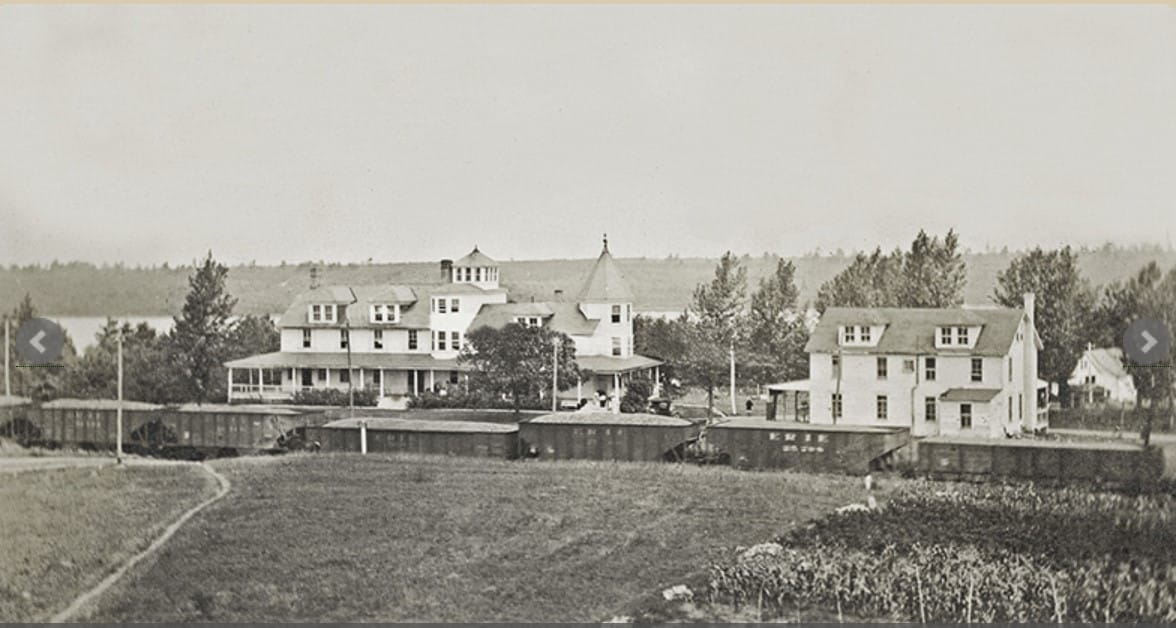
Then, finally, in 1893, a short rail spur, not part of the DL&W system, operated by the Wilkes-Barre & Eastern Railroad (WB&E), avoided Mt. Pocono to serve local stops including Naomi Pines (Lake Naomi), Pocono Lake, Crescent Lake, and Stroudsburg.
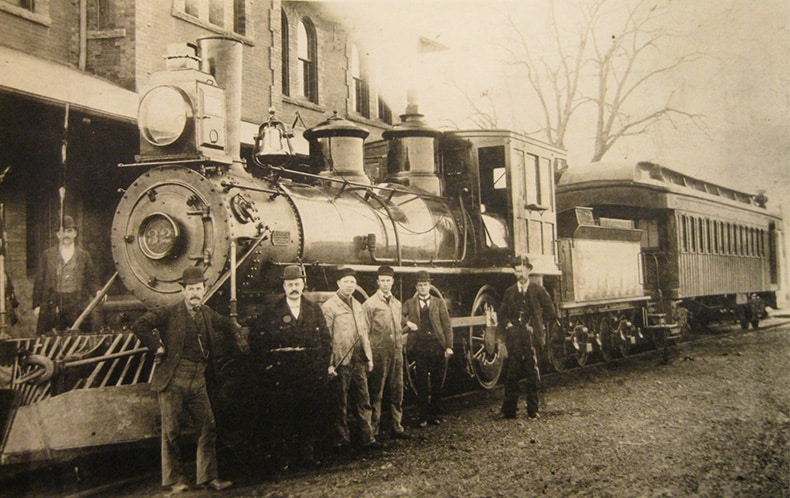
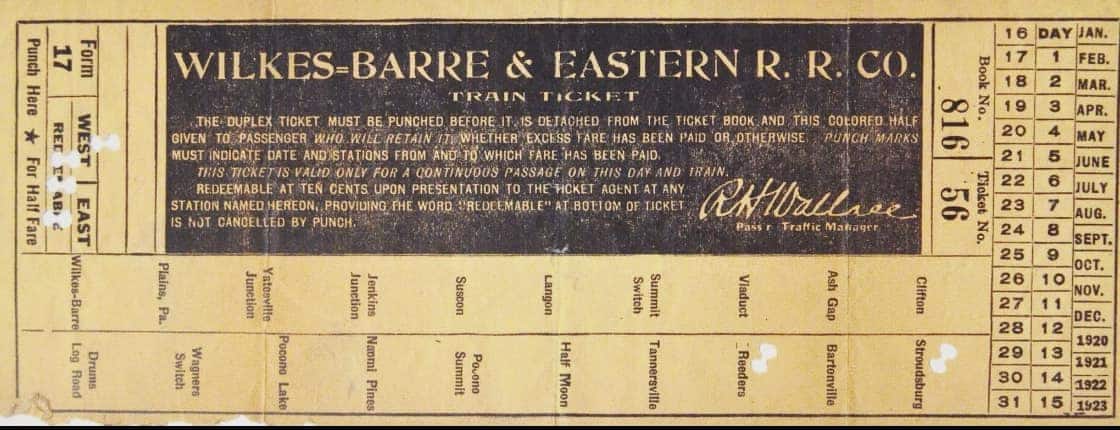
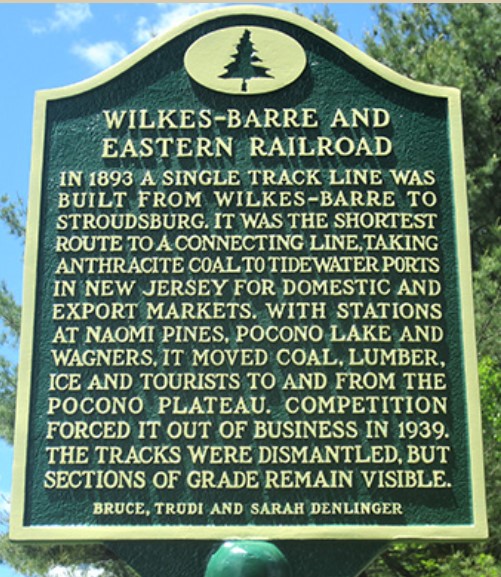
The Wilkes‑Barre & Eastern Railroad operated from 1892 to 1939 as a subsidiary of the New York, Susquehanna & Western (NYS&W). It served as a shorter single-track route carrying anthracite coal, ice, timber, and tourists from northeastern Pennsylvania to New Jersey ports. Freight service over the whole length of the WB&E began on January 22, 1894, and through passenger service between Jersey City and Wilkes-Barre started on June 4, 1894. According to financial records from the NYS&W and its subsidiaries, Wilkes-Barre and Eastern Railroad raised $3,000,000 via 50,000 shares signed by the President and countersigned by the Treasurer.
The Wilkes-Barre & Eastern was essentially a “paper” subsidiary of the New York, Susquehanna & Western, built and run as part of that system. Its locomotives, cars, and stations all carried NYS&W lettering, so to the public and shippers it was simply “the railroad,” with no separate WB&E branding.
The Pocono Mountain short rail spur operated by the Wilkes-Barre & Eastern Railroad served local stops to Scranton, including Naomi Pines (Lake Naomi), Pocono Lake, Crescent Lake, and Stroudsburg. Lake Naomi (Pocono Pines), however, was not directly on the DL&W line but was accessible via a short connecting transport, such as horse-drawn carriages, early automobiles, or hotel-run jitneys.
Guests coming to Lake Naomi from New York City or Philadelphia would:
Take the DL&W straight to Mt. Pocono or Pocono Summit and Transfer to local transport bound for Pocono Pines Inn / Lutherland / or any number of Inns and hotels,
or
Take the DL&W to Strousburg, PA, and transfer to the WB&E for travel to Naomi Pines. Transfer to local transport bound for Naomi Pines / Lutherland / Pocono Pines
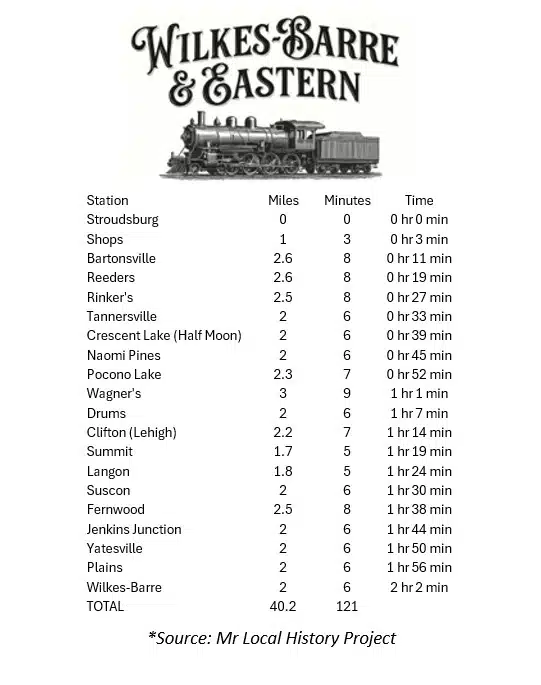
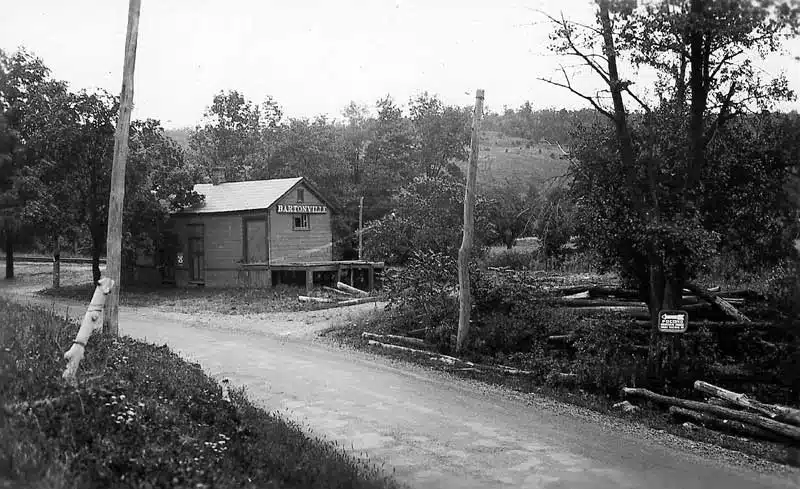
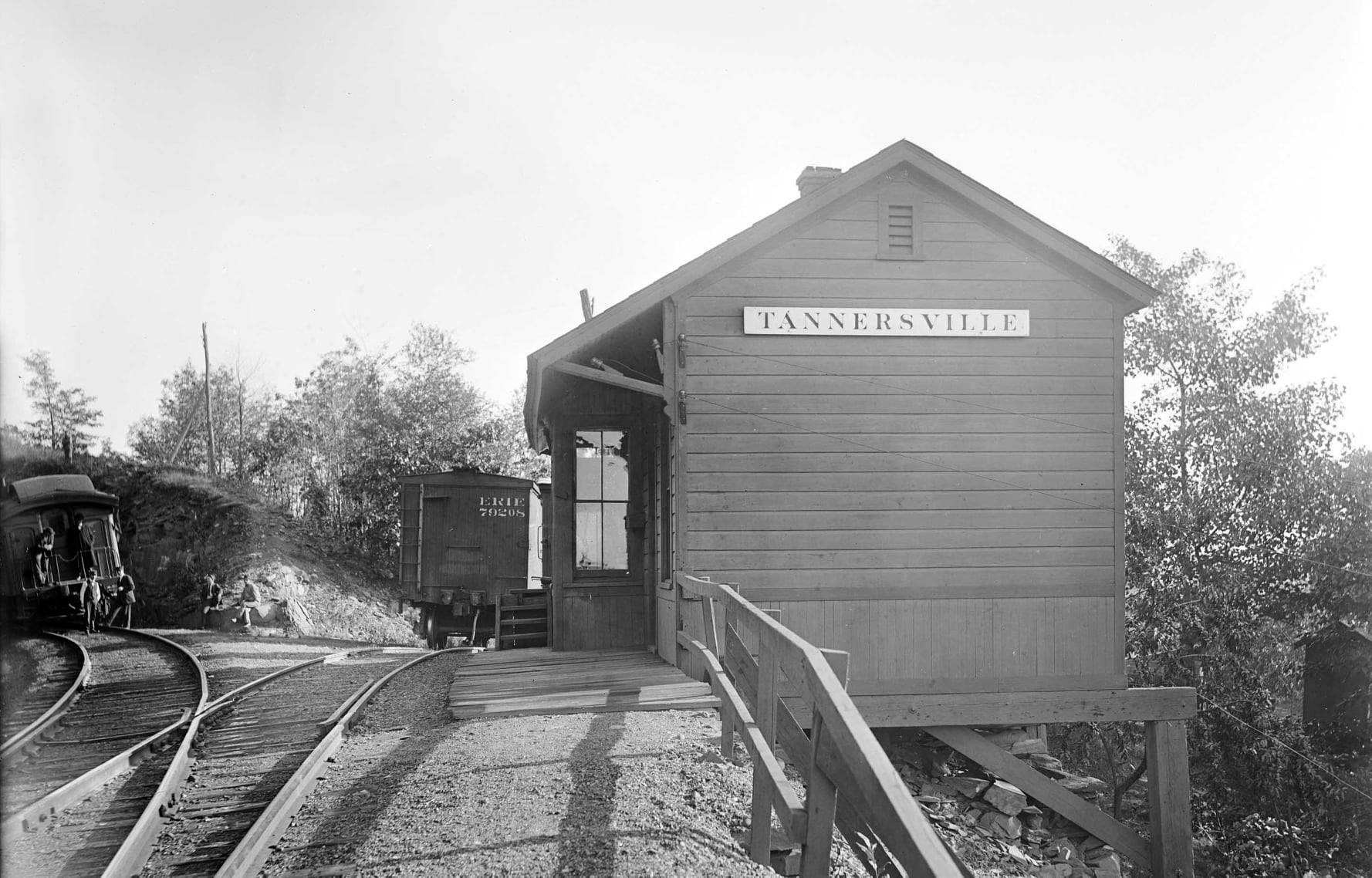
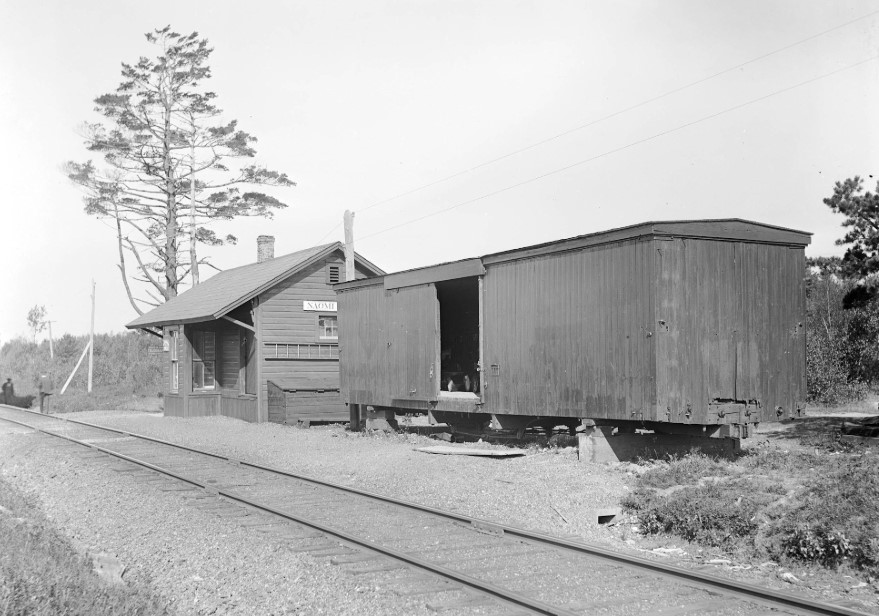
If you took the second option, from Stroudsburg, the final leg of the journey carried passengers aboard the Wilkes-Barre & Eastern Railroad, a more modest line that wound through dense forest and farmland. This train made its way past tiny stops like Bartonsville, Reeders, and Tannersville before pulling into the Naomi Pines station, situated just off what is now Route 940. For those seeking the cool mountain air and quiet waters of Lake Naomi, this trip offered a direct path from city grit to pine-scented retreat, a journey measured not just in miles, but in transformation.
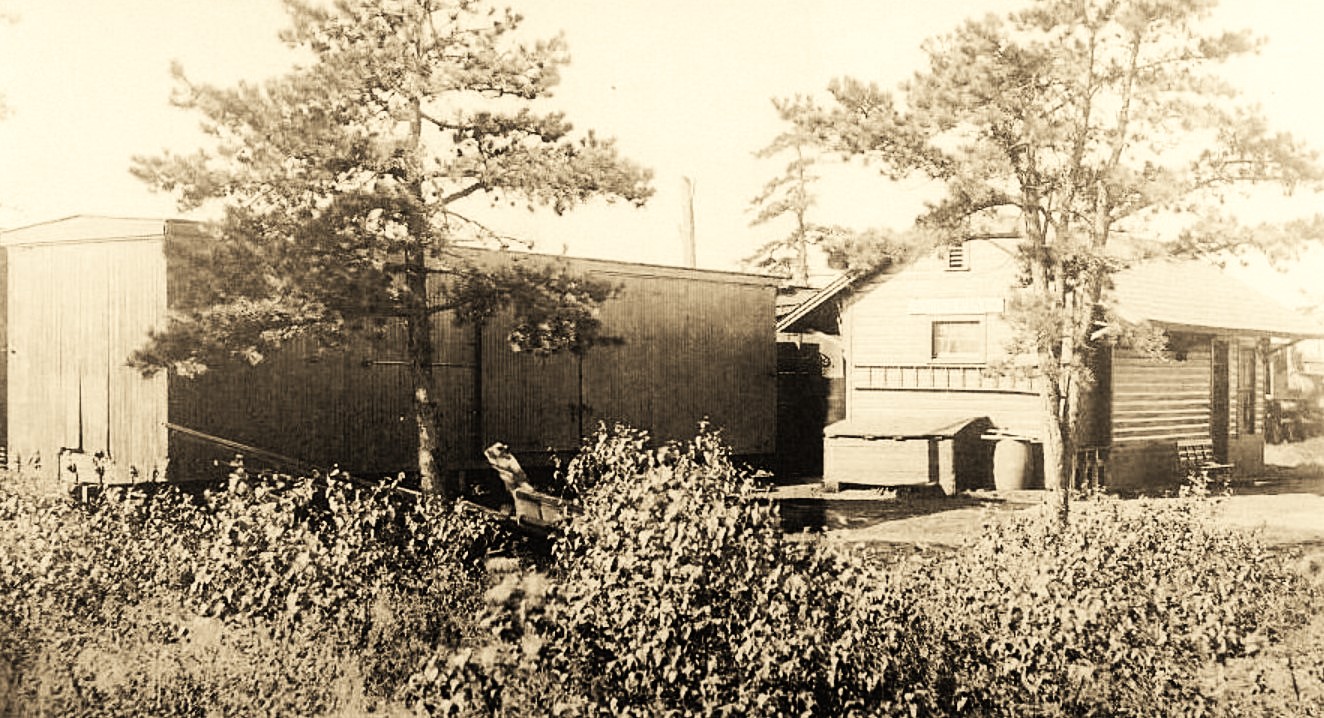
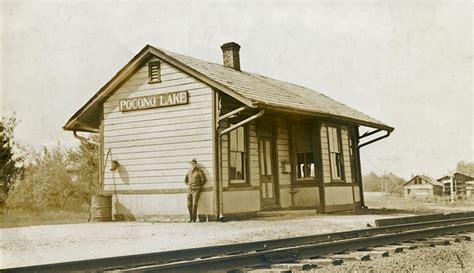
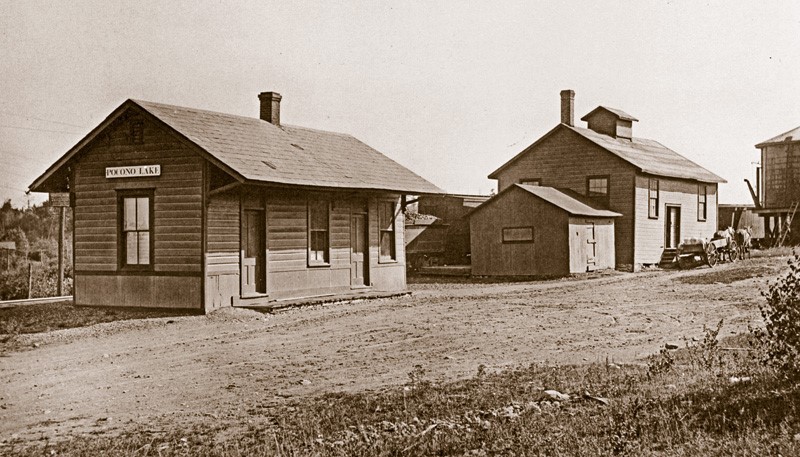
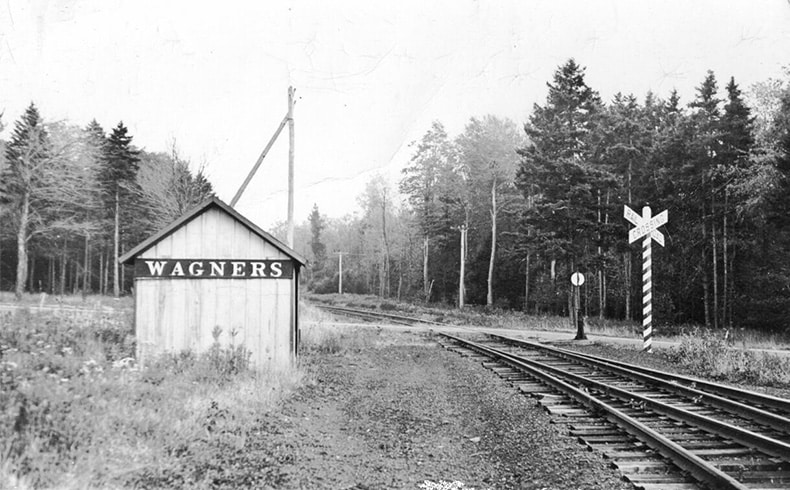
Local stations along the route included: Stroudsburg, Bartonsville, Reeders, Tannersville, Crescent Lake, Naomi Pines (Pocono Pines), Pocono Lake, Wagners, and more going West. The Naomi Pines station was a combination depot built in 1893, later expanded in 1913 using modified boxcars to handle growing seasonal traffic.
Remember, you were in the mountains and there were some beautiful views. But the locals often referred to the Wilkes-Barre & Eastern as the ‘‘Turkey Line,” ‘‘Cow Path” or the ‘‘Scenic Route to Stroudsburg.”
Founded in 1888 by George E. Wagner, Wagner’s Tree Farm spanned 1,700 acres and became a model of forestry, conservation, and community development in Tobyhanna Township. Working alongside his son, Sterling R. Wagner, the family gained recognition for sustainable land management while contributing to the local economy through forest products, coal, blueberries, and the annual sale of 1,500 Christmas trees. A dedicated WB&E rail spur, served by a flag stop station that operated with just one morning train and one return trip in the evening, connected the farm to wider markets. George Wagner’s civic involvement and forward-thinking planning also helped shape the township’s growth.
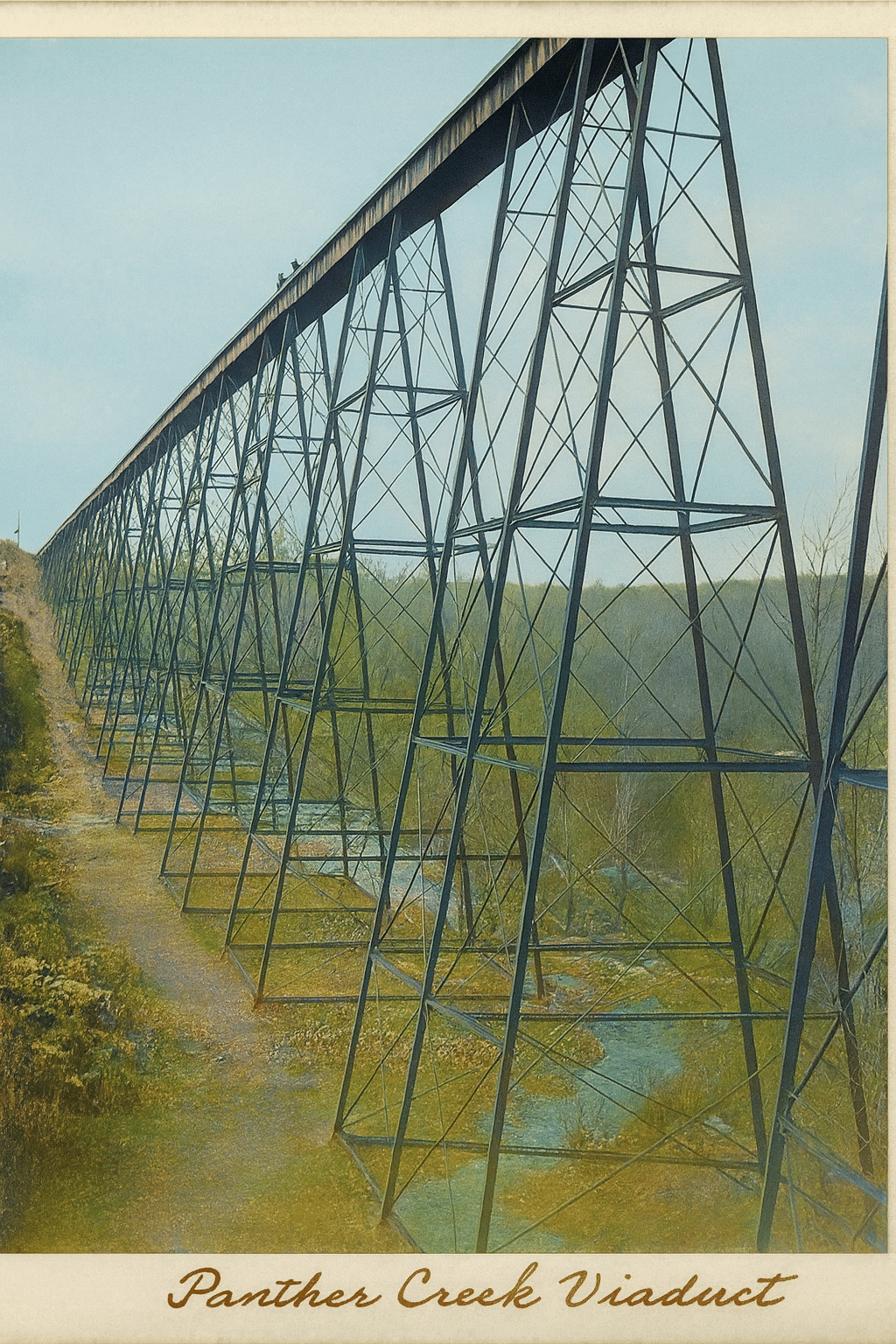
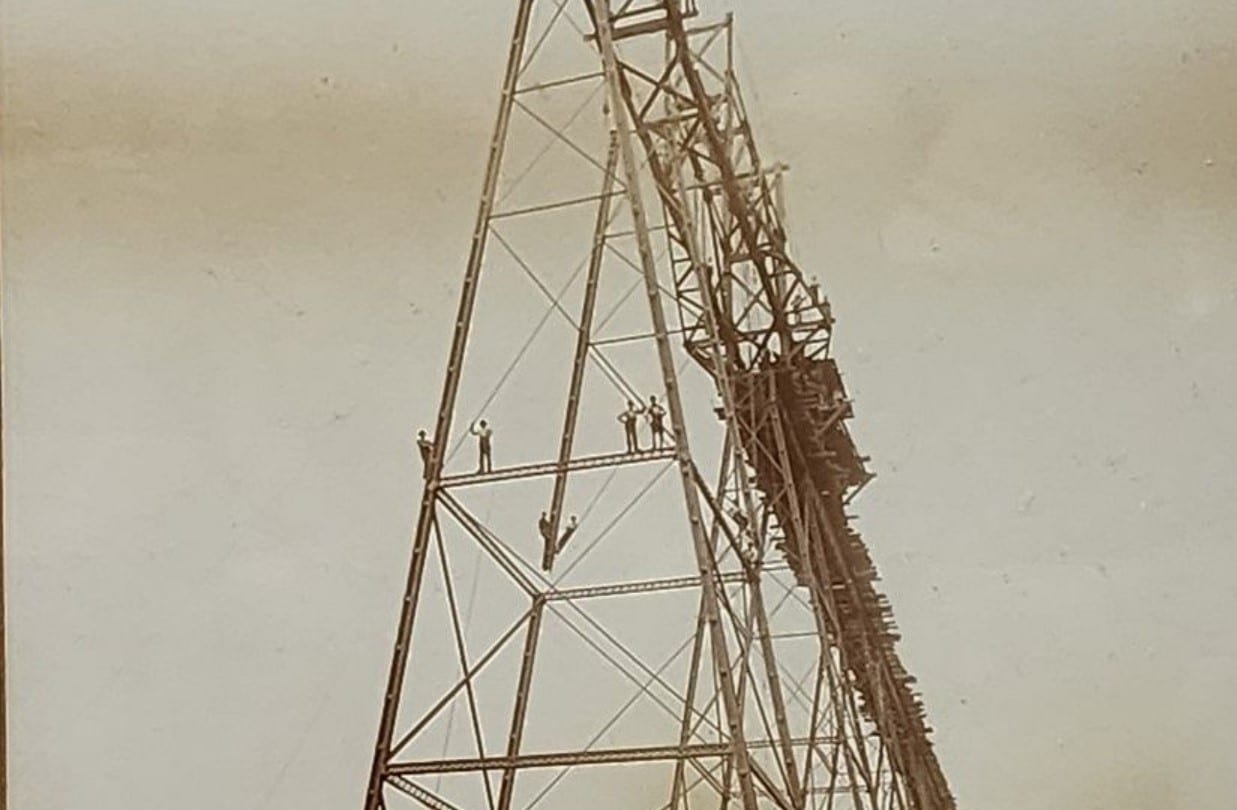
A freight house at Pocono Lake still stands unused just off Route 940 in the defunct Frisbie Lumber Company yard and is visible from the road. Just to the north of Pocono Lake and Wagner stops was a modern marvel we had to share. The structure was called the Panther Creek Viaduct, with a Length of 1680 feet and a height of 160 feet. Water to Rail and a 154 ft. length of Iron
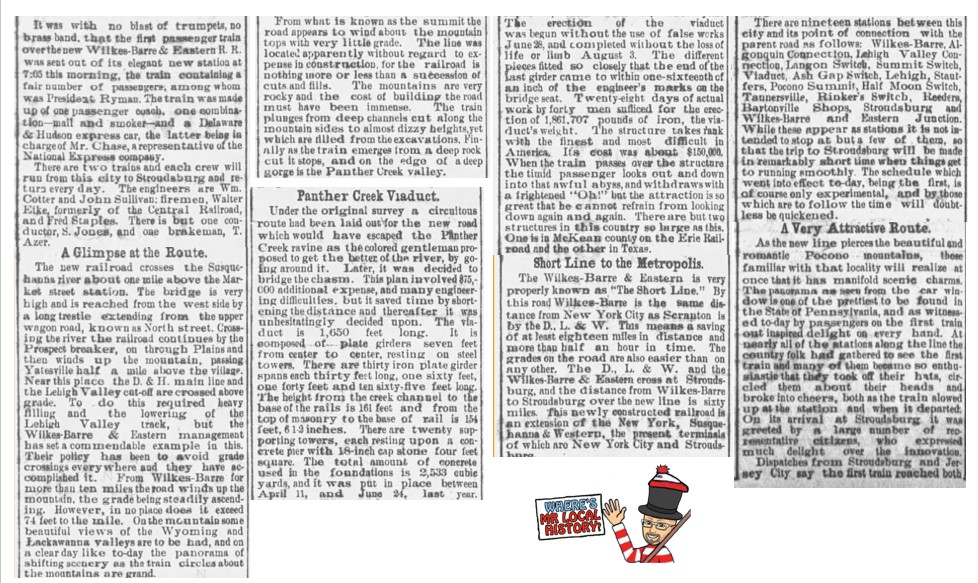
On June 4, 1894, the Wilkes-Barre & Eastern Railroad inaugurated its first passenger service with little fanfare but much significance, offering a scenic and efficient new route through Pennsylvania’s Pocono Mountains. The journey featured engineering marvels like the towering Panther Creek Viaduct—then the highest and one of the longest railroad bridges in the country—constructed with remarkable speed and precision. Designed to be a “Short Line” to New York City, the route offered passengers breathtaking views, gentle grades, and a safer, more direct connection compared to older, more circuitous paths. The article praised both the natural beauty and technical achievement of the railway, highlighting its nineteen stations and promising a new era of travel between Wilkes-Barre and the metropolitan east.
Here’s a great recollection of traveling the railroad to find the best huckleberry in the Poconos. Funny, no reference to Huckleberry Island on Lake Naomi.
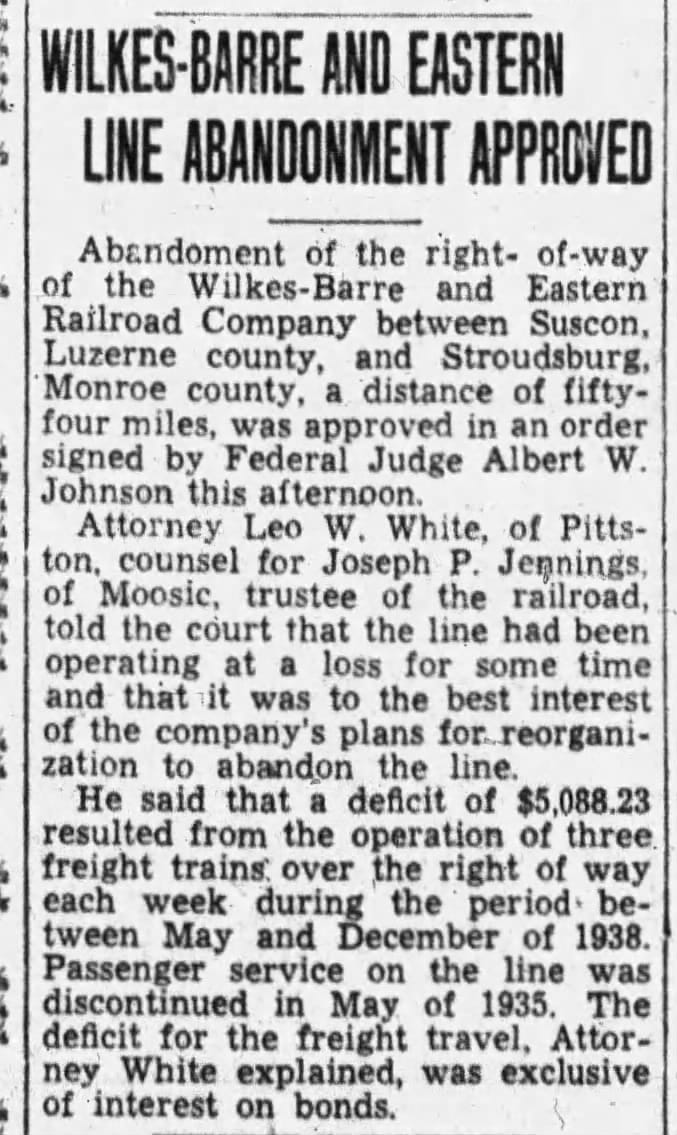
The Wilkes-Barre & Eastern Railroad officially came to an end on March 21, 1939, when a federal judge approved the abandonment of its 54-mile right-of-way stretching from Suscon in Luzerne County to Stroudsburg in Monroe County. The decision marked the final chapter in a line that had served northeastern Pennsylvania since 1892, initially built to transport anthracite coal, ice, lumber, and passengers across the Pocono Plateau. By the late 1930s, however, the railroad had become a financial burden. Passenger service had already been discontinued in May of 1935 due to declining ridership, and the remaining freight operations—just three trains per week—could no longer justify the cost of keeping the line active.
Between May and December of 1938, the railroad incurred a deficit of $5,088 solely from freight operations, not including mounting interest on outstanding bonds. With losses mounting and industries shifting toward trucks and highways, the court ruled that abandoning the line was in the best interest of the company’s reorganization efforts. The arrival and growing popularity of the automobile gave travelers new freedom and convenience, reducing the demand for rural passenger rail service. The WB&E, once a vital link for rural communities and resort travelers, faded into history not with a sudden crash, but with a quiet legal order—a casualty of changing times and transportation needs.
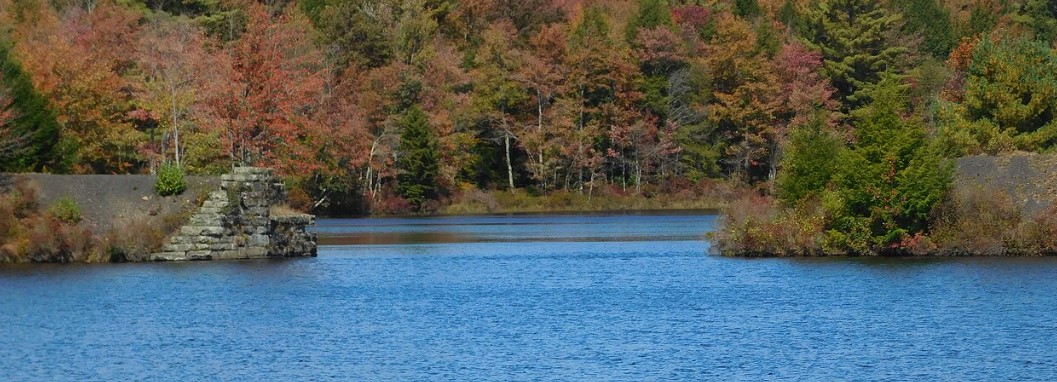
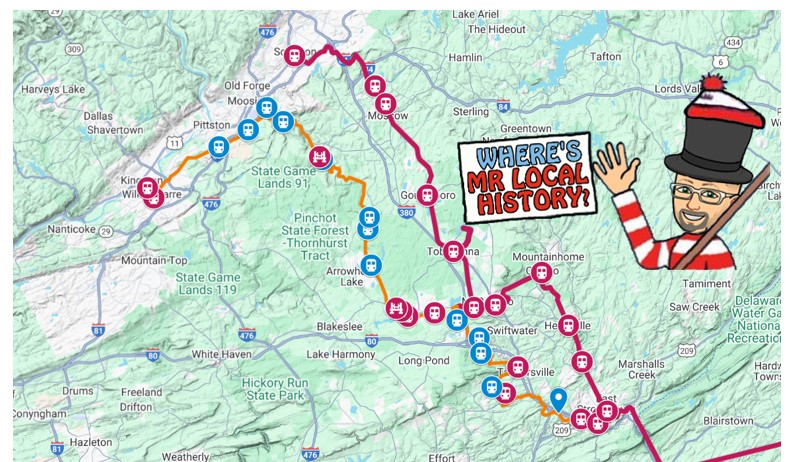
Motorists can trace the WB&E roadbed by following Route 940 west and some sections of I-380 north to the junction with I-80 in Mount Pocono. Long Pond Road near the village of Little Summit intersects with the right-of-way and was the location of a grade crossing. Following Route 940 west towards Pocono Pines, the single railroad bed is easily visible along the lake on the right, as are remnants from a bridge. Much of the line is preserved on Pennsylvania State Game Lands and is easily hiked.
There is a group of people who study railroads exclusively, so instead of creating, why not share their knowledge? Now, if you’re looking to find details of the DL&R or the WB&E to the Poconos, check this out.
From the outset, Lutherland was promoted not only as a summer retreat but as a year-round destination for religious conferences, youth programs, and leisure activities, a place that blended the mission of Christian fellowship with the amenities of a Pocono…
For generations, the Lake Naomi Clubhouse has stood as the heart and soul of community life in Pocono Pines, a beloved gathering place that has evolved alongside the families who call this mountain retreat their home away from home. More…
The series I’ve been researching began as an effort to rebuild my youthful memories of growing up on Lake Naomi in the Poconos starting in the 1960s. As the stories came together, I wanted to start an online dialog with…
This story is part of a series I’ve been researching, as I rebuild my youthful memories growing up on Lake Naomi in the Poconos. As the series comes together, there is an associated Facebook Group, called Lake Naomi Memories, for anyone…
Nostalgic & Personal As a kid, summers at Lake Naomi were my whole world. That’s where I first learned to handle a Sunfish, skimming across the water with the wind in my sail. Just down the road was the Pocono…